.svg)
Klaviyo Review 2026: An Honest Take From a Master Platinum Partner
.avif)
Klaviyo is a powerful email and SMS marketing platform built specifically for ecommerce, offering advanced segmentation, automation flows, and predictive analytics. Pricing scales with contact count, starting free for up to 250 contacts and reaching £2,300 monthly for 250,000 contacts on the email-only plan. The platform delivers a 4.6 out of 5 rating on G2 and Capterra but receives mixed feedback on Trustpilot at 2.4 out of 5. Klaviyo's steepest challenge is the learning curve for advanced features, though the platform's depth rewards the effort for serious ecommerce marketers. The company reported £1.2 billion revenue for full-year 2025 with 32% year-over-year growth, demonstrating strong market traction.

Most Klaviyo reviews tell you what the platform does. This one tells you whether it's right for your business and what you'll actually face when you use it.
What Klaviyo Is and Who Uses It
Klaviyo is an email and SMS marketing platform designed exclusively for ecommerce brands.
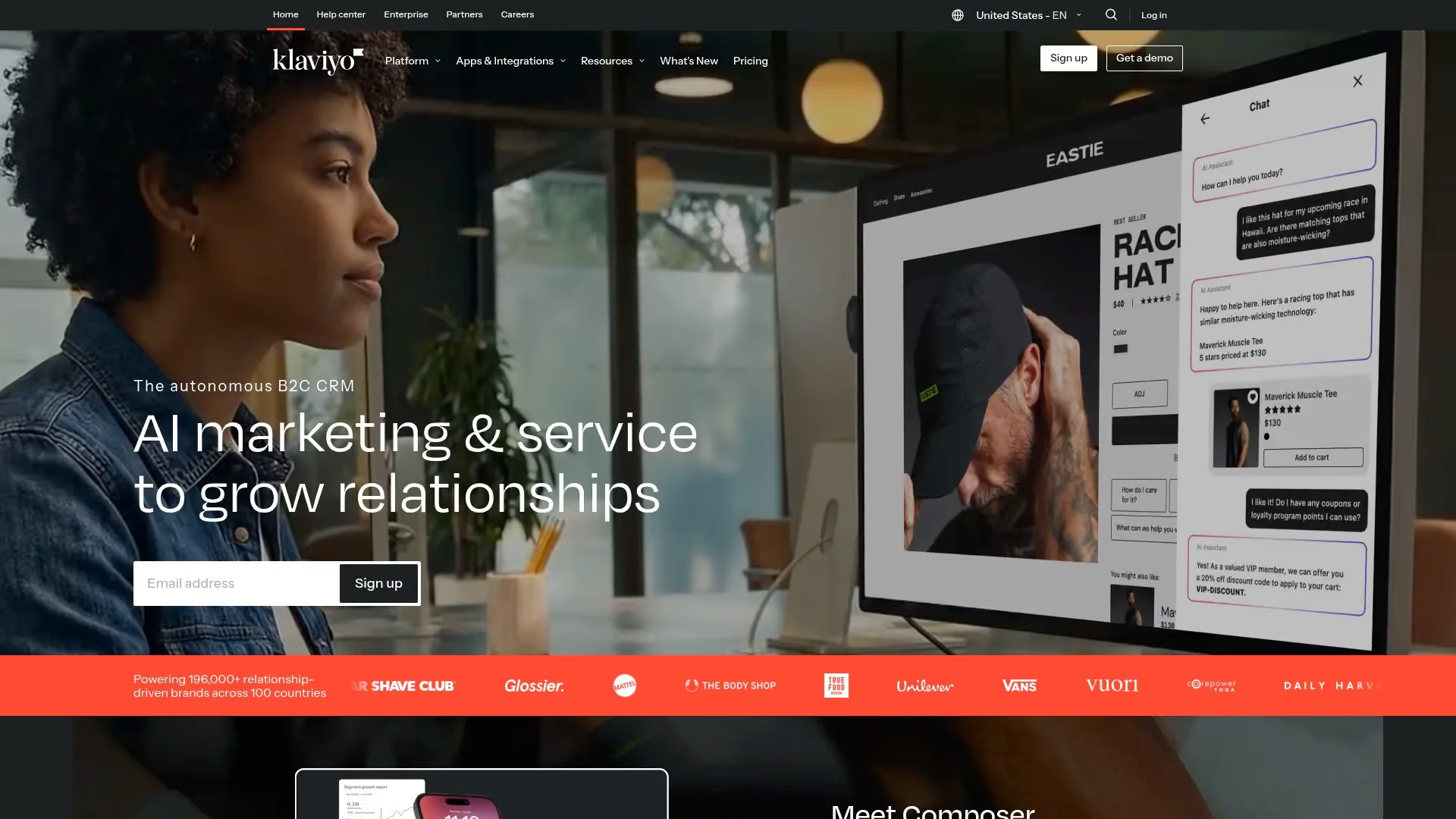
It pulls customer data from your online store, segments audiences based on purchase behaviour and browsing history, and automates triggered messages across the customer lifecycle. Think abandoned cart emails, post-purchase nurture sequences, and browse-abandonment flows.
The platform integrates directly with Shopify, WooCommerce, BigCommerce, and most major ecommerce platforms. It treats your store data as the foundation for every campaign.
Thousands of ecommerce brands use Klaviyo. At Enchant, we've built flows and campaigns for clients across fashion, beauty, fitness, and luxury goods, and we've seen the platform perform at scale.
The typical Klaviyo user is a mid-sized to large ecommerce brand with a growing email list and the resources to manage a sophisticated automation programme. Smaller stores can start on the free plan, but the platform's real power unlocks when you have enough data and customer activity to support segmentation.
Want help finding the best Klaviyo experts in the UK in 2026? Check out our guide.
Klaviyo Pricing: What It Actually Costs
Klaviyo pricing is contact-based and scales with your list size.
The free plan covers up to 250 contacts and includes basic email campaigns, forms, and segmentation. It's enough to get started, but you'll outgrow it quickly if your list is growing.
For 250,000 contacts, Klaviyo's email-only plan costs £2,300 per month. If you add SMS, expect that figure to climb based on message volume and credits consumed.

Pricing tiers include:
- Free: Up to 250 contacts, 500 monthly email sends
- Email: Paid plans start at around £20/month for 500 contacts and scale up
- Email + SMS: Adds SMS credits on top of the email plan cost
The challenge with Klaviyo pricing is the jump as your list grows. A 10,000-contact list might cost you £150/month. A 100,000-contact list could push £1,000/month. If you're adding SMS, budget for additional credits, which vary by region and carrier.
For brands with high customer lifetime value and strong email revenue attribution, the cost pays for itself. For lower-margin businesses or those just starting out, it can feel steep.
How Pricing Compares to Alternatives
Klaviyo tends to cost more than Mailchimp or Omnisend at equivalent list sizes, but you're paying for ecommerce-specific features and deeper data integration.
If you're evaluating alternatives, compare not just the monthly fee but what you get in automation, segmentation depth, and integrations. Our Klaviyo vs Mailchimp comparison walks through feature-by-feature differences.
Pricing transparency is a strength here. Klaviyo publishes its pricing calculator on its website, so you can model your costs before committing.
Email Marketing Features and the Builder
Klaviyo's email builder is a drag-and-drop editor with template blocks for images, text, buttons, product feeds, and dynamic content.
The interface is clean and functional. It won't win design awards, but it's fast to use once you understand the block structure. You can build a three-block promotional email in under 10 minutes.
Templates are available in the library, organised by campaign type: welcome series, product launch, win-back, seasonal promotions. They're serviceable starting points but often need customisation to match your brand.
At Enchant, we recommend building an email design system rather than relying on default templates. That means creating reusable content blocks, consistent typography, and brand-aligned spacing. Our email design services include design system builds for clients who want consistency at scale.
Dynamic Content and Personalisation
Klaviyo supports dynamic content blocks that change based on customer data.
You can show different product recommendations to first-time buyers versus repeat customers. You can swap imagery based on gender, location, or purchase history. You can personalise subject lines with first names, recent browsing activity, or predicted next order dates.
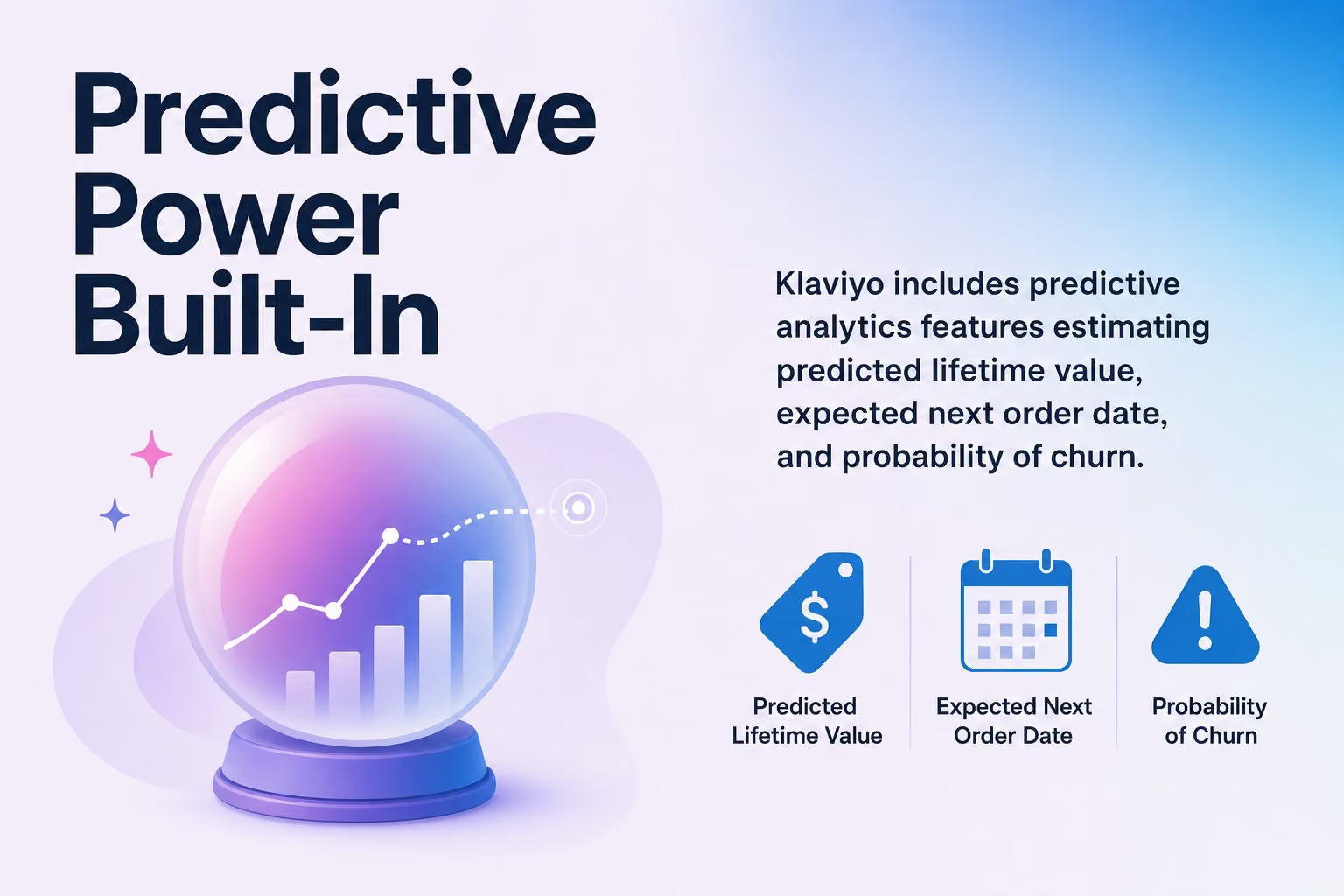
Klaviyo includes predictive analytics features estimating predicted lifetime value, expected next order date, and probability of churn. These fields can drive segmentation and dynamic content logic.
Personalisation in Klaviyo goes beyond merge tags. It's behaviour-driven, using real purchase and browsing data to inform what each recipient sees.
Mobile Optimisation and Dark Mode
Klaviyo emails are mobile-responsive by default, but that doesn't mean they're optimised.
Test your templates on actual devices. Check font sizes, button tap areas, and image scaling. Most email opens happen on mobile, and that's where your design will be judged.
Dark mode is a growing concern. Klaviyo's builder doesn't include built-in dark mode controls, so you'll need to handle that through custom CSS if you want fine-grained control. Our dark mode email design guide covers implementation strategies.
Marketing Automation and Flows
Flows are Klaviyo's term for automated email sequences triggered by customer behaviour.
A flow might start when someone subscribes to your list, abandons a cart, makes a first purchase, or hasn't ordered in 90 days. Each flow is a series of timed messages with conditional logic.
Common ecommerce flows include:
- Welcome series (3-5 emails introducing your brand and first-purchase incentive)
- Abandoned cart (2-3 emails reminding customers to complete checkout)
- Post-purchase (thank you, product care tips, review requests)
- Browse abandonment (follow-up on viewed products)
- Win-back (re-engage dormant customers)
Building a flow in Klaviyo involves setting a trigger, defining the sequence of messages, and adding conditional splits based on customer actions. The interface is visual and relatively intuitive once you've built a few flows.
At Enchant, we've built hundreds of flows across retail, fashion, and wellness brands. The most effective flows combine tight timing, relevant content, and clear CTAs. Our email automation service includes flow strategy, build, and optimisation.
Flow Performance and Optimisation
Klaviyo's flow analytics show open rates, click rates, revenue per recipient, and conversion rates for each message in the sequence.
You can A/B test subject lines, send times, and content within flows. You can also add conditional splits based on engagement: if someone opens the first email but doesn't click, send a different second message than you would to someone who clicked.
Klaviyo publishes guidance on how to increase email conversion rates with strategies including adjusting segmentation and A/B testing. The platform's recommendation engine will flag underperforming flows and suggest tweaks.
The key to flow performance is constant iteration. Set up your baseline flows, monitor revenue attribution, and refine timing and messaging every quarter.
Segmentation and Audience Targeting
Klaviyo's segmentation engine is the platform's strongest feature.
You can segment on any customer data field: purchase history, browsing activity, email engagement, predicted lifetime value, location, custom properties, and behavioural triggers. Segments update in real time as customer behaviour changes.
Example segments:
- Customers who purchased in the last 30 days but haven't opened an email in 14 days
- Subscribers who viewed a specific product category but haven't purchased
- High lifetime value customers with a predicted next order date in the next 7 days
- Customers who purchased once over 180 days ago (win-back target)
You can nest conditions with AND/OR logic and save segments for reuse across campaigns and flows.
At Enchant, we use segmentation to drive everything from campaign targeting to flow logic. Sending the same message to your entire list is a waste of deliverability and engagement. Our guide to behaviour-based segmentation in Klaviyo covers advanced use cases.
Zero-Party Data Collection
Klaviyo supports custom profile properties, which means you can collect zero-party data through forms and preference centres.
Ask subscribers about product preferences, communication frequency, or content interests, then store those responses as profile fields. Use them to refine segmentation and personalisation.
This is where Klaviyo separates itself from basic email platforms. You're not just segmenting on past behaviour. You're building a rich customer profile that informs every message.
SMS Marketing Capabilities
Klaviyo's SMS feature works similarly to email: you build flows, send campaigns, and segment audiences.
SMS messages are charged on a credit system. Credits vary by country and message length. You'll need to monitor credit usage and top up as needed.
Klaviyo's SMS marketing benchmarks include metrics such as click rates, conversion rates, and revenue per recipient by industry. These benchmarks help you gauge performance against similar brands.
SMS works best for high-intent moments: order confirmations, shipping updates, abandoned cart nudges, and flash sale alerts. Don't over-send. SMS fatigue is real, and unsubscribes are immediate.
Compliance is critical. Make sure you're collecting opt-ins properly and following TCPA regulations in the US or GDPR in the UK. Klaviyo's GDPR compliance guidelines emphasize the tools available to facilitate lawful data processing.
SMS and Email Orchestration
Klaviyo lets you build multi-channel flows that combine email and SMS in a single sequence.
For example, your abandoned cart flow might send an email at 1 hour, an SMS at 4 hours (only to SMS subscribers), and a final email at 24 hours. The platform handles channel preference automatically.
At Enchant, we recommend starting with email-only flows, proving ROI, then layering in SMS where it adds value. SMS isn't a replacement for email. It's a complement for high-urgency moments.
Klaviyo Reviews: Product Review Collection and Management
Klaviyo Reviews is a product review collection tool integrated into the platform.
It allows you to request reviews via automated post-purchase emails, collect ratings and photos, and display reviews on your product pages. Reviews are managed within the Klaviyo dashboard alongside your email and SMS campaigns.
The feature integrates with Shopify and other ecommerce platforms. Setup involves installing the Klaviyo Reviews app and configuring the review request flow.
Review request emails typically go out 7-14 days after purchase, giving customers time to use the product. You can customise the email template, set up reminder sequences for non-responders, and incentivise reviews with discount codes.
Why Product Reviews Matter for Ecommerce
Product reviews drive conversion. They provide social proof, answer buyer questions, and improve SEO on product pages.
Klaviyo Reviews consolidates review management in the same platform where you're already running email and SMS. That means you can segment customers who've left reviews, trigger thank-you messages, or target review-leavers with loyalty campaigns.
The challenge is that Klaviyo Reviews is a relatively new feature and lacks some of the depth of standalone review platforms like Yotpo or Reviews.io. If your review strategy is central to your business, evaluate whether Klaviyo's offering meets your needs or whether you need a dedicated solution.
Reporting, Analytics, and Attribution
Klaviyo's reporting dashboard tracks email and SMS performance across campaigns and flows.
Key metrics include open rate, click rate, conversion rate, revenue, and revenue per recipient. You can filter by date range, campaign type, or audience segment.
Flow analytics show performance for each message in the sequence. You can see exactly which email in your abandoned cart flow drives the most revenue and optimise accordingly.
Klaviyo's attribution window tool, updated for 2025, lets you define custom attribution windows for email and SMS. This matters when you're trying to understand how marketing touches contribute to conversions over time.
Benchmarking Your Performance
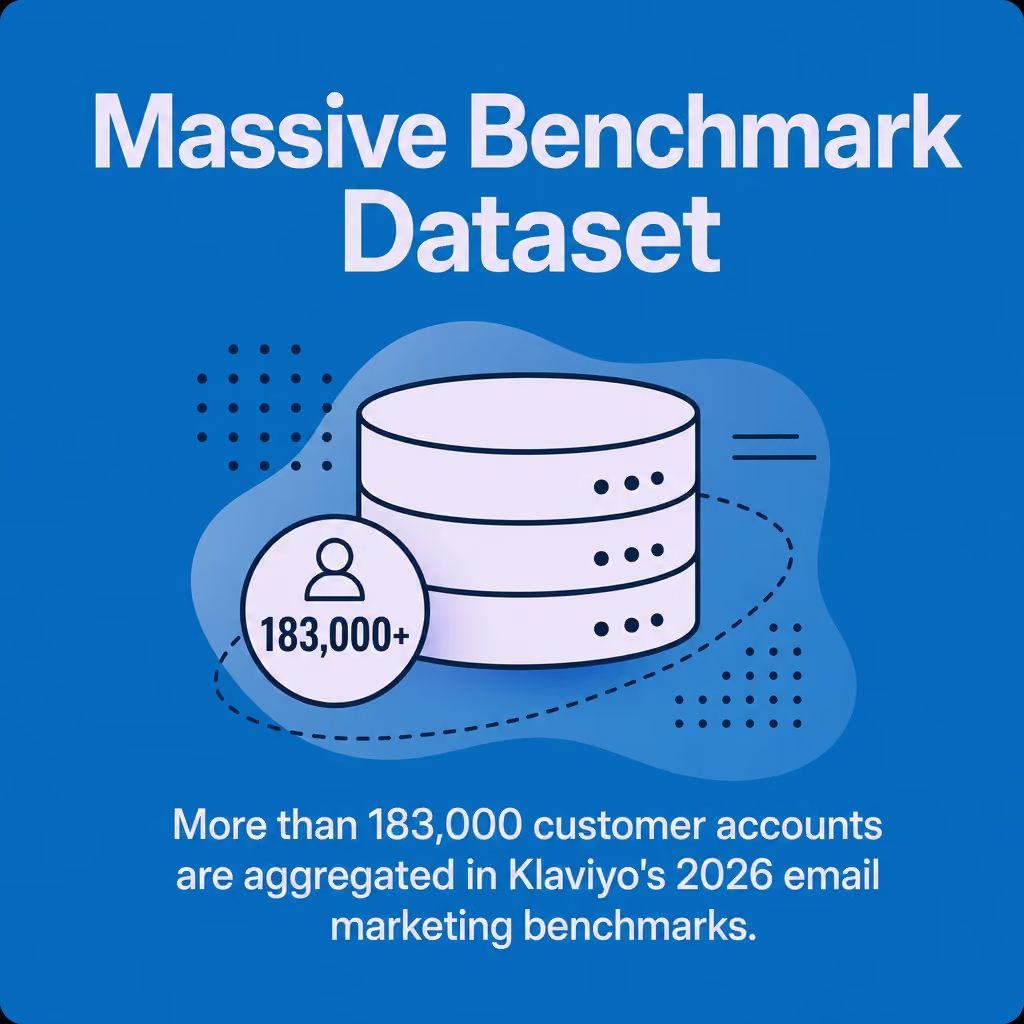
More than 183,000 customer accounts are aggregated in Klaviyo's 2026 email marketing benchmarks. These benchmarks show average open rates, click rates, and conversion rates by industry, giving you a reference point for your own performance.
Benchmarks are useful, but don't obsess over them. Your goal is to improve your own metrics quarter over quarter, not to match an industry average.
At Enchant, we track email revenue as a percentage of total revenue for our clients. That's the metric that matters most. If email is driving 30-40% of your ecommerce revenue, you're doing well.
Integrations and Ecommerce Platform Support
Klaviyo integrates with Shopify, WooCommerce, BigCommerce, Magento, and most major ecommerce platforms.
The Shopify integration is the deepest. It syncs customer data, order history, product catalogues, and inventory in real time. You can trigger flows based on Shopify events like order placed, order fulfilled, or refund issued.
Other integrations include:
- Facebook and Google Ads for custom audience syncing
- Gorgias, Zendesk, and other helpdesks for customer support data
- ReCharge and Bold for subscription management
- Typeform and Jotform for custom data collection
If you need a custom integration, Klaviyo offers a REST API and webhooks. Most agencies and developers can build integrations without too much complexity.
Data Syncing and Accuracy
Integration quality matters. If your ecommerce platform isn't syncing data properly, your segmentation and flows won't work.
Check your integration setup regularly. Make sure product catalogues are updating, order data is flowing in real time, and customer profiles are complete. Small data gaps can cause big problems in automated flows.
AI Features and Predictive Analytics
Klaviyo AI can write subject lines and body copy based on prompts to optimize email marketing.
The AI assistant takes a prompt like "write a promotional email for a 20% off sale on summer dresses" and generates a draft. You can refine the output, adjust tone, or regenerate entirely.
It's faster than writing from scratch, but it's not a replacement for strategic copywriting. Use it for ideation and first drafts, then edit heavily.
Klaviyo's predictive analytics features go deeper. The platform calculates predicted lifetime value, churn risk, and expected next order date for each customer. These predictions are based on historical purchase behaviour and can inform segmentation.
For example, you can build a segment of high-predicted-LTV customers who are at risk of churn and send them a win-back offer before they lapse. That's the kind of targeting that drives retention.
At Enchant, we use AI as a tool, not a crutch. Our guide to AI prompts for email marketing includes frameworks for getting better output from AI assistants.
Ease of Use and Learning Curve
Klaviyo is not the easiest email platform to learn.
The interface is packed with features, and the segmentation logic requires you to understand customer data fields and conditional operators. If you're used to a simpler tool like Mailchimp, expect a steep ramp-up period.
That said, the platform is learnable. Klaviyo offers extensive documentation, video tutorials, and a community forum. The help centre is well-organised and searchable.
For brands with dedicated marketing teams or agencies, the learning curve is manageable. For solo operators or small teams without technical support, it can feel overwhelming.
Our step-by-step Klaviyo tutorial for beginners walks through initial setup, first campaign, and basic flow builds. If you're starting from zero, that's a good place to begin.
Getting Started: What to Expect
Plan to spend your first week setting up:
- Platform integration with your ecommerce store
- List import and segmentation structure
- First welcome flow
- Abandoned cart flow
- Basic email template or design system
Don't try to build everything at once. Start with the flows that drive the most revenue (usually welcome and abandoned cart), prove ROI, then expand from there.
At Enchant, we onboard clients with a 90-day roadmap. That gives time to set up foundations, test and optimise, and scale into more advanced flows and segmentation.
Pros and Cons: What Klaviyo Does Well and Where It Falls Short
Klaviyo's greatest strength is depth of segmentation and ecommerce-specific automation.
The platform treats customer data as the foundation for every message. You can build hyper-targeted campaigns and flows based on purchase behaviour, predicted lifetime value, and real-time browsing activity. That's powerful when used well.
Other strengths include:
- Strong Shopify integration with real-time data sync
- Predictive analytics for churn risk and lifetime value
- Multi-channel flows combining email and SMS
- Detailed reporting and revenue attribution
- Extensive template library and drag-and-drop builder
The platform's weaknesses are cost, complexity, and the learning curve.
Pricing scales quickly as your list grows, and the platform can feel expensive for brands with lower email revenue. The interface is powerful but not intuitive. Advanced features require time and technical understanding to implement properly.
Other cons include:
- Limited built-in dark mode controls (requires custom CSS)
- SMS credits can add up fast if you're sending high volumes
- Review feature is less mature than dedicated review platforms
- Customer support response times vary (especially on lower-tier plans)
Klaviyo delivers a 4.6 out of 5 rating on both G2 and Capterra, while receiving a 2.4 out of 5 on Trustpilot. The Trustpilot score is notably lower, often reflecting frustration with pricing changes, support quality, or billing disputes. G2 and Capterra reviews tend to focus on feature depth and performance, where Klaviyo scores well.

Who Klaviyo Is For (and Who Should Look Elsewhere)
Klaviyo is built for ecommerce brands with growing lists, dedicated marketing resources, and a focus on retention and lifecycle marketing.
You're a good fit for Klaviyo if:
- You sell products online and want to automate post-purchase, abandoned cart, and win-back campaigns
- You have at least 5,000 contacts and plan to grow your list
- You have someone on your team (or an agency) who can manage segmentation and flow builds
- Email and SMS revenue attribution matters to your business
- You want deep integration with Shopify or another major ecommerce platform
You should look elsewhere if:
- You're a content creator, blogger, or service business without ecommerce (Klaviyo is overkill)
- You have under 1,000 contacts and basic email needs (start with a simpler, cheaper platform)
- You don't have the time or resources to learn a complex platform
- You're extremely price-sensitive and can't justify the cost as your list grows
Our guide to the best email marketing platforms for Shopify compares Klaviyo to alternatives like Omnisend, Mailchimp, and Drip. If you're evaluating options, that comparison will help.
Final Verdict: Is Klaviyo Worth It?
Klaviyo is worth the investment if you're serious about ecommerce email marketing and have the resources to use it properly.
The platform's segmentation, automation, and predictive analytics are among the best in the industry. It's built for brands that want to treat email and SMS as revenue channels, not afterthoughts.
The cost is high, and the learning curve is real. But for brands with strong product-market fit, growing lists, and a focus on retention, Klaviyo delivers ROI that justifies the price.
At Enchant, we're a Klaviyo Master Platinum Partner because we believe in the platform's capabilities. We've built flows, campaigns, and full lifecycle programmes for dozens of ecommerce brands, and we've seen the results firsthand.
If you're evaluating Klaviyo, start with the free plan. Build a welcome flow and an abandoned cart sequence. Track revenue attribution. If those two flows alone are driving meaningful revenue, you've got your answer.
Need help setting up Klaviyo or optimising your existing account? Our email marketing audit service includes a full platform review, flow analysis, and 90-day roadmap. Get in touch if you'd like to discuss your specific needs.
Quick Answers to Common Klaviyo Questions
Are Klaviyo reviews good?
Klaviyo reviews are generally positive among ecommerce users who value segmentation and automation. Independent review sites show strong satisfaction, though ratings vary by business size and pricing tolerance. G2 and Capterra scores sit at 4.6 out of 5, while Trustpilot shows 2.4 out of 5, often reflecting billing or support concerns.
What are the cons of Klaviyo?
Common drawbacks include higher pricing as contact lists grow, a steeper learning curve for advanced features, and workflow complexity for beginners. The platform's power makes setup and optimisation more demanding for smaller teams without dedicated marketing resources.
Is Klaviyo doing well as a business?
Yes, Klaviyo reported strong financial performance with £1.2 billion revenue for full-year 2025 and 32% year-over-year growth. Public filings indicate continued customer adoption and healthy demand in the ecommerce marketing software space.