.svg)
SMS vs RCS vs WhatsApp: What's Best for Ecommerce Brands?
.avif)
Most ecommerce brands should keep SMS as the baseline every customer can receive, add RCS on top for high-value visual moments, and use WhatsApp only in markets where customers already live in it. RCS falls back to SMS when a phone can't take it, so it sits on your SMS programme rather than replacing it. The part most SMS vs RCS vs WhatsApp comparisons skip is the US. Since 1 April 2025, Meta has paused WhatsApp marketing templates to US numbers, so a US-heavy D2C brand can't run WhatsApp promotions at all.
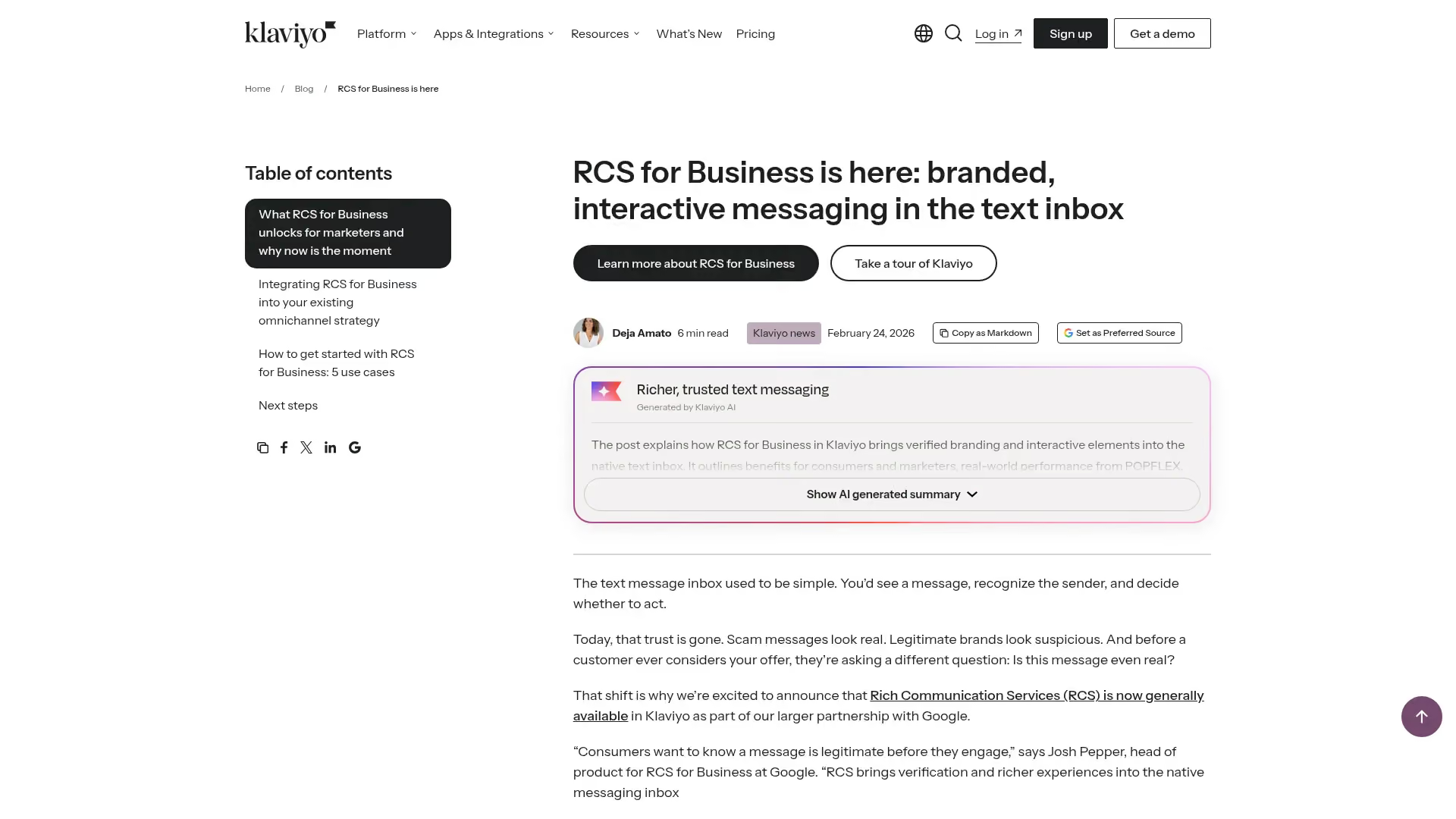
Klaviyo's announcement of RCS for business, with branded sender, carousels and SMS fallback
The Short Answer on SMS vs RCS vs WhatsApp for Ecommerce
For an ecommerce brand, SMS, RCS and WhatsApp stack on top of each other, and each layer has a different job. Should your text be RCS or SMS? Send RCS when the message is visual and worth the extra spend. Send SMS for everything else, and let it catch any RCS message that can't land.
Here's how the stack breaks down.
- SMS is the floor. It works on virtually every phone. Use it for codes, delivery updates and your core flows.
- RCS is the visual layer. Carousels, video and buttons in the native inbox, with automatic fallback to SMS or MMS.
- WhatsApp is the market play. Strong where customers already chat in it, and the best fit for two-way service. US marketing is paused.
- Consent is per channel. Marketing messages need recipient consent. WhatsApp also needs the customer to install the app and opt in to business messages.
One Table Shows What You Trade for Reach
SMS reaches everyone with plain text. RCS adds visuals inside the inbox people already use. WhatsApp adds catalogues and encryption but needs an app and an opt-in. The table compares the three on the factors that decide a rollout.
SMS Is Plain, Universal and Still the Revenue Workhorse
SMS earns its place because it reaches virtually every mobile phone and asks nothing of the customer. No app. No login. It runs over the carrier network in short plain-text segments, and longer messages get split across several. Want images? That's MMS.
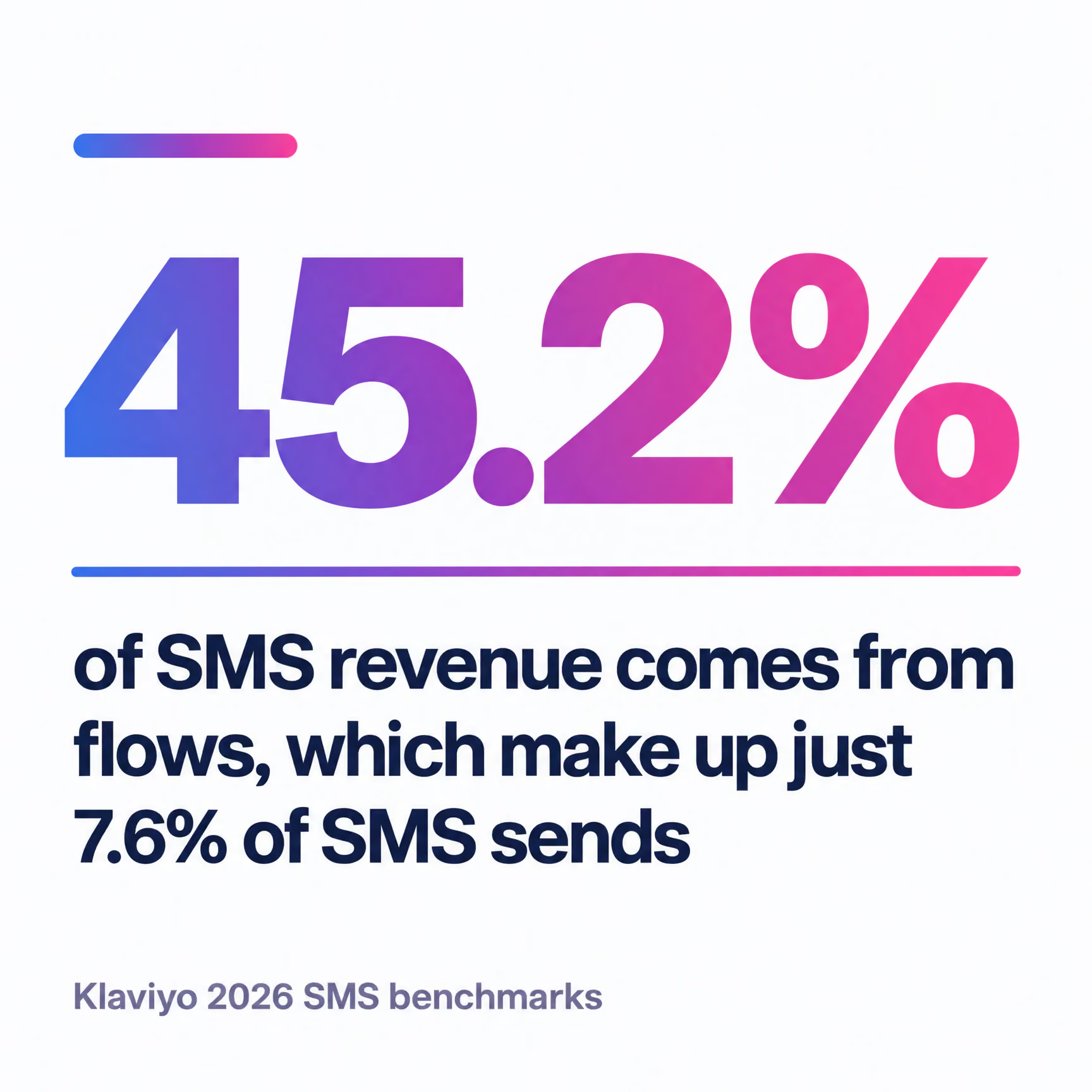
Based on data from more than 183,000 Klaviyo customers, this is why automated flows, not one-off blasts, deserve the first build effort.
Plain text is the point. A delivery update doesn't need a carousel. Neither does a discount code or a one-time passcode.
The revenue case sits in automation. Klaviyo's 2026 SMS benchmarks draw on more than 183,000 customers. In them, flows make up 7.6% of SMS sends but drive 45.2% of SMS revenue. Abandoned cart and welcome series do far more per send than one-off blasts.
So if your SMS programme is mostly campaigns, build out your flows first. A richer channel won't rescue thin retention flows.
RCS Puts Rich Content in the Inbox Customers Already Use
RCS gives you carousels, video and buttons without asking anyone to download anything. RCS (Rich Communication Services) is the GSMA's open-standard upgrade to SMS and MMS. The GSMA's Universal Profile is the shared specification carriers and device makers build to. On Android, it shows up in Google Messages. On iPhone, in Apple Messages.
iPhone support is recent. Apple released iOS 18 with RCS support on 16 September 2024, and the GSMA marked the launch the next day. Sinch notes the iPhone rollout went market by market and carrier by carrier. Not every iPhone on every network got it at once.
How is RCS different from WhatsApp? RCS lives in the phone's native inbox and works off the customer's phone number, just like SMS. WhatsApp is a separate Meta app, so customers must install it and opt in before you can message them.
That native inbox is RCS's biggest advantage. Nothing to install. No new app to persuade anyone to open. Your branded message lands where your SMS already does.
WhatsApp Has 3 Billion Users and a US Marketing Pause
WhatsApp has the biggest audience in this comparison and the tightest restriction in the US. Mark Zuckerberg put it at more than 3 billion monthly users on Meta's Q1 2025 earnings call. That's the freshest official figure, because Meta stopped reporting per-app user numbers after Q4 2023.
Brands meet WhatsApp in two forms. The WhatsApp Business app suits small teams replying by hand from a phone. The WhatsApp Business Platform, often called the WhatsApp Business API, is what lifecycle tools connect to. Automated flows at scale need the Platform.
The customer installs the app and opts in. Anything outside a live service conversation goes out as a template. If you're new to the channel, start with the full mechanics of WhatsApp marketing before you build.
Then there's the US. Since 1 April 2025, Meta has paused marketing templates to US phone numbers, and Klaviyo states Meta "does not currently support" WhatsApp marketing there. Plenty still works. Customer.io confirms utility, authentication and 24-hour service messages to US numbers are still allowed. ManyChat notes click-to-WhatsApp ads still run during the pause.
Don't wait for a reopening date. Kanal reported that Meta had announced no end date as of July 2026. Build your US promotional plan on SMS and RCS.
Your Customer Map Decides Which Channel Pays Off
Where your customers live matters more than which channel has the best features. In the US, UK and France, SMS and RCS are the default. In Brazil, India, Mexico and much of continental Europe, WhatsApp is where people chat.
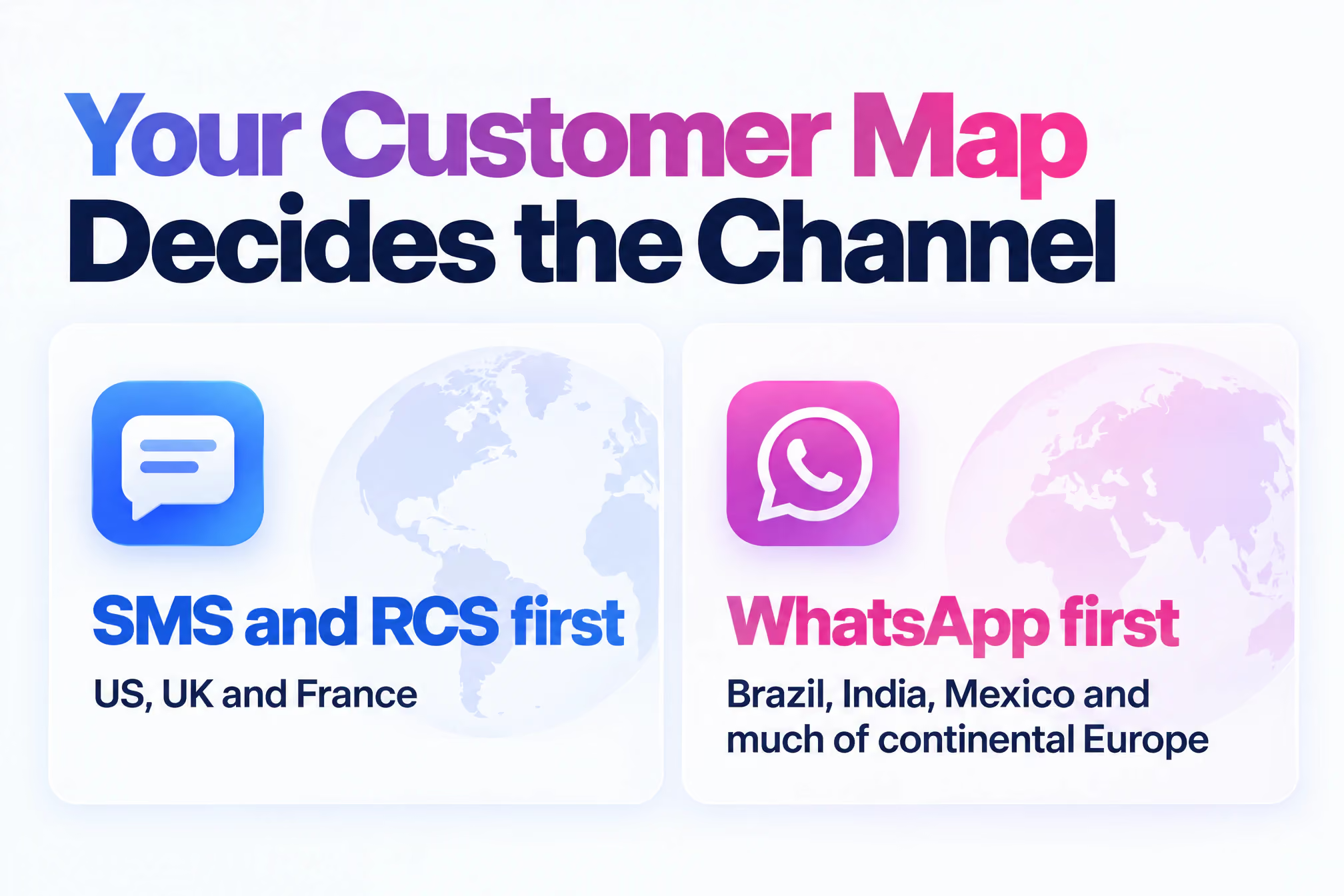
Shipping-country data from your own store is the quickest test of which column most of your customers fall into.
The US numbers show how big the native inbox still is. CTIA counted about 5.75 billion person-to-person SMS and MMS messages a day in the US in 2023. Google said at the Android Show in May 2025 that more than 1 billion RCS messages go out in the US each day, on a 28-day average. Different years, different counters. Still, SMS remains the bigger pipe, and RCS is no longer niche.
Do the maths on your own list. Pull last year's orders by shipping country from Shopify or Klaviyo. If a meaningful slice ships to WhatsApp-first markets, WhatsApp earns a pilot. If almost everything ships to the US or UK, it probably doesn't. Not yet.
Rich Features Are Where RCS and WhatsApp Earn Their Price
RCS and WhatsApp both turn a text into something a customer can browse and tap. SMS stays deliberately bare. The table shows each channel's signature features and the limit you'll hit first.
RCS gives you a verified branded sender, rich cards, product carousels, suggested reply buttons and read receipts. A drop announcement can show four products, each with a "Shop now" button, inside the native inbox. Read receipts tell you who opened. SMS never could.
WhatsApp works through templates, split into categories such as marketing, utility and authentication. On top sit Flows for structured in-chat interactions, catalogues customers browse without leaving the chat, and click-to-WhatsApp ads. Utility templates make WhatsApp a strong home for order and delivery updates. WhatsApp marketing automation turns those into triggered flows rather than manual sends.
And SMS? Its simplicity is a feature. No card to render, no button to misfire, no app to update. For a one-line reminder, that's exactly what you want.
Pricing Runs on Three Different Models
SMS, RCS and WhatsApp each bill on a different model, so compare cost per order or per pound of revenue, never just cost per message.
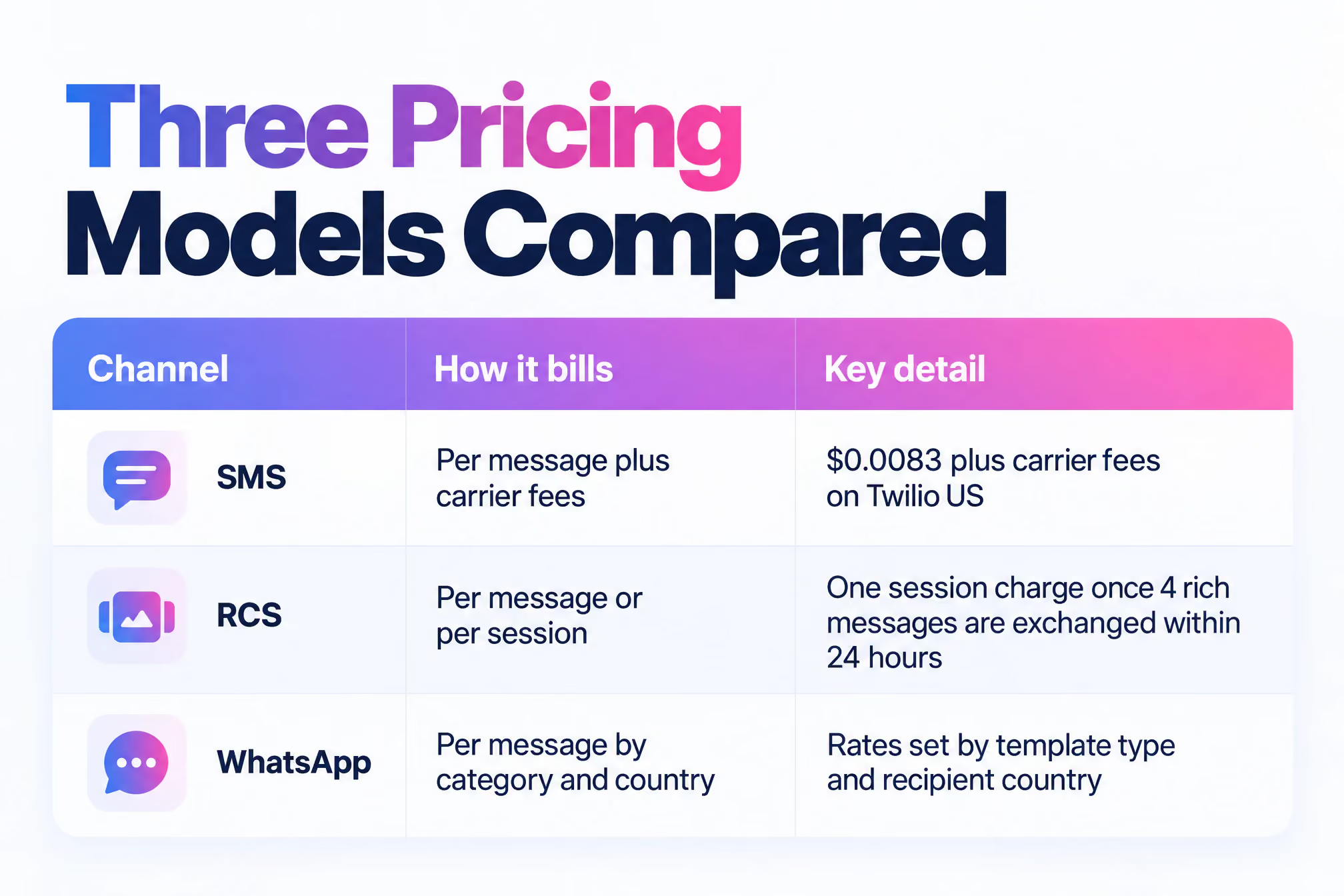
Because each channel bills differently, cost per order is the only figure that compares them fairly in a budget review.
SMS and Basic RCS Start at the Same US Price
At the entry level, RCS costs no more than SMS. Twilio's US starting price is $0.0083 per message for both SMS and basic "RCS Rich" messages, before carrier fees. Those fees add up. Twilio passes on carrier fees of $0.0035 per outbound SMS on AT&T and $0.0045 on T-Mobile. The sticker price undersells what SMS really costs.
Rich, Two-Way RCS Moves to Session Billing
RCS gets more expensive as it gets richer and more conversational. Rich media can cost more than basic text, and two-way agents bill differently from one-way promos. On 20 November 2025, Google merged its "Basic Message" and "Single Message" RCS categories into a single "Non-conversational" category.
Conversational RCS works differently. Under Google's US billing model, an agent pays one session charge once 4 rich messages are exchanged within 24 hours. At least 2 must come from the user and at least 1 from the business. Outside the US, Google's standard RCS billing uses a 24-hour conversation window instead. Get your provider's rate card per category before you design the journey.
WhatsApp Charges per Message by Category and Country
WhatsApp pricing changed shape in mid-2025. Since 1 July 2025, Meta has charged per message on the WhatsApp Business Platform, with rates set by message category and the recipient's country code. A marketing template to Germany and a utility message to India are different line items.
Klaviyo handles this in cash. Klaviyo bills WhatsApp in dollars from your Mobile Messaging plan, not in credits, at a rate set by template type and recipient country. Budget it separately from SMS.
Encryption Puts WhatsApp First and Leaves SMS Exposed
If a message carries anything sensitive, keep it off SMS. WhatsApp encrypts chats end to end by default using the Signal Protocol. RCS business messages are encrypted in transit only. SMS has no encryption at all.
Person-to-person RCS is catching up. Apple's iOS 26.5, released in May 2026, began rolling out end-to-end encrypted RCS between iPhone and Android in beta. It's built on GSMA Universal Profile 3.0 and MLS (Messaging Layer Security), and it only works where the carrier supports it. That covers personal chats. Your brand's RCS messages are a separate case.
WhatsApp needs a caveat too. End-to-end encryption on personal chats doesn't automatically extend to business messages. Ask your provider how messages are handled once they leave your platform.
The practical rule for SMS is blunt. Never send anything you'd mind a stranger reading. No full order details tied to personal data, no passwords, no account numbers.
Fallback Is What Makes RCS Safe to Run in Klaviyo and Braze
Fallback makes RCS a low-risk add-on to an SMS programme. When the recipient's device or carrier can't receive RCS, the message goes out as SMS or MMS instead. If your messages switched from RCS to SMS, that's what happened. The fallback did its job.
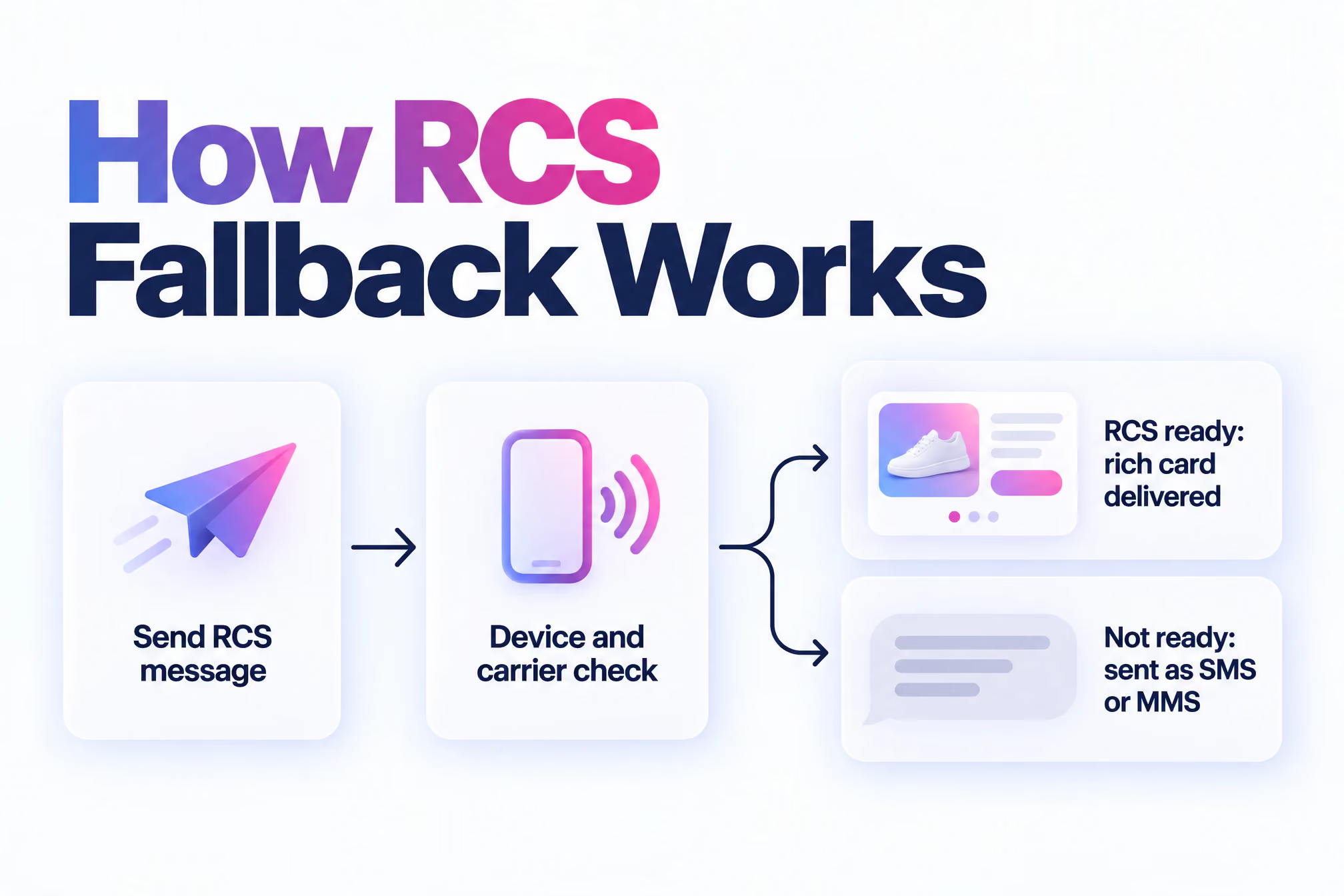
Fallback is why RCS adds little risk: every customer still receives something, so the plain-text version deserves equal copywriting care.
Klaviyo Puts RCS and WhatsApp Next to SMS and Email
Klaviyo now runs RCS and WhatsApp natively alongside SMS and email. Its omnichannel release added WhatsApp and RCS support, including product carousels and two-way conversations. RCS started small. Klaviyo's help centre listed RCS in private beta in an article updated 5 December 2025.
It's now generally available through Klaviyo's partnership with Google. You get a verified branded sender, rich cards, carousels, read receipts and automatic fallback to SMS or MMS. Klaviyo also supports MP4 video in SMS and RCS messages.
Because fallback is automatic, you don't need a separate SMS branch for non-RCS phones. Write the fallback copy with care anyway. Part of your list will read that version, not the carousel. Full disclosure: Enchant is a Klaviyo Master Platinum Partner and a Braze partner, so these are platforms we work in.
Braze Tells You to Plan for Less Than Full Delivery
Braze is upfront about RCS coverage. Braze tells marketers to expect "less than 100% deliverability" for RCS, varying by country, and recommends a provider with SMS fallback.
Braze RCS message composer with the 'Send SMS if RCS fails' fallback option
Inside the composer, Braze's "Send SMS if RCS fails" option adds a fallback message of up to 1,600 characters. RCS suggestion buttons cap out at 25 characters. Write the button first. "Shop the drop" fits. Anything clever probably won't.
Not on either platform? A CPaaS provider can route one API call across SMS, RCS and WhatsApp with fallback built in. The logic is the same. Rich first, plain text as the safety net.
Email Carries the Detail, Messaging Carries the Nudge
Email keeps the long-form job in a multichannel eCRM programme. Product stories, size guides, editorial and loyalty updates belong there. Messaging handles the time-sensitive nudge. Decide which channel owns each lifecycle moment, so a customer doesn't get an email, an SMS and an RCS card about the same cart in one hour. The principles of multichannel messaging alongside email campaigns apply to all three channels here.
Match Each Ecommerce Job to the Channel Built for It
The right channel depends on what the message has to do, so decide per use case rather than per brand. Here's how the common ecommerce jobs map.
Passcodes default to SMS because they have to reach everyone, instantly. WhatsApp authentication messages are a valid alternative, and they still go through to US numbers during the pause.
For international promotions, WhatsApp is where the volume sits. WhatsApp broadcast campaigns do the job SMS campaigns do in the UK, in markets where WhatsApp is the main chat app.
Run all three only when your customer map demands it. A brand selling across the US, UK and Brazil needs SMS and RCS for the first two and WhatsApp for the third. A UK-only brand probably needs SMS and an RCS test. Nothing more. Add channels when the data says so, not because a vendor launched one.
Quick Answers
Should My Text Be RCS or SMS?
Use RCS when the message benefits from images, carousels or buttons, such as a launch or abandoned cart. Use SMS for codes, updates and anything plain, and keep it as the fallback for RCS.
How Is RCS Different From WhatsApp?
RCS runs in the phone's built-in messaging app with no download, using the customer's phone number. WhatsApp is a separate Meta app that customers must install and opt in to before a brand can message them.
Why Did My Messages Switch From RCS to SMS?
The recipient's device or carrier couldn't receive RCS, so the message fell back to SMS or MMS. Braze warns that RCS delivery is below 100% and varies by country, which is why fallback matters.
Which Is Safer, SMS or WhatsApp?
WhatsApp. It encrypts chats end to end by default, while SMS has no encryption at all. That protection on personal chats doesn't automatically extend to business messages, so check with your provider.
Start With One RCS Abandoned Cart Test
Don't roll RCS out across every flow. Prove it on the one that already makes money.
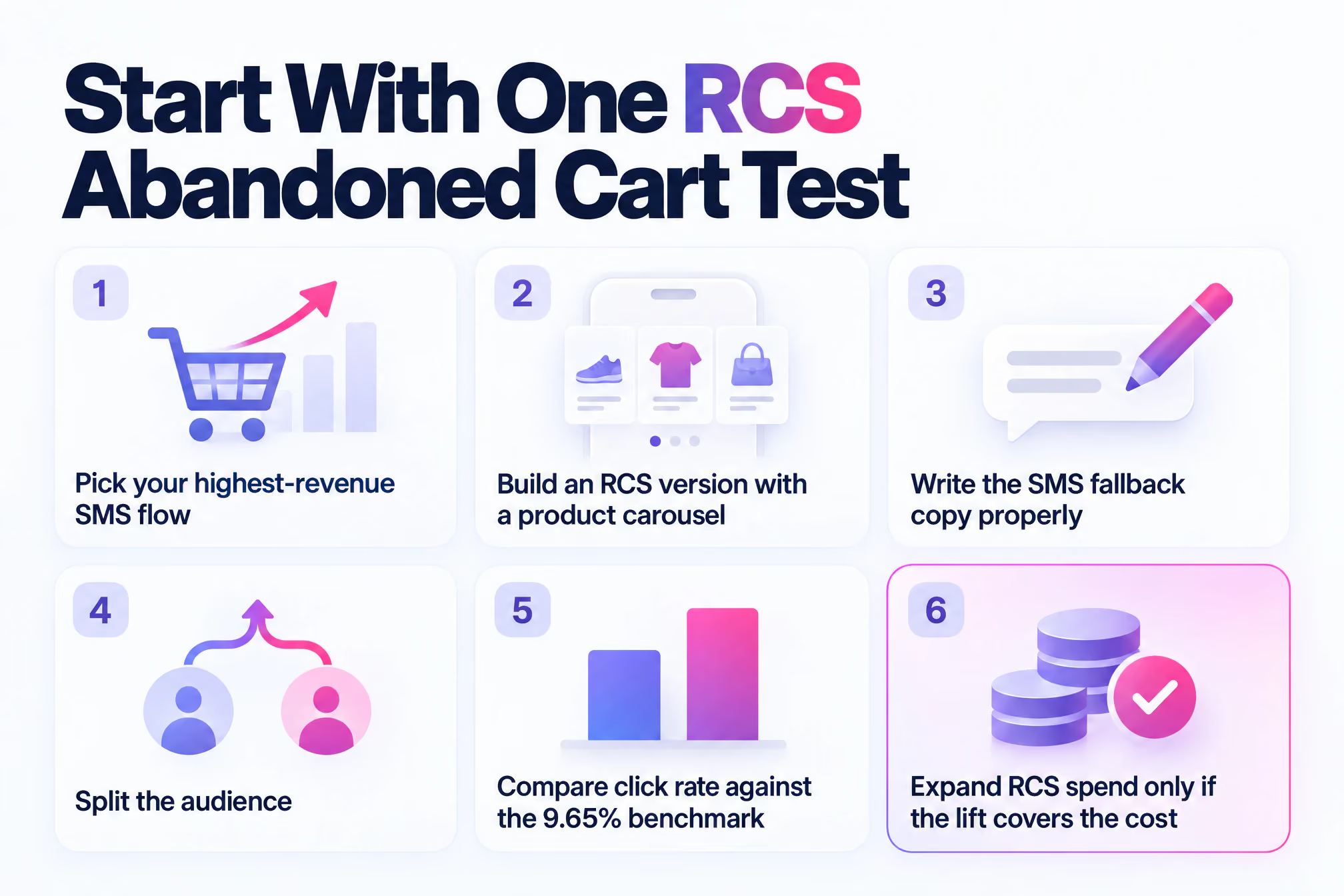
Testing on a flow that already earns gives a clear revenue baseline, so any RCS uplift shows up quickly and honestly.
- Pick your highest-revenue SMS flow. For most stores, that's abandoned cart.
- Build an RCS version in Klaviyo or Braze with a product carousel of the abandoned items and a short button.
- Write the SMS fallback copy properly, because part of the audience will only see that.
- Split the audience between the RCS version and your plain SMS version.
- Compare click rate against the plain SMS and against Klaviyo's 9.65% "good" benchmark for SMS flows.
- Expand RCS spend only if the lift in revenue per recipient covers the extra cost.
If you'd rather have specialists build it, Enchant runs SMS, WhatsApp and multichannel CRM programmes in Klaviyo and Braze. Talk to us about WhatsApp marketing management or a wider multichannel build.