.svg)
Klaviyo SMS: When to Add It, What It Costs, Real Performance Data
.avif)
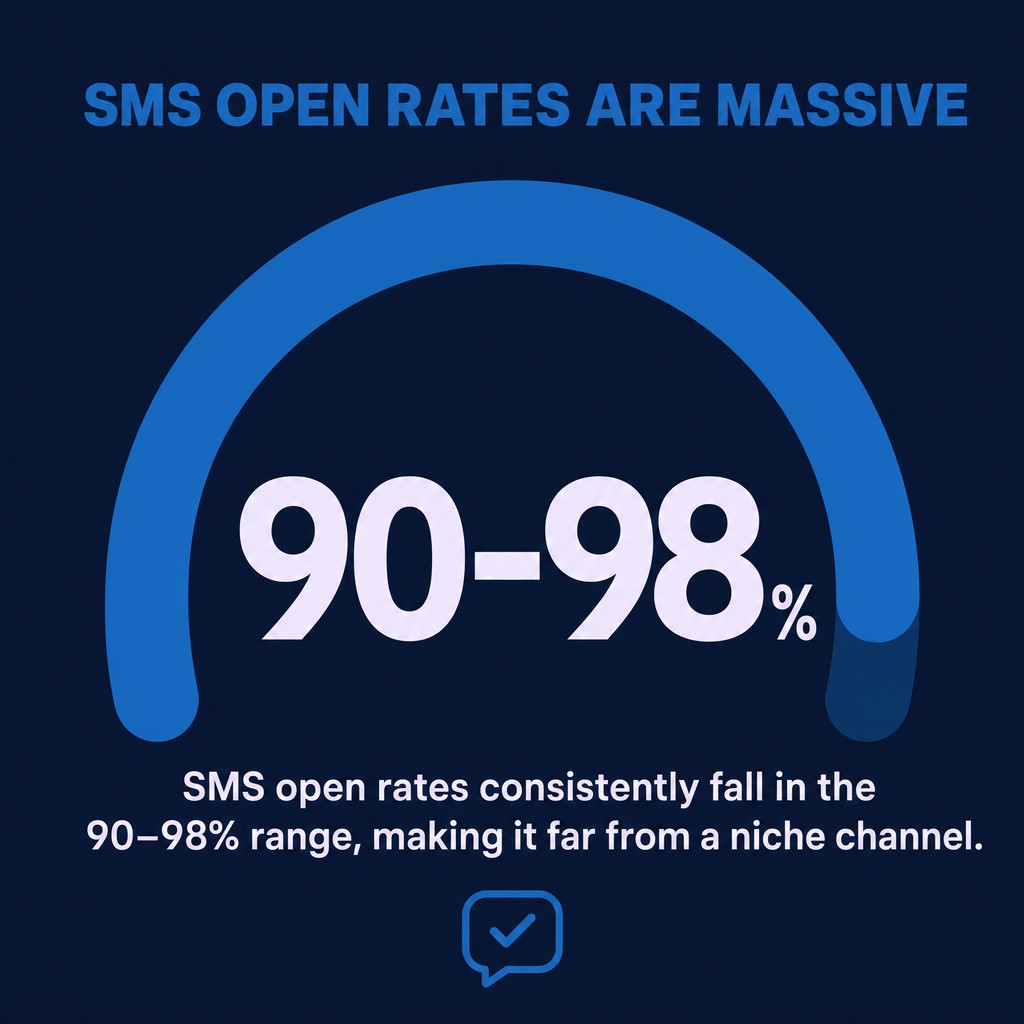
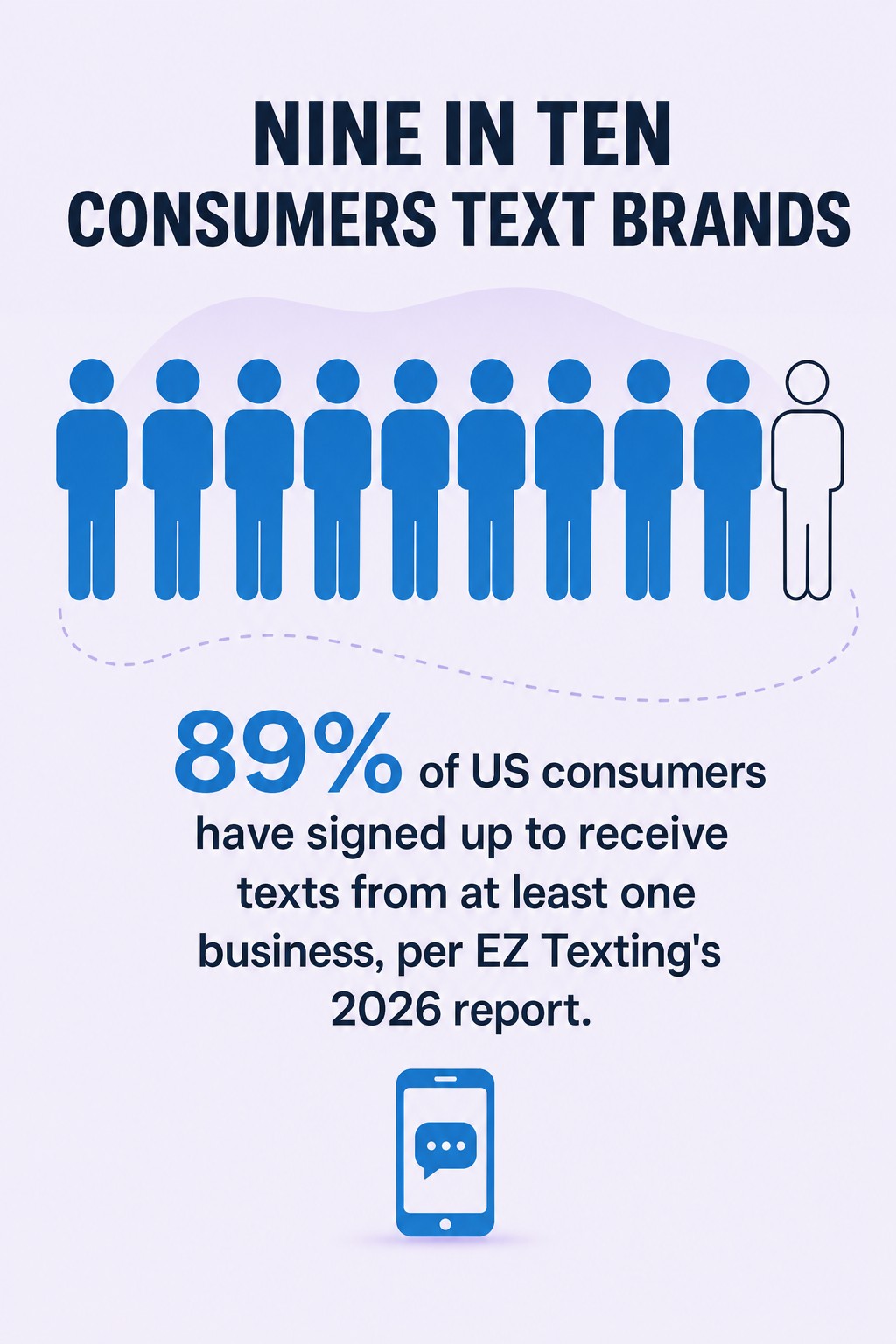
Klaviyo SMS is a native SMS marketing channel built into the Klaviyo platform, available across 22 countries including the US, Canada, and the UK, with benchmarks data drawn from over 183,000 customers according to Klaviyo's 2026 SMS benchmarks. SMS open rates consistently fall in the 90–98% range, and EZ Texting's 2026 consumer texting behaviour report found that 89% of US consumers have signed up to receive texts from at least one business. That is not a niche channel. That is mass adoption.
Most brands we talk to are sitting on Klaviyo for email and treating SMS as an afterthought. A separate tool, a separate budget conversation, a separate strategy. That is a mistake. When SMS lives inside the same platform as your email flows, your segmentation data, and your automation triggers, the whole thing gets sharper. This guide covers what Klaviyo SMS actually does, how the credit model works, which number types to use, what compliance looks like in practice, and where the real performance gains come from.
What Klaviyo SMS Is and Why It Sits Inside the Platform
Klaviyo SMS is a native text messaging channel inside the Klaviyo platform, letting brands send SMS campaigns, MMS messages, and automated flows from the same interface they use for email, using the same audience data and segmentation logic throughout.
This is the bit that matters most. SMS marketing on a standalone tool means your cart abandonment text has no idea what your email automation already sent that customer. Inside Klaviyo, the two channels share a single profile. One subscriber record. One purchase history. One set of behavioural triggers. That means your SMS flows can pick up exactly where an email flow left off, or skip a channel entirely based on engagement data.
As a Klaviyo Master Platinum Partner, we have seen what happens when brands run SMS and email in silos versus in a single platform. The omnichannel version wins. Not marginally. Substantially.
According to Klaviyo's Wikipedia entry, the company posted revenue of $1.234 billion in full-year 2025 and trades on the NYSE as KVYO. More than 169,000 companies use the platform for email marketing, SMS marketing, and audience segmentation per Omnisend's pricing analysis. Those numbers reflect why SMS inside Klaviyo is worth taking seriously as a channel, not bolting on later.
Key Klaviyo SMS Features: Campaigns, Automation, MMS, and AI
Klaviyo SMS includes SMS campaigns, automated flows, MMS support, audience segmentation, personalisation tools, opt-in management, and AI-powered send-time optimisation, all accessible from the same dashboard used for email marketing.
SMS Campaigns and MMS
SMS campaigns in Klaviyo work the same way email campaigns do. You pick a segment, write your message, schedule or send immediately. Standard SMS messages cap at 160 characters per Klaviyo's official SMS documentation. Go over that and you are sending a multi-part message, which costs more per send.
MMS changes the format entirely. Images, GIFs, short video. The character limit expands and the visual impact goes up. For product launches, seasonal campaigns, and anything where seeing beats reading, MMS is the right call. Worth noting: MMS costs more credits than a standard SMS, so factor that into your planning.
Automation Flows and Triggers
This is where Klaviyo SMS earns its place. Automated flows trigger from specific events: a cart abandonment, a browse abandonment, a post-purchase action, a price drop on a wishlisted item. Every one of those triggers can fire an SMS, an email, or both, depending on what the subscriber profile says about that person's engagement habits.
Klaviyo's channel affinity feature reads historical engagement data to decide which channel each subscriber responds to best. That is the kind of personalisation that goes well beyond a first-name merge tag. It is behavioural routing at the profile level.
AI Features: K:AI and Send-Time Optimisation
Klaviyo's AI layer, branded as K:AI, covers SMS copy generation, send-time optimisation, and list growth recommendations. Send-time optimisation calculates the best delivery window per subscriber based on historical open behaviour. That is genuinely useful for SMS, where timing matters more than in email. A text arriving at 2am is not just ignored. It is actively annoying.
AI is a force multiplier here, not a replacement for strategy. Use it to optimise the timing and test the copy. The segmentation logic and the flow architecture still need a human with a plan.
How to Set Up SMS in Klaviyo: The Practical Steps
Setting up Klaviyo SMS requires enabling the SMS channel in your account, choosing and registering a sending number, collecting subscriber consent via opt-in methods, and configuring quiet hours and compliance settings before sending a single message.
The order of those steps matters. A lot of brands get excited about the channel and try to send before they have sorted the compliance side. That is a fast way to get your messages blocked or your number suspended. Do it in the right order.
Step 1: Enable SMS in Your Klaviyo Account
Go to your Klaviyo account settings and navigate to the SMS section. Select your sending country. This determines which number types are available to you and which compliance rules apply. The US, UK, and Canada each have different frameworks. More on that in the compliance section.
Step 2: Choose and Register Your Sending Number
Klaviyo supports four number types: toll-free numbers, short codes, long codes (10DLC in the US), and branded sender IDs. Each has different registration requirements, throughput limits, and country availability. Pick the wrong one and you will hit sending bottlenecks at scale. The right choice depends on your volume and geography. Full breakdown in the dedicated section below.
Step 3: Build Your Opt-In Collection
Klaviyo SMS supports multiple opt-in methods: sign-up forms, subscribe keywords (text JOIN to a number), and checkout opt-in. You can also configure double opt-in to send a confirmation text before adding someone to your active SMS list. Double opt-in adds a step but produces a cleaner, more engaged subscriber list. Worth the friction.
Set up your opt-in flows before you start driving sign-ups. The welcome SMS is the highest-engagement message you will ever send. Have it ready.
Step 4: Configure Compliance Settings
Set quiet hours. In the US, TCPA guidelines cover permitted sending windows. In practice, 8am to 9pm local time is the standard safe zone. Klaviyo enforces quiet hours automatically once configured. Also set your opt-out keyword handling. STOP must always unsubscribe the contact. That is non-negotiable and built into the platform.
For a full walkthrough of how Klaviyo's attribution model connects to your SMS performance data, the guide on Klaviyo's attribution window tool is worth reading alongside this one.
Klaviyo SMS Sending Numbers: Toll-Free, Short Code, Long Code, Branded Sender ID
Klaviyo SMS supports four sending number types: toll-free numbers, short codes, long codes (10DLC), and branded sender IDs, each with distinct registration requirements, throughput capacities, and country availability that affect deliverability and cost at scale.
Choosing the wrong number type is one of the most common setup mistakes we see. Brands pick the easiest path to get started, then hit walls when they try to scale.
Number TypeBest ForRegistration RequiredKey LimitationToll-Free NumberSmall to mid-volume US and Canada sendsVerification requiredLower throughput than short codeShort CodeHigh-volume campaigns and promotionsFull carrier approval (weeks)Higher cost, longer setupLong Code (10DLC)Conversational and local-feel messaging10DLC campaign registrationMust register or traffic gets blockedBranded Sender IDUK and international marketsCountry-specific requirementsNo two-way messaging
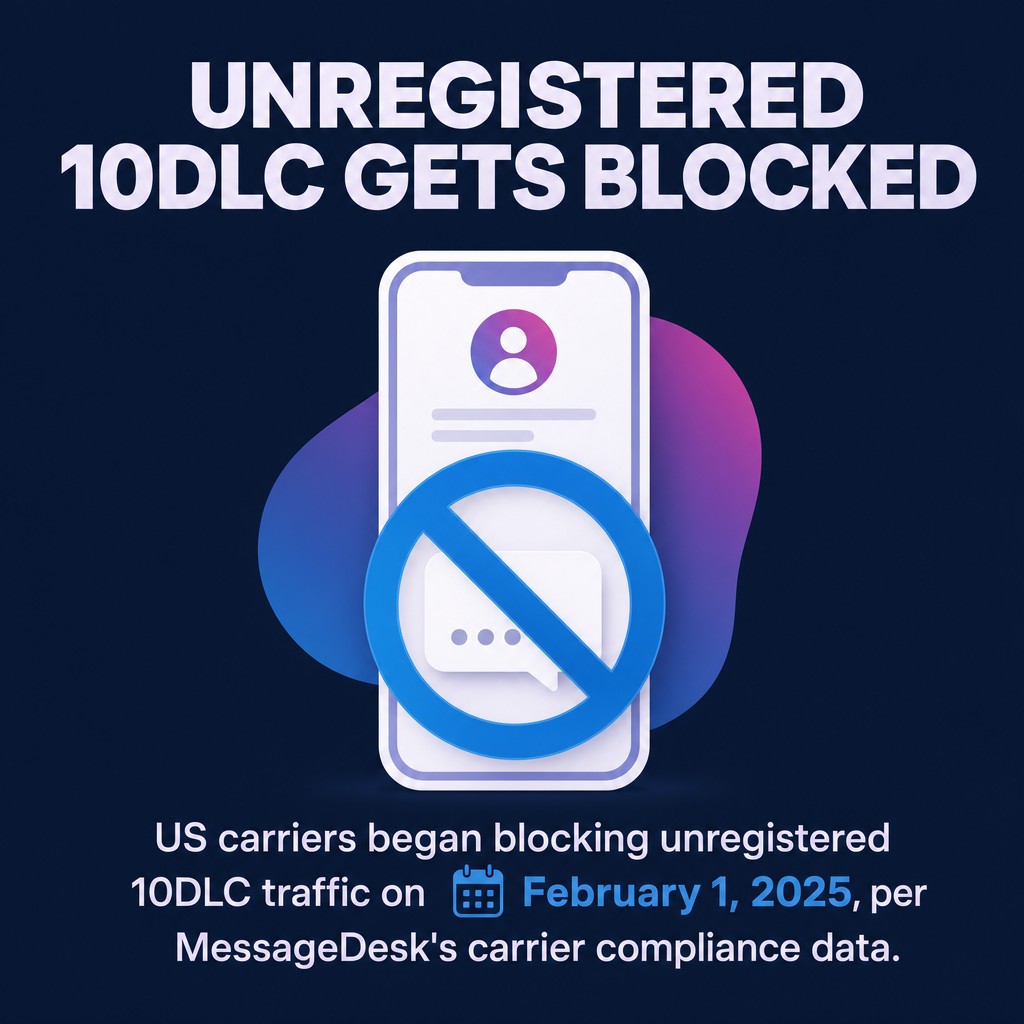
The 10DLC registration point is not optional. MessageDesk's carrier compliance data confirms that US carriers began blocking unregistered 10DLC traffic on February 1, 2025. If you are sending on a long code in the US without a registered campaign, your messages are not reaching anyone.
Branded sender IDs are the standard format for UK sends. They display your brand name instead of a number, which helps recognition but removes two-way messaging capability. For one-directional promotional SMS campaigns, that trade-off is usually fine.
Countries Where Klaviyo SMS Is Available
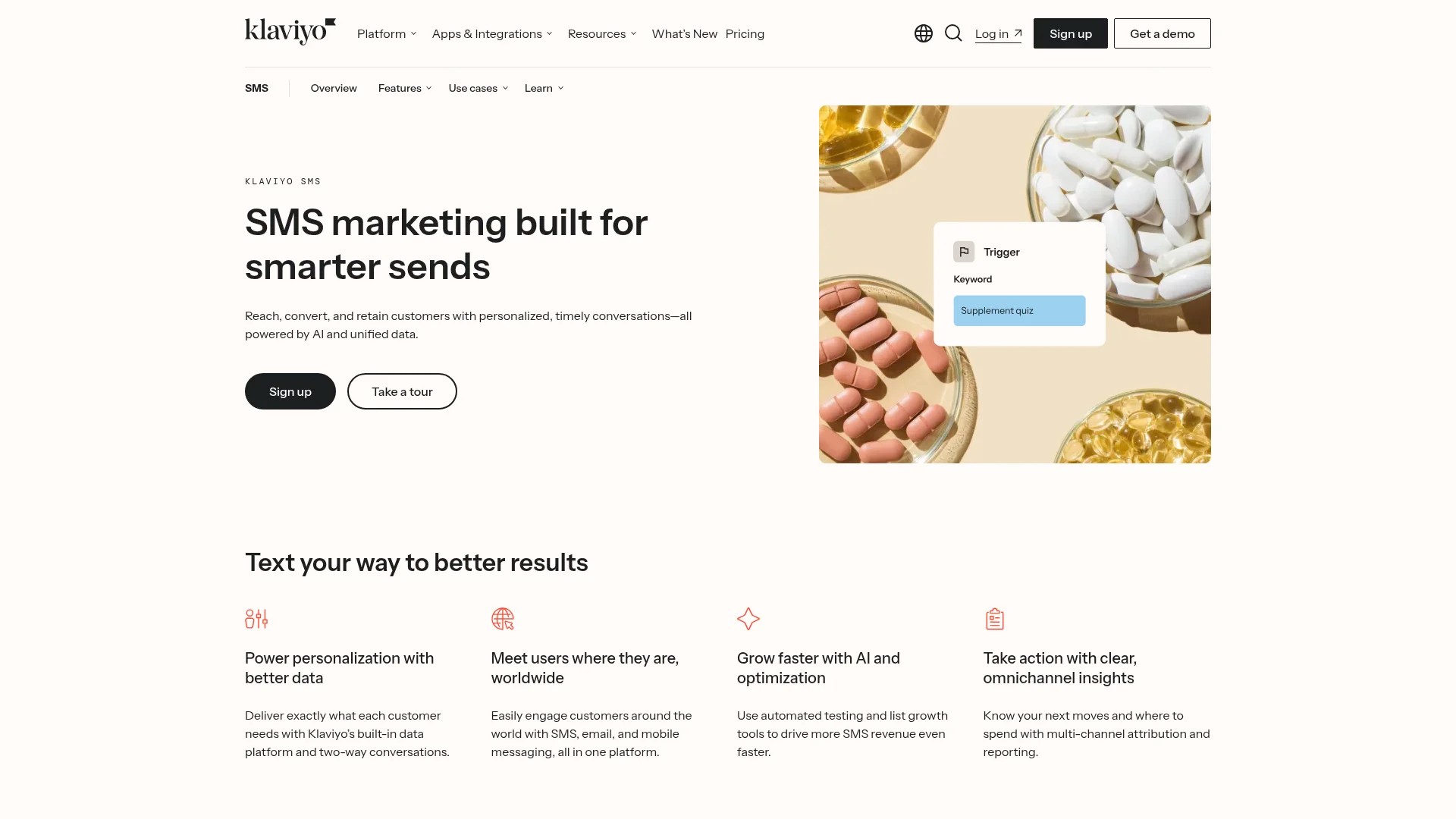
Klaviyo SMS is available in 22 countries, including the US, Canada, and the UK, with country-specific number types, compliance rules, and sending restrictions that vary significantly across markets according to Klaviyo's official SMS product page.
Country availability is not just a tick-box. Each market has different number type support, different opt-in requirements, and different carrier filtering behaviour. The US runs on toll-free numbers, short codes, and 10DLC long codes. The UK uses branded sender IDs as standard. Other markets may have more limited options.
If you are running SMS marketing across multiple geographies, check the available number types per country before you commit to a strategy. A branded sender ID that works in the UK will not map directly onto a US campaign. They are separate setups with separate compliance frameworks. Our SMS marketing service covers multi-market SMS strategy for brands operating across regions.
Klaviyo SMS Pricing: How the Credit Model Works
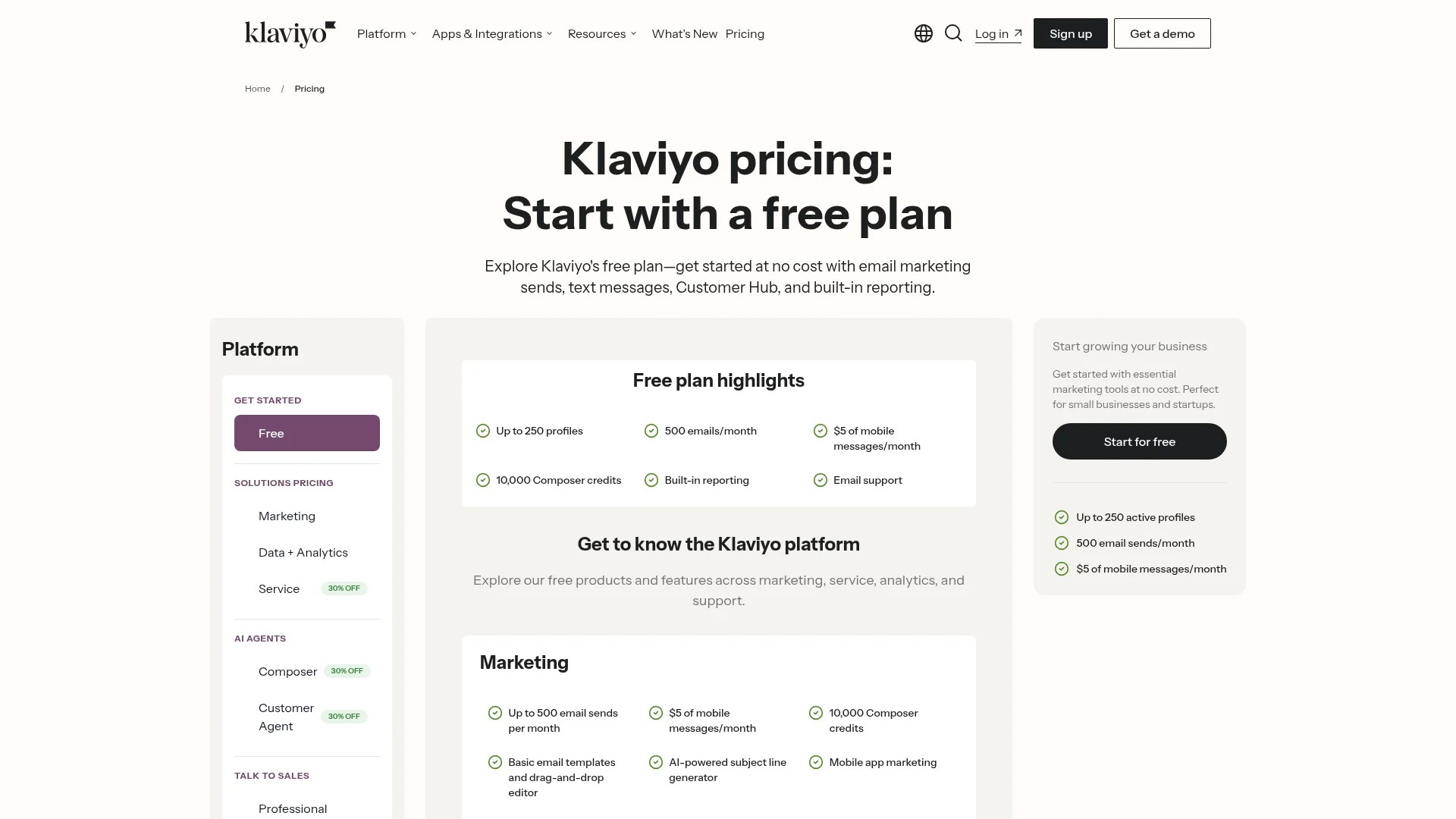
Klaviyo has transitioned to a per-message dollar-rate model for SMS, replacing the older credit system, with the free plan including $5 of mobile messages per month and paid email plans starting at $20/month for 251–500 active profiles according to Klaviyo's pricing page.
The old credit system is where most of the confusion lives. People see guides referencing credits and assume that is still current. It is not. Klaviyo's SMS documentation confirms the transition to per-message dollar rates. Under the prior credit model, a standard US SMS cost approximately 1 credit, equivalent to roughly $0.01 to $0.015, per MoEngage's Klaviyo pricing breakdown. The new model prices messages directly in dollars, which is actually easier to plan around.
What You Pay at Different Scales
The free plan gives you $5 of mobile messages per month. That covers a small list of SMS sends or a handful of MMS messages. It is enough to test the channel, not enough to run a real programme.
The email plan starts at $20/month for 251 to 500 active profiles per Email Tool Tester's Klaviyo pricing review. At 50,000 active profiles, the email-only plan runs approximately $720/month according to CheckThat's Klaviyo pricing data. SMS credits are purchased separately on top of the base plan.
MMS costs more per message than standard SMS. International sends cost more than domestic US sends. Plan your budget around your actual send volume and message mix, not a theoretical credit allowance.
SMS Automation and Flows in Klaviyo
Klaviyo SMS flows are automated message sequences triggered by subscriber behaviour, with cart abandonment, browse abandonment, post-purchase, and welcome series flows among the highest-performing automations available on the platform.
The performance data on SMS automation versus broadcast campaigns is not close. Automated flows outperform one-time sends because they reach people at the exact moment of relevant intent. A cart abandonment SMS sent 30 minutes after a session ends is catching someone who was already close to buying. That is the whole point.
Cart Abandonment and Browse Abandonment
Cart abandonment flows are the first SMS automation most brands set up, and for good reason. The subscriber left with intent. A short, direct SMS with a link back to their cart is exactly the right message at exactly the right time.
Browse abandonment is slightly softer. The subscriber looked but did not add to cart. An SMS here needs to be lighter in tone. More "we noticed you were looking at this" than "you forgot something." The personalisation angle matters. Use the product name. Pull in a dynamic image via MMS if the category justifies it.
Post-Purchase and Welcome Flows
Post-purchase SMS flows handle the moments after conversion: order confirmation, shipping updates, review requests, replenishment reminders. These messages have extremely high open rates because subscribers are already expecting communication.
The welcome flow is where most brands underinvest. Your welcome SMS is the first text you send to a new subscriber. It sets the tone for the entire relationship. At Enchant, our default multi-channel welcome structure spans email and SMS across the first seven days, with each message serving a distinct purpose. Brand introduction, first purchase offer, community or loyalty programme invite. Each channel carries a different part of that sequence based on where the subscriber engages.
For more on how to structure automated sequences across channels, the email marketing automation campaigns guide covers the underlying flow logic that applies equally to SMS.
Klaviyo SMS Compliance: TCPA, CASL, GDPR, and Quiet Hours
Klaviyo SMS compliance requires adherence to TCPA rules in the US, CASL in Canada, and GDPR in the UK and EU, covering explicit opt-in consent, mandatory opt-out handling, quiet hours enforcement, and country-specific data processing requirements for every SMS programme.
SMS compliance is not optional and it is not a formality. Get it wrong in the US and you are looking at TCPA litigation. Get it wrong in the UK and GDPR applies. This is one area where "we'll sort it later" is genuinely dangerous.
TCPA (United States)
The Telephone Consumer Protection Act requires explicit written consent before sending any marketing SMS to a US consumer. That means a clear opt-in, documented. Not a pre-ticked box. Not an implied consent from a previous purchase. Explicit, affirmative, recorded consent.
Quiet hours under TCPA convention run to 8am to 9pm local time for the recipient. Klaviyo enforces this automatically once your quiet hours settings are configured. Every message must include an easy opt-out path. STOP keywords must unsubscribe the contact immediately.
CASL (Canada)
Canada's Anti-Spam Legislation requires express or implied consent and mandates that every commercial message includes sender identification and an unsubscribe mechanism. The implied consent window is time-limited, so maintaining accurate consent records is important for Canadian SMS lists.
GDPR (UK and EU)
GDPR requires a lawful basis for processing personal data, and for SMS marketing that lawful basis is almost always consent. That consent must be freely given, specific, informed, and unambiguous. Data retention policies apply to SMS subscriber records just as they do to email lists. As a Data and Marketing Association partner, compliance is built into how we approach every SMS programme we run.
For retailers specifically, the intersection of GDPR and consent management is covered in detail in our GDPR and email marketing guide for retailers, which maps directly onto SMS consent principles.
Segmentation and SMS List Hygiene
Compliance and segmentation are linked. Sending SMS to unengaged subscribers is not just expensive. It drives opt-outs and spam complaints that damage your sending reputation. Segment your SMS list by engagement recency. Suppress subscribers who have not opened or clicked in 90 days. Keep the list clean and the compliance risk stays low.
SMS Segmentation and Personalisation in Klaviyo
Klaviyo SMS segmentation uses the same unified customer profiles as email, enabling brands to filter and target SMS subscribers by purchase history, browsing behaviour, location, engagement recency, predicted lifetime value, and custom properties.
Personalisation in SMS is not about using someone's first name. That is table stakes. Real personalisation means sending a cart abandonment text that names the specific product left behind. It means an MMS that shows the actual item with the actual price. It means a post-purchase flow that references what they bought and suggests the logical next purchase based on their history.
Klaviyo's segmentation logic lets you build conditions across any data point in the profile. SMS subscribers who have bought twice but never from a specific category. Subscribers in a specific location whose last purchase was over 90 days ago. Subscribers whose predicted lifetime value puts them in the top 20% of your customer base. All of that is accessible inside the same segmentation builder you use for email.
The channel affinity feature takes it further. Rather than manually deciding who gets an email versus an SMS, Klaviyo reads each subscriber's engagement pattern and routes messages accordingly. Subscribers who consistently open SMS but ignore email get SMS. The reverse is also true. That kind of routing improves overall programme performance because you are reaching people on the channel where they actually engage.
Sending the same SMS to your entire list is exactly as flawed as sending the same email to your entire list. Segmentation is non-negotiable. The tools are there. Use them.
Klaviyo SMS in Your Omnichannel Strategy: Making It Work
Klaviyo SMS performs at its highest when it operates as one channel inside a connected omnichannel lifecycle, not as a standalone broadcast tool, using shared profile data, coordinated flow timing, and suppression logic to avoid messaging fatigue across email and SMS simultaneously.
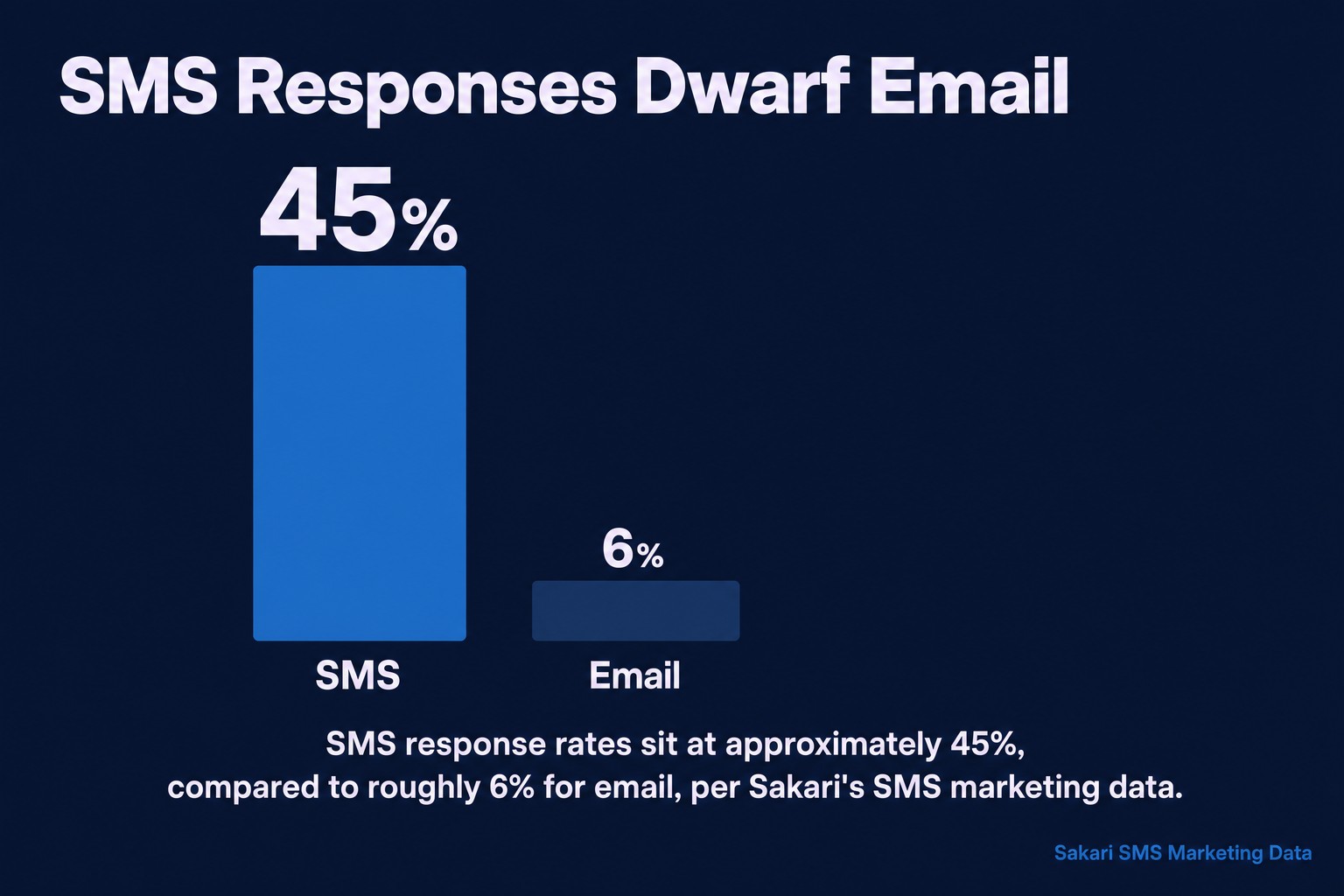
The numbers make the case plainly. Sakari's SMS marketing data puts SMS response rates at approximately 45%, compared to roughly 6% for email. That gap is significant, but it also reflects something important: SMS subscribers are a more deliberate audience. Someone who opts into your texts has made a conscious choice. Treat that with respect.
The practical omnichannel setup in Klaviyo involves coordinating email and SMS flows so they complement each other rather than repeat the same message on two channels. Your cart abandonment sequence might start with an email at one hour, then fire an SMS at three hours if the email goes unopened. That logic is built in Klaviyo's flow conditions. It is not complicated. It just requires thinking through the full journey before building.
A/B testing applies to SMS just as it does to email. Test message length. Test the presence or absence of a discount code. Test MMS versus plain text for the same campaign. Klaviyo's reporting dashboard shows revenue attributed to each SMS campaign and flow, so you can see what is actually driving results rather than guessing.
If you are building out your full automation strategy across channels, the post on triggered messaging strategies for engagement covers the underlying timing and trigger logic that applies directly to how SMS flows are structured in Klaviyo.
Adding Klaviyo SMS to Your Programme: Where to Start
Klaviyo SMS is a high-performing channel when it runs inside a well-structured omnichannel programme, with the right number type registered, compliance settings configured correctly, and flows built to work alongside email automation rather than independently of it.
The performance data is clear. Open rates in the 90–98% range. Response rates at approximately 45%. Nearly nine in ten US consumers already opted into at least one business's texts. The channel is mature and the audience is there.
The brands that get poor results from SMS marketing are almost always the ones who treated it as a broadcast channel. Send a discount to everyone, measure nothing, repeat. That is not SMS marketing. That is spam with a smaller character limit.
Done properly, Klaviyo SMS extends your lifecycle programme into a genuinely omnichannel operation. Email handles the longer, richer messages. SMS handles the high-urgency, time-sensitive moments. MMS handles the visual impact plays. Each channel does what it is best at, to the right audience, at the right moment, using shared data that makes every message smarter.
If you want help building an SMS strategy that integrates properly with your existing Klaviyo email programme, our SMS marketing service covers channel strategy, flow builds, compliance setup, and ongoing optimisation. Or if you are earlier in your Klaviyo journey, the Klaviyo versus Mailchimp platform comparison covers the broader platform decision before you commit to the full channel stack.