.svg)
10 Abandoned Cart Email Sequences That Recovered Real Revenue
.avif)
Cart abandonment emails earn 44.76% open rates and recover over 10% of lost sales. That's better than most promotional campaigns.
But most brands still get them wrong.
They send one generic reminder. Maybe add a discount. Then wonder why customers don't come back.
We've built cart recovery sequences for brands like Bohomoon (1000%+ email revenue increase) and Self Portrait (390% revenue increase from email marketing). The sequences that actually recover revenue follow specific patterns, use multi-touch timing, and understand why people abandon in the first place.
This guide breaks down ten real cart recovery sequences. You'll see the exact subject lines, email timing, and conversion tactics that work. Plus the strategic framework behind each one, so you can adapt them to your brand.
Why Shopping Cart Abandonment Happens (And Why It Matters)
Cart abandonment sits at 70.22% across ecommerce, according to Baymard Institute's synthesis of 50 different studies. Seven out of ten people who add products to cart never complete checkout.
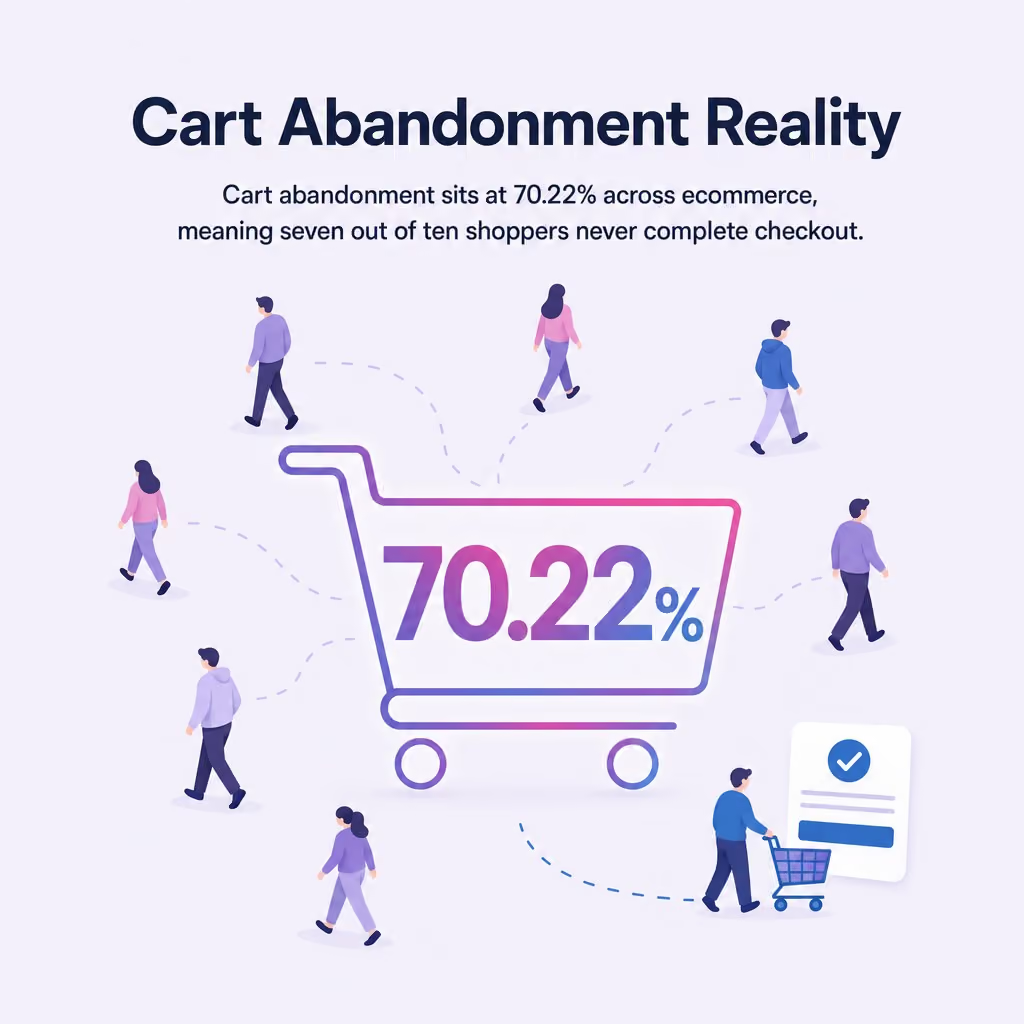
That's not a small leak. That's most of your potential revenue walking away.
The Four Main Reasons People Abandon Carts
Contentsquare reports that 39–48% of cart abandonments are due to extra costs being too high. Unexpected shipping fees kill more sales than anything else.

The second reason matters just as much. FullStory notes that almost a quarter of abandoned carts occur due to forced account creation. People want to buy, not sign up for another account.
Payment friction comes third. Limited payment options, complicated forms, security concerns. Anything that adds friction between "I want this" and "I own this" increases abandonment.
The fourth reason is simpler: they're browsing. Not every cart abandonment is a lost sale. Some people use carts as wishlists. Others compare prices across sites. A percentage will never convert, no matter what you send.
Why Email Remains the Primary Recovery Channel
Email works because it's owned, personal, and persistent.
You can't retarget someone who uses an ad blocker. You can't guarantee they'll see your social post. But if you have their email, you can reach them directly.
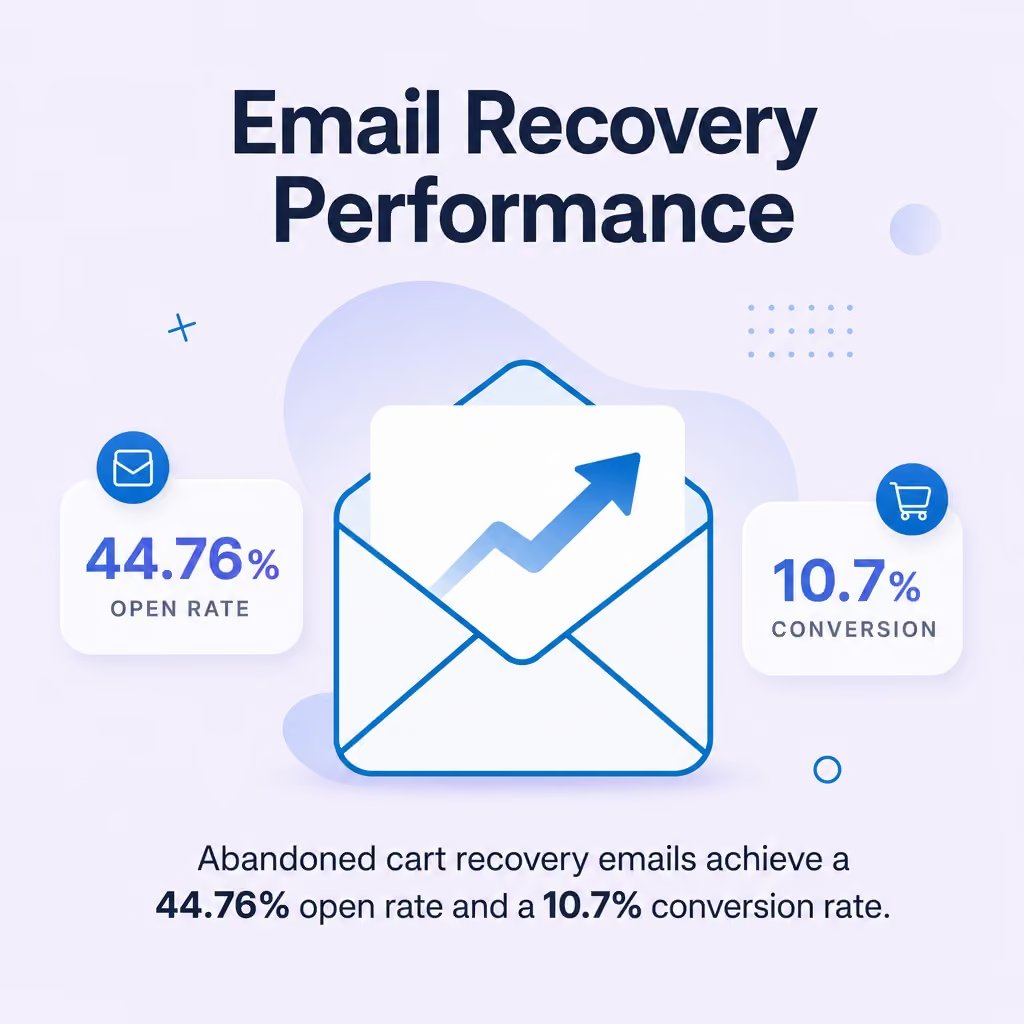
The channel economics matter too. Mailmend reports that abandoned cart recovery emails achieve a 44.76% open rate and a 10.7% conversion rate. Compare that to cold email (under 20% open) or display ads (under 1% click-through).
Our email marketing automation campaigns consistently show cart recovery as one of the highest-ROI flows you can build.
The Three-Email Framework Every Brand Should Start With
Most effective cart recovery sequences use three emails. Not one, not five. Three targeted messages over 72 hours.
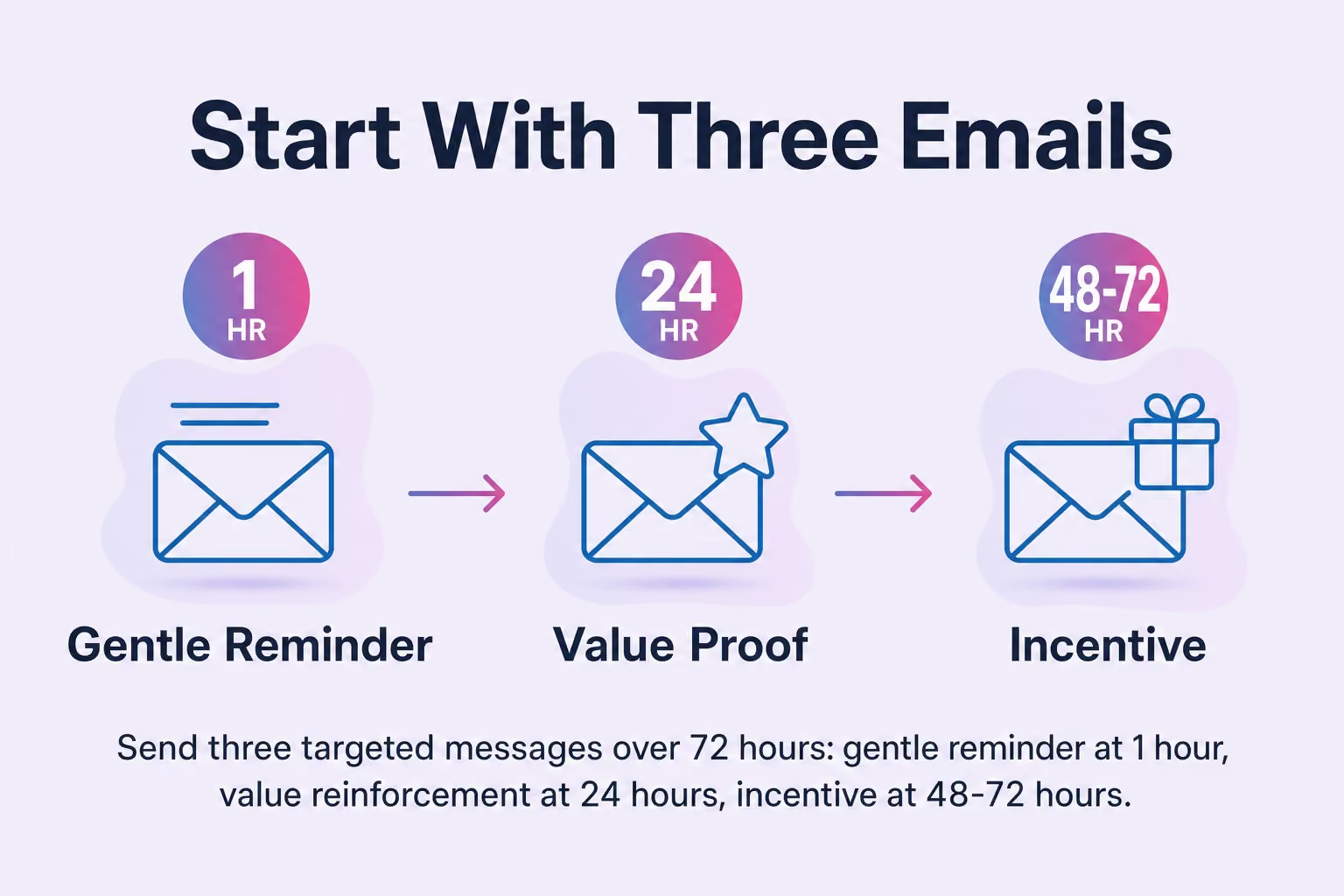
Why three? Because Growth Suite's framework shows that recovery rates drop to just 5% after 72 hours. After three days, you're chasing diminishing returns.

Email One: The Gentle Reminder (1 Hour After Abandonment)
The first email assumes good intent. Maybe they got distracted. Maybe the phone rang. Give them an easy path back without pressure.
Timing: 1 hour after cart abandonment
Subject Line: "You left something behind"
Key Elements:
- Product image with clear CTA button
- No discount or incentive yet
- Simple reminder copy
- Single-click return to cart
- Mobile-optimised layout
This email should feel helpful, not pushy. You're solving a problem (they forgot), not selling.
Email Two: The Value Reinforcement (24 Hours After Abandonment)
The second email reminds them why they wanted the product. Add social proof, highlight features, remove objections.
Timing: 24 hours after cart abandonment
Subject Line: "Still thinking about [Product Name]?"
Key Elements:
- Customer reviews or ratings
- Product benefits restated
- Free shipping reminder (if applicable)
- Return policy highlighted
- Multiple product images
This email rebuilds confidence. It answers the questions they might have had when they left.
Email Three: The Incentive (48-72 Hours After Abandonment)
The final email introduces an offer. Not always a discount. Could be free shipping, a gift, extended returns.
Timing: 48-72 hours after cart abandonment
Subject Line: "Here's 10% off to complete your order"
Key Elements:
- Time-limited offer (24-48 hours)
- Clear discount or incentive
- Urgency language without being aggressive
- Easy coupon code application
- Final CTA with offer highlighted
Chase Dimond recommends that high‑consideration sequences include a stronger incentive of 10–15% off in the final email. For expensive products or longer consideration cycles, this works.
But don't lead with discounts. Train customers to abandon carts to get offers, and you've created a revenue problem.
Example 1: The Classic Reminder Sequence (Fashion Retail)
This sequence works for mid-market fashion brands selling £50-£200 items. Three emails, clean design, mobile-first.
Email One: "Your Cart Is Waiting"
Send Time: 1 hour after abandonment
Subject Line: "Your cart is waiting"
Preview Text: "Complete your order in just a few clicks"
The email opens with the product image. Large, clear, clickable. Below it, product name, size, colour, price.
Copy: "You left these items in your cart. They're still available and ready to ship."
Single CTA button: "Complete My Order"
No discount. No urgency. Just a helpful reminder with an easy path back.
Email Two: "Here's Why People Love [Product Name]"
Send Time: 24 hours after abandonment
Subject Line: "Here's why people love [Product Name]"
Preview Text: "4.8 stars from 2,000+ reviews"
This email leads with social proof. Five-star rating, review count, two short customer quotes.
Then product benefits: "Made from organic cotton. Machine washable. Free returns within 30 days."
Another product image, different angle. Shows the item being worn.
CTA: "Complete Your Order"
Still no discount. You're reinforcing value, not dropping price.
Email Three: "Complete Your Order + Get Free Shipping"
Send Time: 48 hours after abandonment
Subject Line: "Complete your order + get free shipping"
Preview Text: "Offer ends in 24 hours"
The offer sits at the top: "Free Shipping on Your Order (24 Hours Only)"
Product image again. Same clear CTA.
Copy: "We've added free shipping to your order. Use code FREESHIP at checkout. Expires tomorrow at midnight."
Urgency without pressure. Time limit without manipulation.
This sequence typically recovers 8-12% of abandoned carts for fashion retail. Your mileage varies based on average order value, brand strength, and product category.
Example 2: The High-Consideration Sequence (Luxury Goods)
Luxury purchases take longer. People don't impulse-buy £500 handbags. This sequence extends to five emails over seven days.
Email One: "Your Selection Is Reserved"
Send Time: 2 hours after abandonment
Subject Line: "Your selection is reserved"
Notice the language shift. Not "cart", but "selection". Not "waiting", but "reserved".
The email feels premium. Generous white space. Large product photography. Minimal copy.
"We've reserved your selection for 48 hours. Complete your purchase at your convenience."
CTA: "View My Selection"
Email Two: "Introducing [Product Name]"
Send Time: 24 hours after abandonment
Subject Line: "Introducing [Product Name]"
This email tells the product story. Materials, craftsmanship, design inspiration.
Three high-quality images. Detail shots. Lifestyle context.
Copy focuses on exclusivity and quality, not price.
CTA: "Complete Your Purchase"
Email Three: "Styled By Our Creative Director"
Send Time: 48 hours after abandonment
Subject Line: "Styled by our Creative Director"
Styling suggestions. How to wear it, what to pair it with. More aspirational imagery.
This email builds desire, not urgency.
CTA: "Shop The Look"
Email Four: "Questions About Your Selection?"
Send Time: 96 hours (4 days) after abandonment
Subject Line: "Questions about your selection?"
This email invites conversation. "Our team is here to help. Reply to this email or call us at [number]."
Include care instructions, warranty details, return policy.
CTA: "Contact Our Team"
Email Five: "Complimentary Gift With Your Purchase"
Send Time: 7 days after abandonment
Subject Line: "Complimentary gift with your purchase"
The final email offers something. Not a discount (luxury brands rarely discount). A gift, free monogramming, priority shipping.
"Complete your purchase in the next 48 hours and receive [premium gift]."
This sequence works because it matches the consideration cycle. You don't rush luxury buyers. You build confidence.
Example 3: The Browse-Abandonment Hybrid (Home Goods)
Not everyone abandons at checkout. Some leave after viewing products. This sequence catches both.
Browse Abandonment Email: "You Were Looking At These"
Send Time: 4 hours after browsing session
Subject Line: "You were looking at these"
This email shows the products they viewed, not carted. Three to five items in a grid.
Copy: "We noticed you were browsing. Here's what caught your eye."
Each product has its own CTA: "View Details"
This captures people who haven't decided yet. It keeps your brand top-of-mind without requiring a cart commitment.
Cart Abandonment Email One: "Your Basket Is Ready"
Send Time: 1 hour after cart abandonment
(Same structure as Example 1, Email One)
The difference: This email acknowledges they already browsed. "We've saved the items you added to your basket."
Cart Abandonment Email Two: "Complete The Look"
Send Time: 24 hours after cart abandonment
Subject Line: "Complete the look"
This email recommends complementary products. They added a sofa? Show cushions, throws, side tables.
Product recommendations based on cart contents. "Customers who bought [item] also loved these."
CTA for cart: "Complete My Order"
CTAs for recommendations: "Add To Basket"
Cart Abandonment Email Three: "£50 Off Orders Over £500"
Send Time: 48 hours after cart abandonment
Subject Line: "£50 off orders over £500"
Threshold discount. Encourages adding more items, not just completing the existing cart.
This works well for home goods because people often need multiple items. One discount code increases average order value while recovering the cart.
This hybrid approach catches people earlier in the journey. It turns browsers into cart-creators, then cart-creators into buyers.
Subject Line Strategies That Actually Get Opens
Subject lines determine whether your cart recovery email gets read. Stripo emphasizes that abandoned cart emails have open rates between 45–50%, but only if the subject line works.
Your subject line faces two challenges: standing out in a crowded inbox and overcoming skepticism about marketing emails.
The Curiosity Gap (Use Sparingly)
"You left something behind" works because it creates mild curiosity without being manipulative.
"Did you forget something?" works less well. It sounds accusatory.
"Your items are waiting" splits the difference. Neutral, clear, mildly curious.
Test curiosity-based subject lines against your control. They work for some brands, not others. Depends on your audience and how many marketing emails they get.
The Personalised Subject Line
"Your [Product Name] is still available" outperforms generic alternatives.
Why? Because it's specific. The reader knows exactly what the email contains.
Dynamic product insertion in subject lines typically lifts open rates 5-15%. Worth the technical setup.
Our subject line strategies for retail and D2C brands include specific personalisation frameworks you can implement.
The Benefit-Forward Subject Line
"Free shipping on your order" tells them exactly what they get.
"Complete your order today" doesn't.
Lead with the benefit, especially in the third email when you're introducing an incentive.
"Here's 10% off your order" beats "Don't miss out" every time.
The Urgency-Without-Pressure Subject Line
"Your cart expires in 24 hours" works if you actually expire carts.
"Last chance!" feels manipulative if it's not actually the last email.
Real urgency works. Fake urgency trains people to ignore you.
If you're using urgency, make it legitimate. Limited stock, actual time-limited offers, real policy constraints.
Five High-Performing Subject Line Templates
Subject Line TypeExampleBest ForProduct-Specific"Your [Product] is waiting"Single-item cartsQuestion Format"Still interested in [Product]?"High-consideration itemsBenefit-First"Free shipping on your order"Incentive emailsSocial Proof"Join 10,000+ happy customers"Trust-building emailsNeutral Reminder"Your basket is ready"First reminder email
Test your subject lines. What works for luxury brands fails for fast fashion. What works for tech products fails for groceries.
Start with proven templates, then adapt to your brand voice and customer base.
Email Timing and Sequence Strategy
Timing determines whether your sequence feels helpful or annoying. Send too fast, you're pushy. Wait too long, they've forgotten or bought elsewhere.
The First Email: The One-Hour Window
Most brands send the first email within one hour. This matches user behaviour. People abandon carts because they got distracted, not because they decided against buying.
One hour is long enough to avoid feeling instant. Short enough to catch them while the purchase is still fresh.
Exception: High-value B2B purchases. Give them 4-6 hours. The consideration cycle is longer.
The Second Email: The 24-Hour Mark
Twenty-four hours gives them time to think, compare, research. If they haven't returned, they need more information or reassurance.
This email should add value, not just repeat the reminder.
Some brands test 12 hours vs 24 hours. Depends on purchase urgency. Event tickets? Go faster. Furniture? Give them time.
The Third Email: The 48-72 Hour Decision Point
By 48-72 hours, their purchase intent is fading. This email introduces the incentive because it's your last high-probability shot.
Recovery rates drop to just 5% after 72 hours according to Growth Suite's framework. After three days, you're mostly talking to people who won't convert.
Some brands add a fourth email at 7 days. Fine for high-value products. Wasteful for impulse purchases.
Multi-Channel Timing: When to Add SMS and Push
Email isn't the only channel. SMS and push notifications can complement your email sequence.
SMS timing: Use SMS for the first reminder only. Send 2-3 hours after cart abandonment. Keep it short: "Hi [Name], you left items in your cart. Finish checkout here: [link]"
Don't spam SMS. One message. Make it count.
Push notification timing: For app users, send a push notification 30 minutes after cart abandonment. Earlier than email, less invasive than SMS.
Push works well for frequent shoppers. They've downloaded your app, so they're engaged.
Our SMS marketing services and push notification services integrate with email sequences to create true multi-channel cart recovery.
When Not to Send: Suppression Rules
Don't send cart recovery emails to people who:
- Completed a purchase in the last 7 days
- Unsubscribed from marketing emails
- Abandoned a cart worth less than £10 (adjust based on your economics)
- Work for your company (internal email domains)
- Are already in another active flow (welcome series, win-back campaign)
Clean suppression rules prevent annoying customers and wasting sends.
Key Elements of High-Converting Cart Recovery Emails
Good cart recovery emails share specific design and copy elements. These components consistently lift conversion rates across brands.
Product Images and Details
Show what they're abandoning. Product name, image, size, colour, quantity, price.
Make the image large and clickable. Mobile users tap images more than text links.
Include multiple angles if possible. Front view, lifestyle shot, detail close-up.
For multiple-item carts, show all products. Don't make them guess what's in there.
Call-to-Action Button Design
Your CTA button is the most important element. Everything else supports getting people to click it.
Button text: "Complete My Order" beats "Buy Now" or "Checkout". It's less aggressive, more helpful.
Button colour: High contrast with the background. Test your brand's primary colour vs a contrasting colour.
Button size: Large enough for mobile taps. Minimum 44x44 pixels, bigger is better.
Button placement: Above the fold, repeated below product details, and again at the email bottom.
Multiple CTAs don't hurt conversion. People scan emails differently. Put the button where their eyes land.
Social Proof and Trust Signals
Star ratings, review counts, customer testimonials. These overcome purchase hesitation.
"4.8 stars from 3,000+ reviews" is more convincing than any copy you write.
Include trust badges: secure checkout icons, return policy summary, customer service contact.
For new products without reviews, use brand-level social proof. "Join 50,000+ happy customers" or "Featured in [Publication]".
Personalisation Beyond First Name
Dynamic content based on cart contents, browsing history, purchase behaviour.
Show different messaging for first-time visitors vs repeat customers.
Recommend products based on what they abandoned. They carted a dress? Show matching shoes.
Reference their location if relevant. "Free next-day delivery to [City]" beats generic "fast shipping".
Our email copywriting services build personalisation into every flow, not just the merge tags.
Mobile-First Design Requirements
Most cart abandonment emails get opened on mobile. Design for mobile first, desktop second.
Single-column layouts. Large tap targets. Minimal text.
Test your emails on actual devices, not just preview tools. Apple Mail renders differently than Gmail on Android.
Check dark mode. Make sure your email looks good when people have dark mode enabled.
Discount Strategy: When and How Much to Offer
Discounts recover carts. They also train customers to abandon carts to get discounts.
This tension defines your discount strategy.
When Not to Offer Discounts
Don't lead with discounts in email one or two. Give them a chance to complete the purchase at full price first.
Don't offer discounts on products you rarely discount elsewhere. Creates pricing confusion.
Don't offer discounts to repeat customers who've never needed one before. You're leaving money on the table.
When Discounts Make Sense
Email three, when recovery rates are dropping. The discount is a last-push tactic.
For first-time customers only. Repeat buyers have already proven they'll pay full price.
When abandoned carts include items that have been on sale recently. They might be waiting for another discount.
For carts with high shipping costs. Free shipping (not a discount, but perceived similarly) removes a major objection.
Discount Amounts That Work
5-10% off recovers carts without significantly impacting margin.
10-15% off for high-consideration purchases. Chase Dimond recommends that high‑consideration sequences include a stronger incentive of 10–15% off in the final email.
Free shipping is more effective than 10% off for orders under £100. Removes friction rather than reducing value.
Tiered offers work: "Spend £100, get £10 off. Spend £200, get £25 off." Increases average order value while recovering the cart.
Alternatives to Discounts
Free shipping is the obvious one. Easy to implement, doesn't devalue your brand.
Extended returns. "Complete your order today, get 60 days to return instead of 30."
Free gift with purchase. Moves old inventory, adds perceived value without discounting your core products.
Loyalty points. "Complete your order and earn double points." Works for brands with established loyalty programmes.
Our loyalty programme services integrate point-earning triggers into cart recovery sequences.
Setting Up Your Cart Recovery Sequence
Technical setup varies by platform, but the principles stay the same.
ESP and Ecommerce Platform Integration
Your email service provider needs to talk to your ecommerce platform. Klaviyo, HubSpot, and Braze all integrate with major ecommerce platforms.
Key data you need flowing: cart contents, cart value, customer email, abandonment timestamp, browsing history, customer segment (new vs returning).
Without this data, you can't personalise or trigger properly.
Trigger Setup and Testing
Define what counts as cart abandonment. Typically: user adds item to cart, provides email address (at checkout or earlier), doesn't complete purchase within X minutes.
Set your trigger timing. Email one at 1 hour, email two at 24 hours, email three at 48-72 hours.
Build in suppression logic. Don't send if they purchased, unsubscribed, or are in another flow.
Test with real carts. Add items to cart using a test email. Make sure triggers fire correctly and emails render properly.
Segmentation Rules for Better Performance
Send different sequences based on:
- Cart value (high-value gets longer, more personal sequence)
- Customer type (new vs returning customers)
- Product category (fashion vs electronics needs different messaging)
- Abandonment stage (cart vs checkout abandonment)
- Geographic location (shipping costs vary)
Start with one sequence. Add segmentation once you have baseline performance data.
Performance Tracking and Metrics
Track these metrics for each email in your sequence:
MetricWhat It Tells YouHow to Improve ItOpen RateSubject line effectivenessTest different subject line stylesClick RateEmail content and CTA performanceImprove CTA design, simplify layoutConversion RateOverall sequence effectivenessTest timing, offers, and messagingRevenue RecoveredFinancial impactFocus on higher-value cartsUnsubscribe RateWhether you're annoying peopleReduce frequency, improve relevance
Compare sequence performance against your promotional emails. Cart recovery should outperform on all metrics except reach.
Continuous Testing and Optimisation
Test one element at a time. Subject lines, send timing, discount amounts, CTA copy, email design.
Run tests for at least 7-14 days. Cart abandonment flows need volume to reach statistical significance.
Don't test too many things at once. You won't know what drove the change.
Our email automation services include ongoing testing and optimisation as standard.
Advanced Tactics: Beyond the Basic Three-Email Sequence
Once your basic sequence is performing well, test these advanced approaches.
AI-Powered Personalisation
Wisepops' research shows that AI‑powered cart recovery popups can convert up to 15.98% of abandoning visitors. Apply similar AI logic to email.
Dynamic product recommendations based on browsing and purchase history.
Personalised discount offers based on customer lifetime value and purchase probability.
Send-time optimisation that delivers each email when that specific person is most likely to open.
Our AI for email marketing services implement machine learning models that improve cart recovery performance.
Real-Time Cart Recovery
Bloomreach states that real‑time abandoned cart recovery can boost revenue by up to 20%. Send the first email within minutes, not hours.
Requires tight ESP integration and real-time data sync.
Best for high-intent, short-consideration purchases. Concert tickets, limited stock items, flash sales.
Less effective for browse-heavy categories where people expect time to think.
Video in Cart Recovery Emails
Embedded product videos increase engagement. Show the product in use, demonstrate features, add personality.
Include a fallback static image with play button for email clients that don't support video.
Keep videos under 30 seconds. You're reminding, not selling from scratch.
Post-Purchase Abandoned Cart Follow-Up
Someone abandons a cart, then buys something else from you. Don't send the abandoned cart sequence.
Instead, send a post-purchase email: "Thanks for your order! We noticed you were also interested in [abandoned items]. Here's 10% off if you'd like to add them."
Turns one purchase into two. Lower friction because they've already bought once.
Making Cart Recovery Work for Your Brand
Cart recovery isn't one-size-fits-all. Adapt these examples to your brand, products, and customers.
Start with the three-email framework. Get that working. Measure performance. Then test variations.
Focus on the fundamentals first: clear CTAs, good product images, mobile-optimised design, proper timing.
Advanced tactics matter, but basics executed well beat fancy tactics implemented poorly.
Track your recovery rate. Sendtric describes recovery emails as potentially achieving open rates up to 45% for well-executed sequences. If you're below 30%, something's broken.
Remember why people abandon carts in the first place. Your emails should address those reasons, not just remind them the cart exists.
Need help building a cart recovery sequence that fits your brand? Our team has built flows for brands across 14 industries, from luxury retail to subscription services. Explore our email automation services or get in touch to discuss your specific needs.