.svg)
Klaviyo Alternatives: The Honest Agency Comparison (2026)
.avif)
Klaviyo is a strong platform. We work with it every day as a Klaviyo Master Platinum Partner, so nobody here is going to pretend otherwise. But at 5,000 contacts, you're paying $100/month, and Klaviyo's pricing model shifted in February 2025 to bill on active profiles rather than profiles emailed, a change that caught a lot of brands off guard. If your list has grown faster than your revenue, that bill starts to sting. The right Klaviyo alternative depends entirely on your business model, your stack, and where your growth is actually headed.
Most comparison posts just list ten tools and call it done. This one is different. We've built automation workflows, migrated flows, and stress-tested segmentation logic across most of the platforms below. What follows is an honest breakdown of when each Klaviyo alternative actually makes sense, and when it doesn't.
What's Wrong with Klaviyo? The Real Reasons People Switch
Klaviyo's contact-based billing structure is the most common trigger for brands to start evaluating alternatives, but pricing is rarely the whole story.
The billing change matters. Klaviyo moved from charging based on profiles emailed to charging based on active profiles in February 2025. For brands with large lists and low engagement, that means paying for contacts you're suppressing. Klaviyo's own financials reflect how sticky the platform is: Q1 2026 revenue hit $358.0 million, representing 28% year-over-year growth, and dollar-based net revenue retention sits at 110%. That tells you most customers are spending more over time, not less.

So why do people leave? Four reasons come up consistently.
First, cost at scale. Klaviyo pricing climbs steeply as contacts grow. For early-stage DTC brands or seasonal ecommerce businesses with large dormant lists, the cost-to-revenue ratio tips in the wrong direction.
Second, complexity for smaller teams. Klaviyo's depth is a selling point for sophisticated operators, but a liability for a two-person team that just wants a welcome series and an abandoned cart flow without a steep learning curve.
Third, SMS pricing. Klaviyo bundles email and SMS marketing, but SMS credits are billed separately on top of the email plan. Brands sending high SMS volumes often find cheaper combined pricing elsewhere.
Fourth, ecommerce-only focus. Klaviyo is built for ecommerce. If you're running a SaaS product, a B2B pipeline, or a hybrid model, the CRM and marketing automation depth of platforms like ActiveCampaign or Brevo is more useful.
None of these are Klaviyo failures. They're fit problems. And fit is everything.
Quick Comparison: Best Klaviyo Alternatives at a Glance
The ten Klaviyo alternatives below cover the main use cases: ecommerce SMBs, high-volume SMS senders, budget-conscious small businesses, DTC retention specialists, and B2B automation teams.
Prices are approximate entry-level figures for small lists. All platforms use contact-based or email-volume-based pricing that scales upward. Check each platform's current pricing page before committing.
What to Look for in a Klaviyo Alternative
Before picking a platform, get clear on five things. Most brands skip this and end up migrating twice.
Ecommerce Integrations That Actually Work
Not all ecommerce integrations are equal. A native Shopify integration means real-time behavioural data: product browsed, cart abandoned, purchase made, refund requested. A third-party connector via Zapier adds latency and failure points. For ecommerce businesses running abandoned cart flows, post-purchase sequences, and browse abandonment triggers, native Shopify or WooCommerce integration is non-negotiable.
Ask specifically: does the integration pass product data, purchase history, and browsing events in real time? Or does it just sync a contact list nightly? The answer changes everything about what automation workflows you can build.
Segmentation Depth and Behavioral Triggers
Segmentation is where most cheap platforms fall flat. You need to be able to segment by purchase frequency, average order value, product category, days since last order, and RFM (recency, frequency, monetary) scores, not just by email open history. If you're sending the same email to your entire list, you're leaving money on the table. Full stop.
Check whether the platform supports dynamic segmentation (segments that update in real time as behaviour changes) versus static lists you have to manually rebuild.
Email and SMS Marketing on One Platform
Running email and SMS marketing on separate platforms means managing two sets of automation workflows, two suppression lists, two billing relationships, and two deliverability histories. That's messy. The best Klaviyo alternatives offer both channels natively, with flows that can branch across email and SMS based on subscriber preference or engagement signals.
Pricing Structure and Scalability
Contact-based billing is the norm. But the scaling curve matters enormously. A platform that's cheap at 1,000 contacts but doubles every 5,000 contacts will hurt you as you grow. Map out what you'd pay at your current list size, at double, and at 5x. Some platforms bill on emails sent rather than contacts stored, which suits brands with large lists and low send frequency.

Migration Difficulty and Flow Portability
This is the most overlooked cost of switching. Klaviyo's automation workflows, segmentation logic, and flow structures don't port cleanly to other platforms. Plan for 20-40 hours of rebuild time minimum on a mid-complexity account. If you're running 15+ active flows with conditional splits and A/B tests, factor that in before the decision. Our ESP selection service exists precisely because this decision is harder than it looks.
1. Omnisend: Best Klaviyo Alternative for Ecommerce
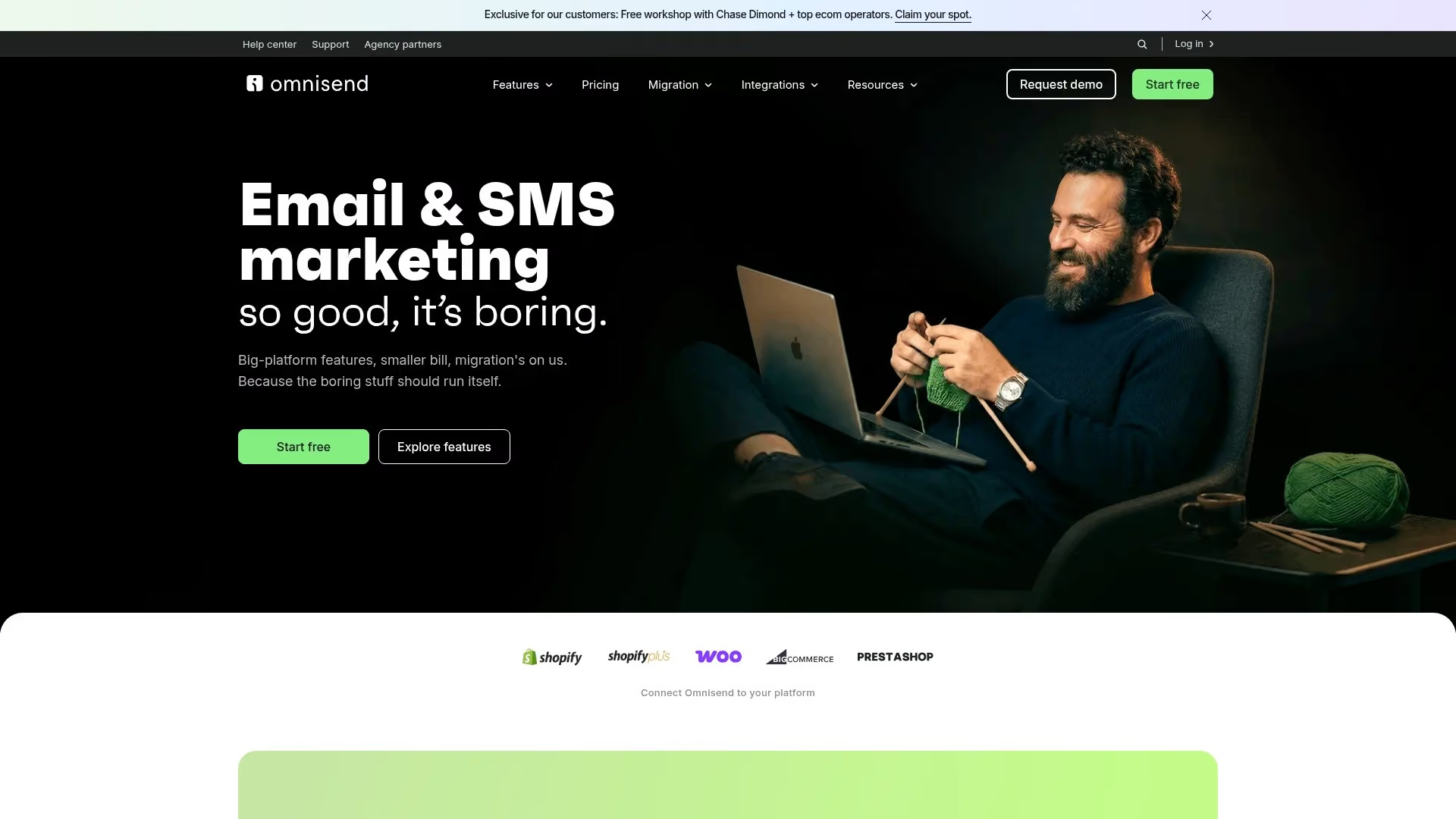
Omnisend is the most direct Klaviyo alternative for ecommerce businesses on Shopify, WooCommerce, or BigCommerce, with native integrations, built-in SMS marketing, and a free plan that includes automation workflows.
Omnisend is trusted by over 150,000 brands worldwide and holds a 4.7-star rating from more than 6,000 Shopify reviews, which is a meaningful signal at that review volume. The platform targets the SMB ecommerce segment specifically, with a cleaner onboarding experience and a lower price point than Klaviyo at comparable contact counts.
What Omnisend Does Well
The Shopify integration is native and real-time. Abandoned cart, browse abandonment, post-purchase, and welcome series flows are all available as pre-built templates, which cuts setup time considerably for smaller teams. Omnisend also includes SMS marketing and push notifications within the same workflow builder, so you can build a proper multi-channel welcome series without duct-taping separate platforms together.
Segmentation covers the ecommerce essentials: purchase history, cart value, campaign engagement, and product interest. It's not as deep as Klaviyo's behavioural data layer, but for most SMB ecommerce brands, it's more than sufficient.
The data point worth keeping in mind: according to Omnisend's 2025 ecommerce marketing report, one in three people who click on an automated email message make a purchase, compared to one in 18 for scheduled messages. That's the case for investing in automation workflows properly, regardless of which platform you use.

Omnisend Pros and Cons
- Pros: Native Shopify, WooCommerce, and BigCommerce integrations; email and SMS on one platform; generous free plan with automation; competitive pricing at SMB scale; strong pre-built ecommerce flows
- Cons: Less segmentation depth than Klaviyo at enterprise scale; limited CRM functionality; fewer integrations than ActiveCampaign; reporting less granular on higher-tier behaviour
Free plan: Yes. Up to 250 contacts and 500 emails/month with automation included.
Pricing: Paid plans start around $16/month for 500 contacts. Scales more affordably than Klaviyo at mid-market list sizes.
Verdict: The strongest like-for-like Klaviyo alternative for ecommerce SMBs. If you're on Shopify or WooCommerce, under 50,000 contacts, and want email plus SMS marketing without complexity, Omnisend is the first place to look.
2. ActiveCampaign: Best for Marketing Automation Depth
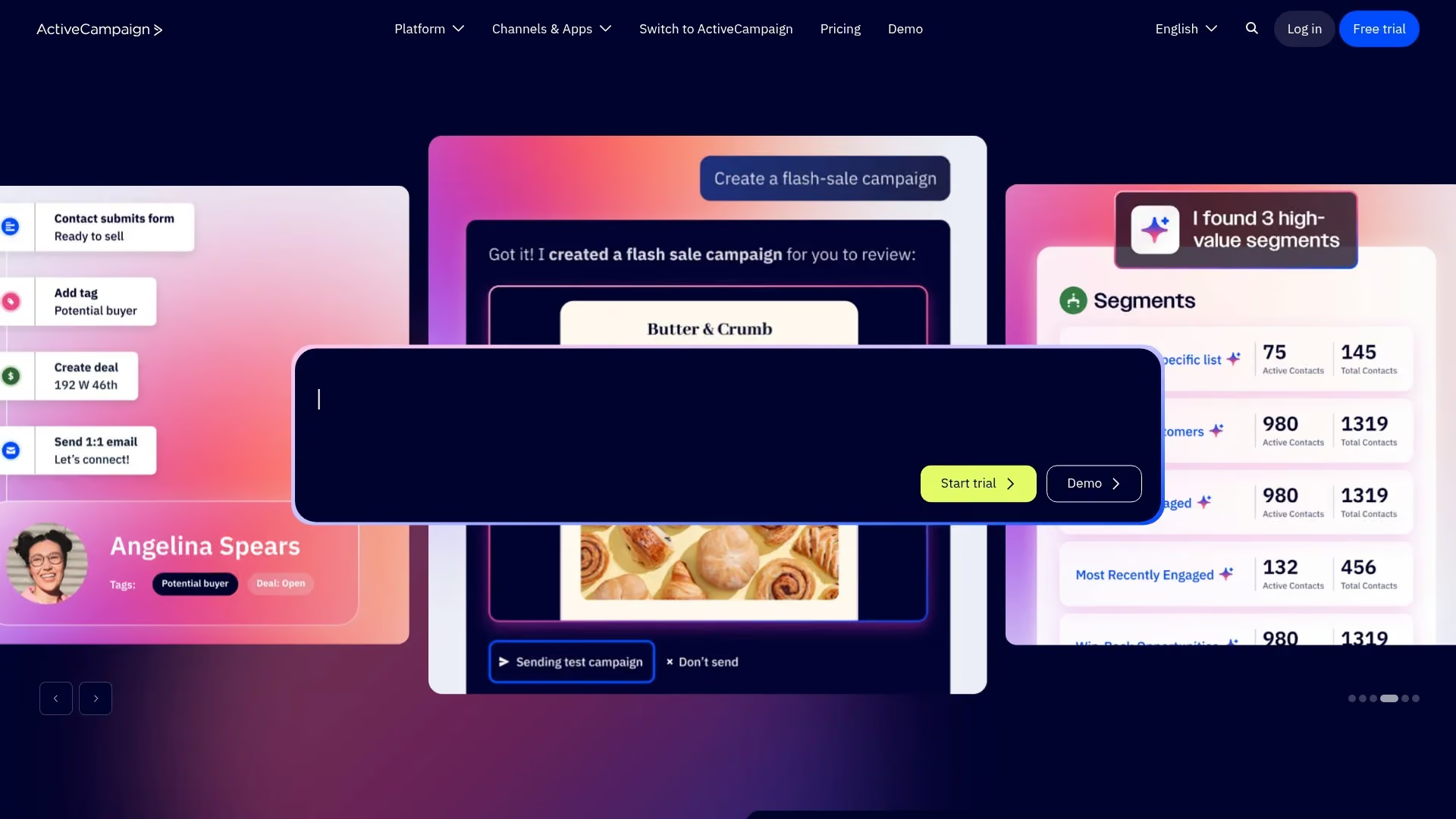
ActiveCampaign offers the deepest marketing automation workflows of any platform in this comparison, with a visual automation builder, lead scoring, CRM pipeline management, and an integration library connecting to over 1,000 tools.
That integration breadth is significant. ActiveCampaign's integration library connects to 1,000+ tools, which matters if your stack includes a custom CRM, a subscription platform, a Shopify store, and a helpdesk simultaneously. Klaviyo handles ecommerce data beautifully but doesn't give you the B2B pipeline or lead scoring logic that ActiveCampaign does.
Marketing Automation Workflows
The automation builder is genuinely powerful. You can build multi-branch workflows based on email engagement, site behaviour, CRM stage, deal value, and custom field data. Conditional logic is deep. Split testing inside automations works well. For brands running complex nurture sequences across long sales cycles, this level of automation workflow control is hard to match.
Segmentation also extends beyond ecommerce purchase data into contact attributes, engagement scores, and pipeline stage, which makes ActiveCampaign a better fit for hybrid DTC/B2B brands than Klaviyo.
Ecommerce Integration
ActiveCampaign integrates with Shopify, WooCommerce, and BigCommerce, but these connections run via their integration layer rather than a purpose-built native sync. For ecommerce-first brands where real-time product browsing data drives automations, Omnisend or Klaviyo will serve you better. ActiveCampaign shines when email marketing is one part of a broader CRM and sales workflow.
ActiveCampaign Pros and Cons
- Pros: Industry-leading automation workflow depth; built-in CRM; lead scoring; 1,000+ integrations; strong B2B and hybrid use cases; excellent split testing
- Cons: No free plan (trial only); steeper learning curve than Omnisend or MailerLite; ecommerce integrations less native than Klaviyo; can feel like overkill for pure-play ecommerce
Free plan: No. 14-day trial available.
Pricing: Starts around $15/month for 1,000 contacts on the Starter plan. Marketing automation features require higher tiers.
Verdict: The best Klaviyo alternative for brands where marketing automation needs to span beyond ecommerce into CRM, lead scoring, and multi-stage nurture. Not the right pick if ecommerce product data is your primary trigger source.
3. Brevo: Best Free Alternative to Klaviyo
Brevo (formerly Sendinblue) offers a genuinely useful free plan with unlimited contacts, email sends up to 300/day, SMS marketing, and basic automation workflows, making it the most accessible entry point among all Klaviyo alternatives.
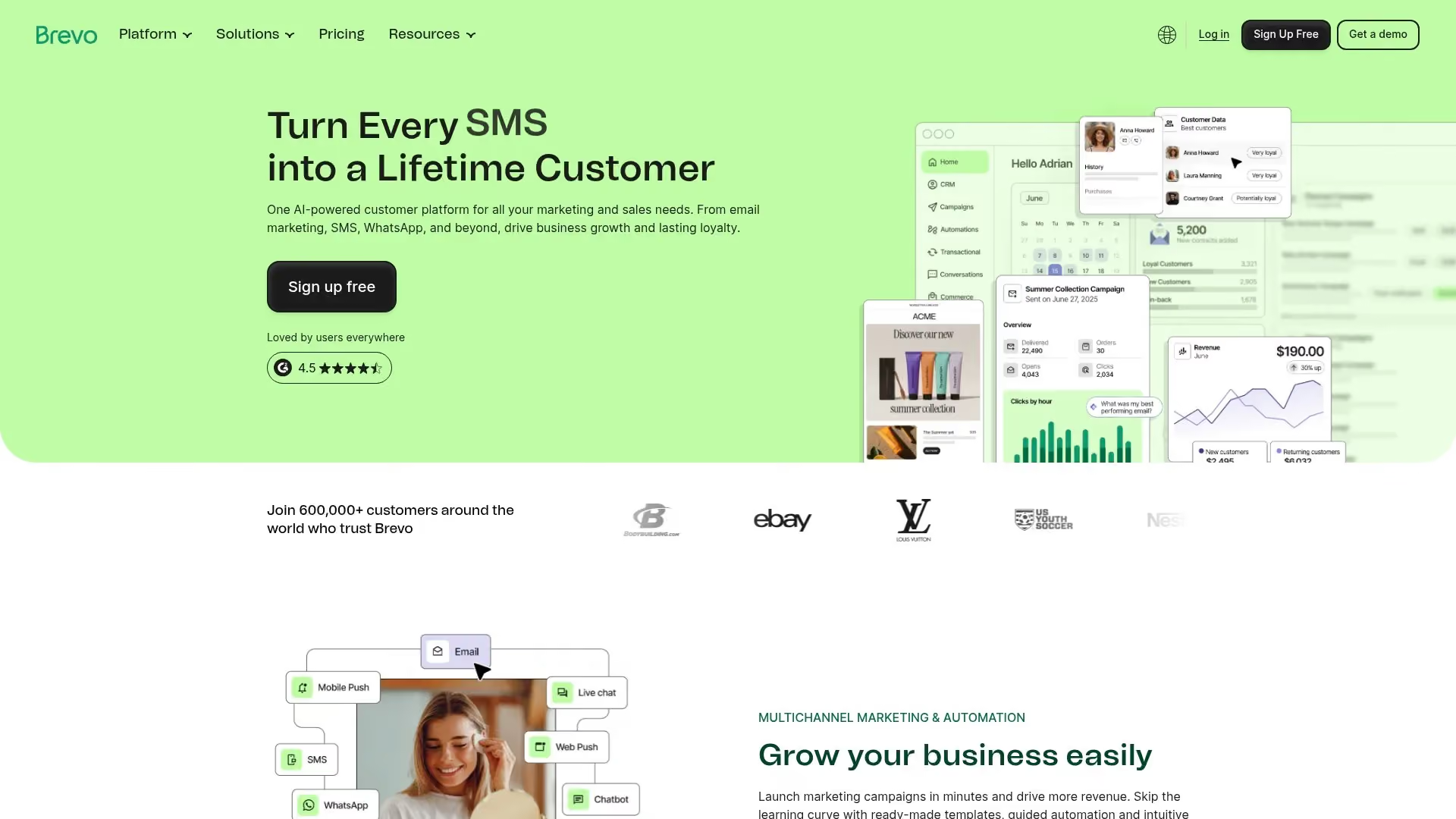
The rebranding from Sendinblue to Brevo reflects a broader platform shift toward multi-channel marketing, but the core strength remains the same: email and SMS marketing on a send-volume billing model rather than a contact-count model. That's a meaningful structural difference from Klaviyo. If you have a large list but send to it infrequently, Brevo's pricing model works strongly in your favour.
Free Plan and SMS Marketing
The free plan is legitimate. Unlimited contact storage, 300 emails per day, SMS marketing access, and basic automation workflows are all included without a credit card. For a startup or small ecommerce business testing email marketing for the first time, this is a serious advantage.
SMS marketing is built into the platform natively, not bolted on. You can run email and SMS flows from the same automation workflow builder, coordinate suppression across both channels, and manage contact preferences in one place. That's the multi-channel lifecycle thinking we'd expect from any serious retention platform.
Ecommerce Integration
Brevo integrates with Shopify, WooCommerce, and Magento. The Shopify connection supports abandoned cart triggers, purchase events, and customer segmentation based on order history. It's not as deep as Klaviyo's ecommerce data layer, but for most SMB ecommerce use cases, it does the job. WooCommerce integration is solid via the official Brevo plugin.
Brevo Pros and Cons
- Pros: Genuine free plan with automation; send-volume billing suits large lists; native email and SMS marketing; Shopify, WooCommerce, and Magento integrations; transactional email included; good deliverability infrastructure
- Cons: Daily send limit on free plan (300/day); automation workflow depth below Klaviyo and ActiveCampaign; segmentation less behavioural; reporting less ecommerce-specific; SMS coverage varies by country
Free plan: Yes. Unlimited contacts, 300 emails/day, SMS marketing, basic automation.
Pricing: Starter plan from around $9/month for 5,000 emails/month. Business plan adds marketing automation and A/B testing.
Verdict: The strongest free Klaviyo alternative, and a serious option for any brand where list size is large but send frequency is modest. Also worth considering if transactional email and marketing email need to live on the same platform.
4. Mailchimp: Best for Small Business Simplicity
Mailchimp is the most recognised email marketing platform globally, with a free plan, a drag-and-drop builder, and Shopify integration that covers the basic ecommerce automation needs of most small businesses without the complexity of Klaviyo.
The honest take on Mailchimp: it's not trying to compete with Klaviyo at the top end. The segmentation is shallower, the ecommerce data layer is less granular, and the automation workflows don't match Klaviyo's conditional logic depth. But for a small ecommerce business sending a weekly newsletter, a welcome series, and an abandoned cart flow, Mailchimp delivers without requiring a dedicated email specialist to run it.
Ecommerce Features and Shopify Integration
Mailchimp's Shopify integration supports abandoned cart emails, product recommendations, and purchase-triggered automations. WooCommerce integration exists via a third-party plugin. The automation workflow builder is simpler than Klaviyo's but more approachable for non-specialists. Pre-built ecommerce journeys cover the core use cases: welcome series, abandoned cart, win-back, and post-purchase follow-up.
Where Mailchimp falls short for serious ecommerce brands is segmentation granularity. RFM-based segmentation, browse abandonment triggers, and deep product-level behavioural data are either absent or require higher-tier plans and workarounds. If that level of personalisation matters to your retention strategy, Omnisend or Klaviyo are better choices.
Mailchimp Pros and Cons
- Pros: Very easy to use; large template library; free plan available; Shopify and WooCommerce integration; well-known with good support resources; includes basic SMS marketing on paid plans
- Cons: Contact-based billing gets expensive at scale; less ecommerce-specific than Klaviyo or Omnisend; shallower automation workflow logic; segmentation limited vs competitors; pricing has increased significantly in recent years
Free plan: Yes. Up to 500 contacts and 1,000 emails/month.
Pricing: Essentials plan from around $13/month for 500 contacts. Scales steeply at higher contact counts.
Verdict: A solid Klaviyo alternative for small businesses that prioritise ease of use over advanced ecommerce segmentation. Not a like-for-like replacement for Klaviyo's ecommerce depth, but perfectly adequate for teams that don't need it.
5. Drip: Best for DTC and Subscription Brands
Drip is a purpose-built ecommerce email and SMS marketing platform focused on retention, with deep Shopify and WooCommerce integration, RFM-based segmentation, and automation workflows designed specifically for DTC and subscription businesses.
Drip's positioning is interesting. It targets brands that have outgrown Mailchimp but find Klaviyo's pricing aggressive, sitting in a specific middle ground that suits DTC brands with between 5,000 and 50,000 contacts and a strong focus on customer lifecycle marketing rather than acquisition. The platform's strength is retention-first thinking: churn prediction, win-back flows, subscription renewal triggers, and customer lifetime value segmentation.
Ecommerce Integration and Segmentation
Native Shopify and WooCommerce integrations support real-time purchase events, browse abandonment, cart abandonment, and order status triggers. BigCommerce integration is also available. Segmentation goes deep on ecommerce behaviour: you can segment by purchase frequency, product category purchased, days since last order, predictive lifetime value, and custom attributes. For DTC brands building out a proper retention programme, that segmentation depth is what you actually need.
SMS marketing is included within Drip's automation workflows, so you can build flows that branch between email and SMS based on engagement or channel preference. This is the multi-channel lifecycle approach that drives real retention results.
Drip Pros and Cons
- Pros: Deep ecommerce segmentation including RFM and predictive LTV; native Shopify, WooCommerce, and BigCommerce integrations; email and SMS in one workflow builder; strong retention-focused automation templates; clean interface
- Cons: No free plan; starts at $39/month which can feel high for very small lists; smaller integration library than ActiveCampaign; less brand recognition means fewer third-party tutorials and resources
Free plan: No. Free trial available.
Pricing: From $39/month for up to 2,500 contacts. More competitive than Klaviyo at mid-market scale.
Verdict: The best Klaviyo alternative for DTC brands and subscription businesses where retention metrics (repeat purchase rate, churn, LTV) are the primary KPIs. Solid choice if Klaviyo's pricing is the trigger for switching and you don't want to sacrifice ecommerce segmentation depth.
6. GetResponse: Best for Content Creators and Webinars
GetResponse combines email marketing, marketing automation, landing pages, webinar hosting, and a basic ecommerce feature set in one platform, making it the most versatile Klaviyo alternative for content creators, course sellers, and businesses where lead generation and webinars drive the funnel.
The webinar functionality is genuine and not an afterthought. It's built into the platform natively and connects to automation workflows, so you can trigger email and SMS sequences based on webinar registration, attendance, and post-event behaviour. For a Klaviyo user whose primary use case is ecommerce, this won't matter. But for a creator or educator who needs email marketing, automation workflows, landing pages, and event functionality under one billing relationship, it reduces stack complexity considerably.
Ecommerce and Marketing Automation
GetResponse integrates with Shopify, WooCommerce, and BigCommerce. Ecommerce automation workflows cover abandoned cart, post-purchase, and browse abandonment basics. The automation workflow builder is visual and accessible, though it doesn't match Klaviyo's ecommerce behavioural data depth or Drip's retention-focused segmentation.
A free plan is available with up to 500 contacts, basic email marketing, and landing page access. The paid plans add marketing automation, webinars, and SMS marketing at competitive pricing for the feature breadth included.
GetResponse Pros and Cons
- Pros: Built-in webinar hosting; landing page builder included; free plan available; visual automation workflow builder; Shopify and WooCommerce integration; email and SMS marketing combined
- Cons: Ecommerce segmentation less deep than Klaviyo, Omnisend, or Drip; deliverability requires careful list management; some automation features only on higher tiers; webinar focus makes it feel unfocused for pure ecommerce
Free plan: Yes. Up to 500 contacts with basic features.
Pricing: Paid plans from around $15/month. Webinar and automation features on mid-tier plans.
Verdict: A strong Klaviyo alternative for content creators, educators, and businesses with a significant webinar or lead-generation component. Not the best fit for pure ecommerce brands where product behavioural data drives automation.
7. MailerLite: Best for Beginners and Small Teams
MailerLite offers one of the cleanest, most accessible email marketing interfaces available, with a free plan supporting up to 1,000 contacts, a solid drag-and-drop editor, basic automation workflows, and Shopify integration at a price point that makes it genuinely attractive for early-stage ecommerce brands.
The platform's strength is simplicity. If your team is small, your flows are straightforward (welcome series, abandoned cart, post-purchase), and you don't need deep ecommerce segmentation or advanced personalisation, MailerLite delivers everything you need without the overhead. The onboarding is fast, the interface doesn't require training, and the free plan is among the most generous in this list.
Automation Workflows and Ecommerce Integration
MailerLite's automation workflow builder handles the core ecommerce triggers: cart abandonment, purchase confirmation, welcome sequences, and win-back flows. Shopify integration is native. WooCommerce integration works via their official plugin. Segmentation covers the basics: purchase history, engagement status, subscriber source, and custom fields. It's not behavioural data at Klaviyo's depth, but it's sufficient for most small ecommerce operations.
SMS marketing is available on paid plans. The channel combination is useful, though SMS functionality is less central to MailerLite's platform than it is for Omnisend or Brevo.
MailerLite Pros and Cons
- Pros: Very easy to use; generous free plan (1,000 contacts, 12,000 emails/month); clean drag-and-drop editor; Shopify and WooCommerce integration; good deliverability; affordable paid plans; landing page builder included
- Cons: Limited segmentation depth; automation workflows less sophisticated than Klaviyo, ActiveCampaign, or Drip; SMS marketing less central to the platform; reporting basic on free plan
Free plan: Yes. Up to 1,000 contacts and 12,000 emails/month.
Pricing: Growing Business plan from around $9/month for 1,000 contacts. Very affordable relative to feature set.
Verdict: The best Klaviyo alternative for beginners and small teams where simplicity and cost matter more than advanced ecommerce segmentation. A sensible starting point before graduating to Omnisend or Klaviyo as the programme matures.
8. HubSpot Marketing Hub: Best for B2B and CRM-Led Email
HubSpot Marketing Hub, when paired with HubSpot CRM, offers the most complete B2B email marketing and automation platform in this comparison, with contact management, deal pipeline, lead scoring, and marketing automation workflows unified under one data model.
For ecommerce brands, HubSpot is rarely the right Klaviyo alternative. But for B2B businesses, SaaS companies, or hybrid models where the sales cycle is long and email marketing needs to coordinate with CRM activity, HubSpot's unified data model is genuinely powerful. As Enchant's HubSpot Platinum Solutions Partner relationship reflects, we see the platform perform well in exactly these contexts.
Shopify integration exists and covers ecommerce basics, but it's not the native, behavioural-data-rich connection you get from Klaviyo, Omnisend, or Drip. WooCommerce and BigCommerce integrations are available but similarly non-native.
HubSpot Pros and Cons
- Pros: Unified CRM and marketing automation; excellent contact management and segmentation; lead scoring; strong B2B workflow depth; free CRM with email marketing tools; well-supported ecosystem
- Cons: Ecommerce integration less native than Klaviyo or Omnisend; costs escalate sharply on Marketing Hub Professional and above; SMS marketing limited compared to dedicated tools; contact-based billing on paid tiers; overkill for pure ecommerce
Free plan: Yes. Free CRM with limited email marketing tools included.
Pricing: Marketing Hub Starter from around $15/month. Professional tier is considerably more expensive and required for full marketing automation.
Verdict: The right Klaviyo alternative when CRM and email marketing need to share a data model, particularly for B2B or SaaS. For ecommerce brands, Omnisend or Drip will serve you better.
If you're evaluating HubSpot against Klaviyo for an ecommerce context specifically, our comparison of the top email marketing platforms for Shopify covers both in detail.
9. Iterable: Best Enterprise Omnichannel Alternative
Iterable is an enterprise-grade omnichannel marketing platform covering email, SMS marketing, push notifications, in-app messaging, and direct mail within a single workflow builder, making it the most capable Klaviyo alternative for large brands with complex multi-channel lifecycle programmes.
Iterable is not for small teams. The platform is priced for enterprise, onboarding requires dedicated technical resource, and the complexity of building and maintaining workflows at scale demands a proper eCRM team behind it. But for brands at a certain scale, it offers capabilities that Klaviyo doesn't: true omnichannel orchestration across five or six channels simultaneously, enterprise-grade segmentation, and a data infrastructure built for high-volume personalisation.
As an Iterable Platform Partner, we work with the platform directly. The orchestration capabilities are genuine. Where Klaviyo excels at ecommerce data and flows, Iterable excels at managing the entire customer lifecycle across a complex channel mix at scale. The two serve different moments in a brand's growth.
Iterable Pros and Cons
- Pros: True omnichannel workflows (email, SMS, push, in-app, direct mail); enterprise segmentation and personalisation; strong data integration capabilities; Shopify and WooCommerce compatible; highly flexible workflow builder
- Cons: Custom pricing (typically high); significant technical onboarding requirement; not suitable for SMBs; no free plan; requires dedicated eCRM resource to operate effectively
Free plan: No.
Pricing: Custom. Typically suited to brands spending significant amounts monthly on eCRM.
Verdict: The right Klaviyo alternative for enterprise brands running sophisticated multi-channel lifecycle programmes. Not a consideration for SMBs or mid-market brands where Omnisend, Drip, or ActiveCampaign are more appropriate.
10. Sendinblue/Brevo Transactional: Best for High-Volume Transactional Email
Brevo's transactional email infrastructure handles triggered order confirmations, password resets, shipping notifications, and account emails at scale alongside marketing campaigns, making it a strong choice for ecommerce brands that need transactional and marketing email under one platform.
Most Klaviyo users manage transactional email separately (via Postmark, SendGrid, or Shopify's default). Brevo handles both, which simplifies the stack and reduces cost for brands sending large volumes of transactional messages. The send-volume billing model is particularly useful here: you pay for what you send, not for the size of your list.
This use case is fairly specific. If your transactional and marketing email are already on separate platforms that work well, this isn't a compelling reason to switch. But if you're in the process of migrating and want to consolidate, Brevo's dual capability is worth factoring in.
What to Look for When Migrating from Klaviyo
Migrating away from Klaviyo requires more than exporting a contact list. The practical considerations that most migration guides skip are the ones that cause problems three months after the switch.
Flow and Automation Workflow Migration
Klaviyo's flow structures, conditional splits, and timing logic don't translate directly to any other platform's automation workflow builder. Each flow needs to be rebuilt from scratch on the new platform, logic reviewed, and triggers reconfigured to match the new integration's data model. For brands with 10+ active flows, this is a significant project. Budget for it properly.
The flows to prioritise: welcome series, abandoned cart, post-purchase, browse abandonment, and win-back. Get those live first. Everything else can follow.
Segmentation Data Portability
Klaviyo's segments are built on behavioural and transactional data that lives inside Klaviyo. When you export contacts, you export what's in the contact fields, but the segment logic, the predictive LTV scores, and the flow engagement history don't come with it. Plan your migration to re-populate this data from your ecommerce platform directly into the new tool rather than trying to carry it from Klaviyo.
Deliverability and List Hygiene
Switching ESPs always carries deliverability risk. Your sender reputation is partially tied to your sending infrastructure, and a new ESP means a new IP pool (unless you're on dedicated IPs). Warm up properly. Start with your most engaged segments and expand from there. Don't migrate your entire list and blast on day one. This is the most common migration mistake, and it causes inbox placement problems that take months to recover from. Our email marketing deliverability service handles exactly this kind of transition.

For a structured framework on automating your flows on any platform, the email automation toolkit covers 100 ways to build out your programme from the ground up.
The State of the Market: Why This Decision Matters More Now
The global email marketing software market was valued at USD 1.7 billion in 2025, according to Fortune Business Insights' email marketing software market report. The proliferation of platforms means more genuine choice at every price point than existed two years ago. Switching costs are real but manageable with proper planning.

Klaviyo itself is growing fast. Its annual revenue reached $1,234.0 million in 2025, up 31.6% year-over-year according to Klaviyo's 2025 annual report, and in September 2025 the platform launched Marketing Agent and Customer Agent, two AI-powered features built on large language models. The platform is investing heavily in AI-driven capabilities. That matters when evaluating whether the cost increase is justified: if your team uses Klaviyo's AI features actively, the value calculation looks different than if you're only using the basic flows.
The honest position: if you're on Klaviyo and it's working, the switching cost is real and the grass isn't always greener. If cost is the primary complaint, get specific about the numbers before you migrate. If fit is the issue (wrong platform type, missing capabilities, or excess complexity), then the alternatives above offer genuine solutions. Our Klaviyo vs Mailchimp comparison for ecommerce goes deeper on that specific head-to-head if Mailchimp is the direction you're considering.
Which Klaviyo Alternative Should You Choose?
The right Klaviyo alternative depends on your business model, your team's technical capability, your channel mix, and your growth stage. No single platform wins across every scenario.
For ecommerce SMBs on Shopify or WooCommerce: start with Omnisend. It's the most direct Klaviyo alternative at a lower price point, with native ecommerce integrations, email and SMS marketing combined, and a free plan to test with. If cost is the issue and Omnisend's segmentation meets your needs, the migration is relatively straightforward.
For marketing automation depth across a complex stack: ActiveCampaign. Especially if CRM, lead scoring, and multi-stage nurture matter alongside ecommerce. The 1,000+ integration library is a real differentiator.
For the most affordable entry point: Brevo. The free plan is generous, the SMS marketing is native, and the send-volume billing model suits large lists with modest send frequency. For startups and early-stage brands, this is the most sensible place to begin.
For DTC and subscription retention: Drip. The RFM segmentation, subscription-specific triggers, and retention-focused automation workflow templates are built for exactly this use case. More affordable than Klaviyo at equivalent contact counts for the right type of brand.
For enterprise omnichannel: Iterable. If you're operating across five channels simultaneously at scale and need a proper multi-channel lifecycle platform rather than an ecommerce-first tool, Iterable is the upgrade path from Klaviyo. Not a cost-saving decision, a capability one.
If you need help working through the decision, our ESP selection service exists to do exactly this kind of evaluation objectively, without a vested interest in any single outcome. And if you want a clearer view of what top Shopify email apps look like side-by-side, the best email marketing apps for Shopify is a useful companion read.
Summary
Klaviyo is not the wrong choice for most ecommerce brands. But it's also not the only choice, and for certain business types, team sizes, and budget situations, the alternatives above offer genuine advantages rather than just cheaper pricing.
Omnisend leads for ecommerce SMBs. ActiveCampaign leads for automation depth. Brevo leads on free access and SMS volume. Drip leads for DTC retention. The decision comes down to where your business actually is, not where the most popular tool was built for.
One thing to hold firm on regardless of platform: segmentation is non-negotiable, automation workflows drive retention results that batch sends never will, and a proper migration needs planning time built in. Get those three things right and the platform choice becomes less critical than most people think.
Need a second opinion on your ESP selection or a migration plan that doesn't wreck your deliverability? Speak to the Enchant team and we'll give you an honest view of what makes sense for your specific setup. Check out our guide on how to find the best Klaviyo experts in the UK in 2026, too.