.svg)
Klaviyo vs Omnisend: The Honest Side-by-Side for Shopify Brands
.avif)
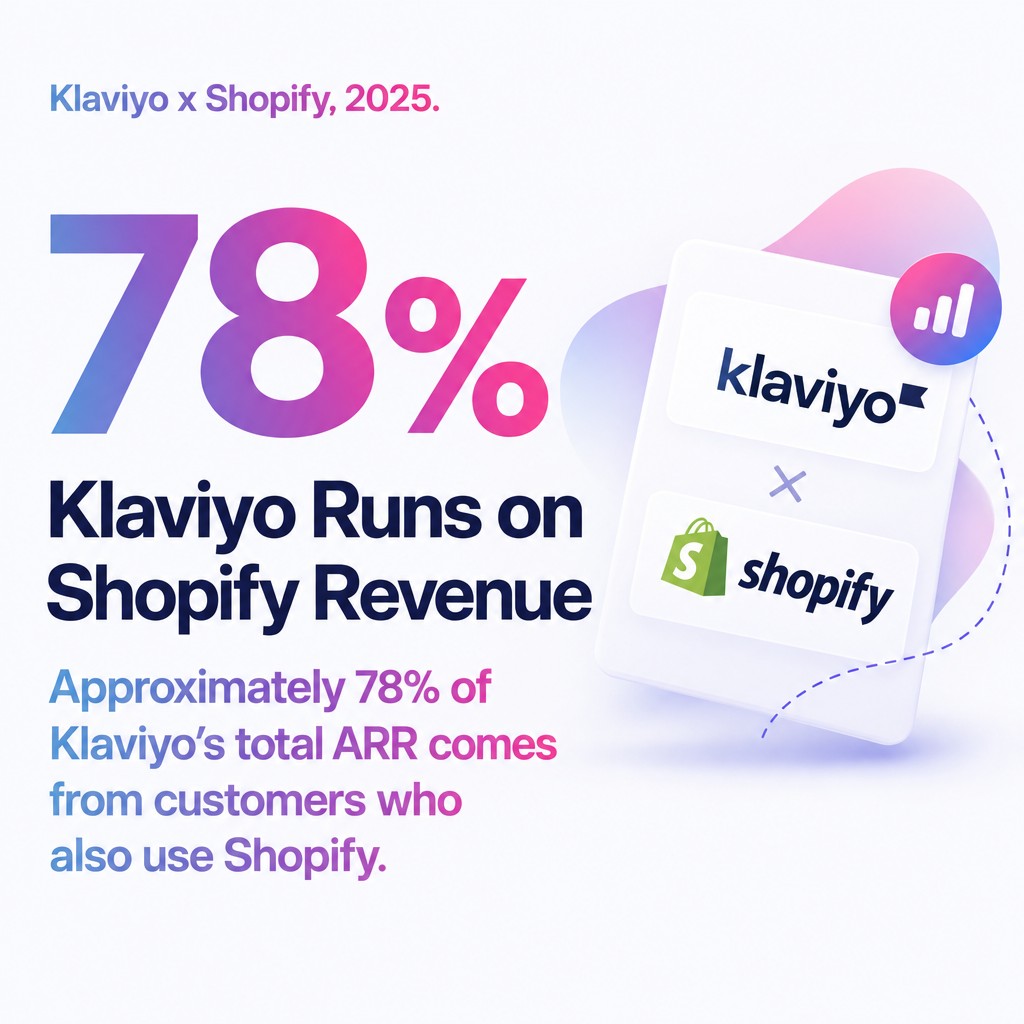
Klaviyo and Omnisend are the two most compared email marketing platforms for ecommerce, and the honest answer to which wins is: it depends entirely on where your store is headed. Klaviyo is the more powerful platform, built around deep data, advanced segmentation, and a Shopify integration so tight that approximately 78% of Klaviyo's total ARR comes from customers who also use Shopify. Omnisend is the more accessible platform, with a lower entry price, a genuinely good free plan, and omnichannel features (including web push notifications) baked in from day one. Neither is wrong. But picking the wrong one for your stage of growth is expensive.
We're Enchant, a Klaviyo Master Platinum Partner. That's the highest tier Klaviyo awards, and we've built automation flows, segmentation architecture, and lifecycle programmes on Klaviyo for brands like Bohomoon, Self Portrait, and Sealskinz. So yes, we know the platform extremely well. But that also means we know exactly where it falls short, and where Omnisend genuinely outperforms it. This guide gives you the unfiltered version.
Klaviyo vs Omnisend: Quick Comparison at a Glance
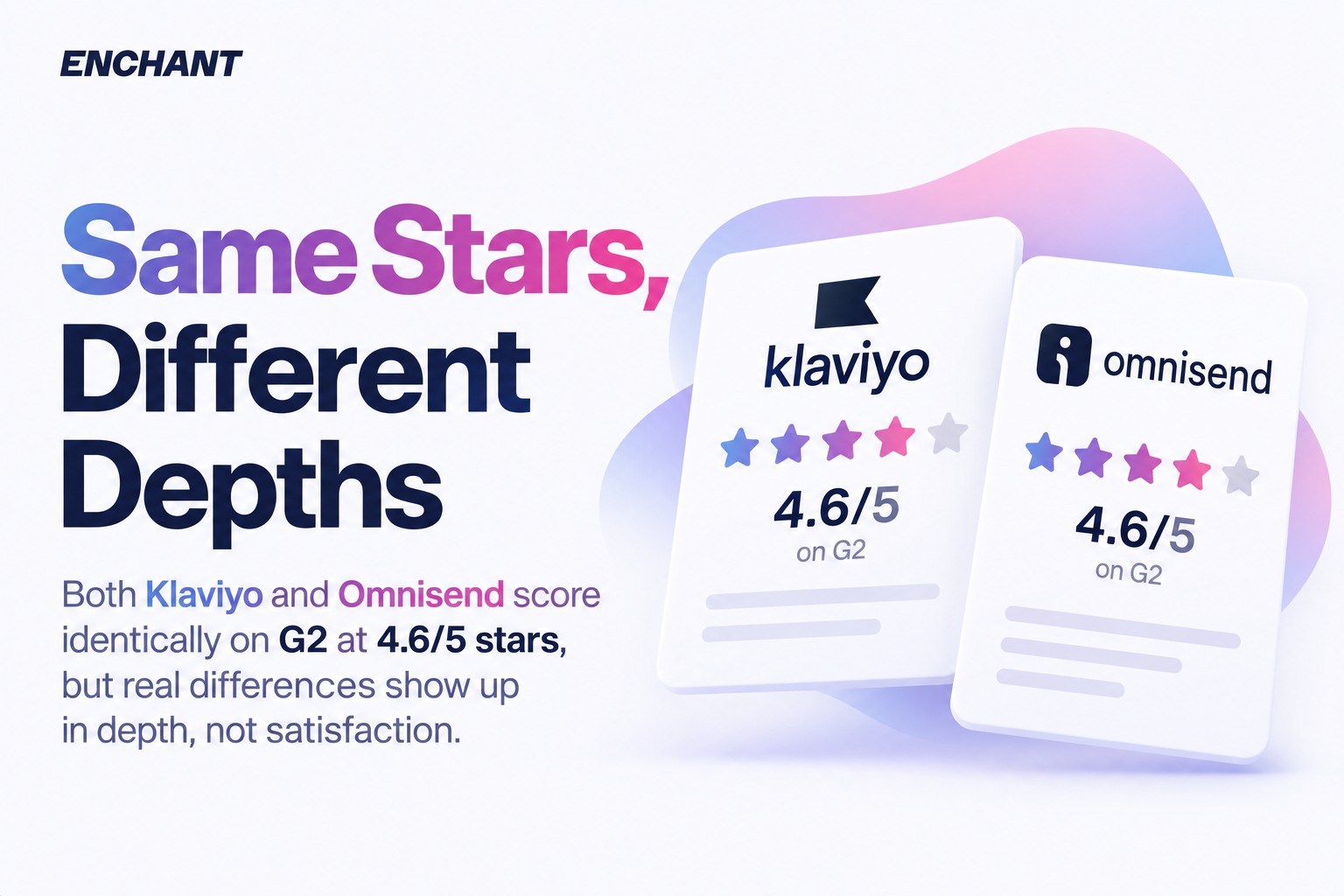
The table below covers the headline differences before we break each category down properly. Both platforms score identically on G2 at 4.6/5 stars, which tells you the user satisfaction gap is smaller than the marketing would have you believe. The real differences show up in depth, not in satisfaction.
Klaviyo wins on depth. Omnisend wins on accessibility and out-of-the-box omnichannel coverage. Everything else in this guide explains why those two sentences matter enormously depending on your store's size and ambitions.
Klaviyo vs Omnisend Pricing: Which Is More Affordable?
Klaviyo changed its billing model in February 2025, switching from a send-volume basis to an active-profile basis, according to Klaviyo's updated pricing documentation. That shift matters. If you have a large list but low engagement, you now pay for contacts you're not converting. Omnisend's pricing, by contrast, has remained more straightforward.
Omnisend Pricing Tiers
Omnisend offers three tiers in 2026: Free, Standard (from $16/month), and Pro (from $59/month), as listed on Omnisend's official pricing page. The Standard tier is genuinely usable for growing stores. SMS credits are included across paid plans, which is a meaningful cost saving compared to platforms that charge separately.
That $16 entry point is hard to argue with for a brand just starting to build its email list. You get automation, segmentation, and SMS without having to unlock three separate add-ons.
Klaviyo Pricing Model
Klaviyo's pricing scales with active profiles. The free plan covers up to 250 contacts and 500 email sends per month, which is identical to Omnisend's free tier on the email side. But as your list grows past a few thousand contacts, Klaviyo gets meaningfully more expensive than Omnisend at the equivalent tier.
The trade-off is capability. You're paying more because the segmentation, analytics, and automation depth genuinely warrant it at scale. For a brand doing £50k+ per month in revenue, the cost difference becomes a rounding error against the revenue attribution data alone.
Pricing verdict: Omnisend wins on price at every tier below enterprise. Klaviyo's cost is justified at scale, but it's a harder sell for stores under £1m annual revenue.
Free Plan Comparison: What You Actually Get
Both Klaviyo and Omnisend offer free plans limited to 250 contacts and 500 emails per month, so on paper they look identical. They are not.
Omnisend's free plan includes web push notifications. Klaviyo's does not. That single difference makes Omnisend's free tier genuinely omnichannel from the start. A new Shopify store can run email, SMS (up to a send limit), and web push notifications without spending a penny on Omnisend. That's a real advantage for brands testing the waters before committing to a paid plan.
Klaviyo's free plan does include access to its flows builder and segmentation tools, which are more powerful than Omnisend's equivalents. But the contact ceiling of 250 means you hit the paywall very quickly either way.
Free plan verdict: Omnisend wins. The inclusion of web push notifications on the free plan means more channels without any spend. If you're evaluating both at zero cost, Omnisend gives you more to test.
Email Automation and Omnichannel Workflows
Klaviyo's email automation flows are among the most configurable available for ecommerce, with conditional splits, multi-trigger logic, and the ability to pull in real-time Shopify data at the individual contact level. Omnisend's pre-built automation templates are genuinely good and much faster to get live, but the logic depth simply doesn't match Klaviyo at the advanced end.
Klaviyo Flows: Power at a Cost
Klaviyo's flow builder lets you branch on almost any data point in a contact's profile. Abandoned cart flows can split by product category, average order value, whether the contact has purchased before, and predicted lifetime value, all within a single flow. That's not something you can replicate in Omnisend without significant workarounds.
The pre-built Klaviyo flow library covers welcome series, abandoned cart, post-purchase, browse abandonment, win-back, and sunset sequences. Each is a solid starting point. But the real value is in customising them with your store's specific data. That customisation takes time and a degree of technical comfort. If you don't have either, you'll underuse what you're paying for.
For a deeper look at how to build out Klaviyo flows properly, our email automation toolkit covering 100 ways to automate campaigns with flows walks through the architecture in detail.
Omnisend Automation: Faster to Live, Simpler Logic
Omnisend's automation is built around speed of deployment. The pre-built templates for abandoned cart, welcome series, and post-purchase flows are genuinely production-ready out of the box. For a store that needs automation live in a day rather than a week, that matters.
The omnichannel angle is where Omnisend genuinely pulls ahead for certain brands. A single workflow in Omnisend can include email, SMS, and web push notifications in a logical sequence. You configure the channel mix once. Klaviyo can do this too, but it requires separate flows for SMS and relies on third-party integrations for web push notifications, adding complexity.
For a Shopify brand running a multi-channel welcome series (email on day one, SMS on day three, web push notification on day five), Omnisend does it natively. Klaviyo makes you build three separate automations and coordinate them manually.
Automation verdict: Klaviyo wins on depth and data-driven logic. Omnisend wins on omnichannel simplicity. Your choice depends on whether your team has the technical capacity to exploit Klaviyo's power.
Shopify and WooCommerce Integration
Klaviyo's Shopify integration is close to native, with Shopify holding approximately 18.85% of Klaviyo's outstanding Series A shares as of August 2025, according to SEC filings. That financial relationship reflects how deeply the two platforms are connected at a product level.
Klaviyo and Shopify: Near-Native Depth
The Klaviyo Shopify integration syncs your entire product catalogue, order history, browse behaviour, and customer tags in real time. Every piece of data a contact generates in your Shopify store is available for segmentation and automation triggers immediately. That depth is why approximately 78% of Klaviyo's total ARR comes from Shopify customers. The two products are deeply aligned.
The product picker inside Klaviyo's email editor pulls live product data directly from your Shopify store. Dynamic product recommendation blocks update at send time based on each contact's purchase history. For a brand with a large catalogue, that functionality alone is worth the platform cost.
If you're specifically evaluating the Klaviyo Shopify setup, our guide to the Klaviyo and Shopify integration covers the technical setup and data sync options in full.
Omnisend and Shopify: Strong, Slightly Less Deep
Omnisend's Shopify App Store rating is 4.8/5, according to Omnisend's own platform comparison data. That rating reflects genuine quality. The integration covers order data, abandoned cart triggers, product blocks in emails, and segmentation by purchase history.
What Omnisend doesn't do quite as well is granular data layering. You can segment by purchase count and category, but the depth of conditional logic available in Klaviyo (pulling RFM scores, predicted next order date, predictive lifetime value) isn't matched on the Omnisend side.
For WooCommerce, both platforms offer solid integrations. Omnisend arguably has a slight edge here on simplicity of setup. Klaviyo's WooCommerce plugin is capable but requires more configuration to get the same data depth you get with Shopify out of the box.
Integration verdict: Klaviyo wins for Shopify, particularly for stores with complex data needs. Omnisend is strong and the 4.8/5 App Store rating is well-earned, but the Klaviyo-Shopify data relationship is in a different category. For WooCommerce, the gap narrows significantly.
Segmentation and Personalisation
Klaviyo's segmentation engine is the most cited reason practitioners recommend it for scaling ecommerce brands, and the depth of behavioural data available at the segment level is genuinely ahead of Omnisend in most scenarios.
Personalisation is not about first-name merge tags. That view is outdated and, frankly, a lazy way to think about it. Real personalisation means dynamic content blocks that change based on purchase category, location, predicted spend tier, or engagement recency. Klaviyo does this natively. Omnisend does it to a degree, but with less granularity.
Klaviyo Segmentation: Behavioural and Predictive
Klaviyo segments update dynamically in real time. You can build a segment of contacts who purchased from a specific product category within the last 90 days, opened at least two emails, and have a predicted lifetime value above a threshold you define. That segment rebuilds itself as behaviour changes. No manual updates required.
The predictive analytics layer inside Klaviyo adds a further dimension. Predicted next order date, churn risk score, and predicted lifetime value are all calculated from your store's own order data. For brands with enough transaction volume to generate reliable predictions, these signals are powerful inputs to segmentation logic and automation triggers.
Klaviyo's AI-assisted segment builder can also generate segment definitions from plain-language descriptions, which reduces the technical barrier for marketers who know what they want but aren't confident with the filter logic.
Omnisend Segmentation: Solid for Most Stores
Omnisend's segmentation covers the core use cases well: purchase history, engagement data, campaign activity, and signup source. For the majority of Shopify brands below a certain scale, these filters are sufficient to run meaningful, targeted campaigns without the overhead of Klaviyo's more complex setup.
The practical difference shows up at around 20,000 contacts and above. Below that, Omnisend's segmentation covers most of what you need. Above it, the inability to layer as many conditions simultaneously, or to use predictive scores as segment criteria, starts to cost you precision.
Segmentation verdict: Klaviyo wins. It's not particularly close at scale. For stores under 20,000 contacts, the practical gap is smaller, but Klaviyo's predictive segmentation is a genuine differentiator for growing brands who want to get ahead of churn rather than react to it.
SMS Marketing Capabilities
SMS is becoming a standard part of ecommerce lifecycle marketing, and both platforms have invested in it, though with different approaches. As of December 2025, 29.6% of Klaviyo's SMB+ customers were using text messaging and/or WhatsApp. That figure has grown steadily, and it reflects real adoption rather than vanity positioning.

Klaviyo SMS: Powerful but Separate
Klaviyo's SMS offering is strong. It supports two-way messaging, keyword-based automation triggers, MMS, and conditional logic within flows that lets you send SMS or email based on a contact's channel preference or behaviour. The unified profile view means that SMS engagement data feeds back into your segmentation exactly as email engagement does.
The cost is handled separately to email in Klaviyo's pricing structure. SMS credits are purchased on top of your email plan, which means you're managing two cost lines. For large-volume SMS senders, this can get expensive quickly.
Omnisend SMS: Included, Simpler
Omnisend includes SMS natively across its paid plans, with credits bundled into the monthly fee up to a threshold. The setup is faster, the workflow integration with email is cleaner for non-technical users, and the entry cost is lower for brands that want to test SMS without committing to significant additional spend.
Omnisend also supports web push notifications within the same workflow as SMS and email, which Klaviyo does not. For a brand wanting a three-channel abandoned cart sequence (email, SMS, web push), Omnisend runs that natively in a single automation. That's a meaningful operational advantage.
Our SMS marketing services page covers the broader SMS strategy considerations that apply regardless of platform, including list building, compliance, and timing logic.
SMS verdict: Omnisend wins on accessibility and native omnichannel integration. Klaviyo wins on depth and data integration for brands already running sophisticated SMS programmes. If SMS is new to your brand, Omnisend's bundled approach is the lower-friction starting point.
Omnichannel Marketing: Web Push, SMS, and Email Together
Omnisend was built from the start as an omnichannel platform, and that design decision shows clearly when you compare the two tools on multi-channel workflow capability.
Web push notifications are the clearest example. Omnisend includes web push notifications natively, across free and paid plans. Klaviyo does not offer web push notifications as a native feature. If web push notifications are part of your retention strategy (and for most ecommerce brands they should be, given the zero-cost recovery opportunity on abandoned sessions), you'd need a separate tool alongside Klaviyo.
That means additional cost, additional integrations, and additional data fragmentation. Not ideal.
For brands running the kind of multi-channel welcome series we recommend at Enchant (email on day one, SMS on day three, web push notification on day five to seven, each with a distinct goal and channel-appropriate CTA), Omnisend handles that entire sequence inside a single workflow. The data stays unified. The reporting stays unified. The contact experience is coherent.
Klaviyo can achieve a similar outcome across email and SMS, but web push notifications require third-party tools. The more channels you add to Klaviyo's stack through integrations, the more the unified data story starts to fragment.
Omnichannel verdict: Omnisend wins. The native inclusion of web push notifications alongside email and SMS in a single workflow is a structural advantage that Klaviyo hasn't matched.
Reporting, Analytics, and Revenue Attribution
Klaviyo's reporting depth is one of the clearest differentiators between the two platforms, and for ecommerce brands where email and SMS are expected to carry a meaningful share of revenue, the ability to attribute that revenue accurately matters a great deal.
Klaviyo Analytics: Deep Revenue Attribution
Klaviyo's revenue attribution model tracks orders placed within a configurable attribution window after an email open or click. The default window is five days, but you can adjust it. Every flow, campaign, and segment has revenue data attached, which means you can compare the performance of your welcome series against your abandoned cart flow against a one-off campaign on a like-for-like basis.
The benchmark reporting feature compares your metrics against anonymised averages from Klaviyo's broader customer base, segmented by industry and revenue tier. That context is genuinely useful. Knowing your abandoned cart recovery rate is 18% tells you something. Knowing the median for your sector is 12% tells you a lot more.
Predictive analytics reporting also shows churn risk distribution across your customer base, expected revenue by segment over the next 90 days, and lifetime value projections. For brands thinking 12 months ahead in their retention strategy (which is how we always plan at Enchant), that forward-looking data is more valuable than historical averages.
Omnisend Reporting: Clear, Less Deep
Omnisend's reporting dashboards are clean and easy to read. Campaign performance, automation revenue, and channel performance (email, SMS, web push notifications) are all surfaced clearly. For most stores, the reporting covers what you need to make sensible decisions week to week.
The depth simply isn't there at the advanced end. Predictive analytics, churn scoring, and multi-touch attribution are not available in Omnisend at the same level as Klaviyo. If your marketing decisions depend on data that goes beyond "this campaign made this much revenue," Klaviyo is the stronger tool.
Analytics verdict: Klaviyo wins. The revenue attribution model, benchmark reporting, and predictive analytics layer give data-led teams significantly more to work with. Omnisend's reporting is functional but doesn't give you the forward-looking signals that justify significant investment in lifecycle marketing.
Email Templates and Editor Experience
Both platforms offer drag-and-drop email editors, and both have improved meaningfully over the past two years. The experience of actually building emails in each platform tells you a lot about who they're built for.
Klaviyo's Editor: Flexible, Requires Patience
Klaviyo's email editor gives you significant control over layout, conditional content blocks, and dynamic product content pulled directly from Shopify. The product picker is excellent. Dynamic blocks that show different content to different segments within a single send are straightforward to configure once you know the platform.
The template library is solid but not expansive. The real value is in building your own reusable blocks rather than relying on the pre-built templates, which means investing upfront time in creating your email design system before you get to efficient production. We always recommend this approach anyway. Brands that build a proper email design system (EDS) produce better, more consistent emails faster and at lower production cost per send.
If that process sounds useful, our guide to the top email marketing platforms for Shopify covers how editor quality and template architecture should factor into your platform choice.
Omnisend's Editor: Faster for Beginners
Omnisend's editor is more approachable. The template library is larger, the drag-and-drop behaviour is more intuitive, and the learning curve for a marketer who hasn't used a visual email builder before is significantly shorter. Getting a branded email live in Omnisend takes less time than in Klaviyo for a first-time user.
The trade-off is the ceiling. Omnisend's editor handles standard ecommerce emails well. Complex conditional content, advanced personalisation blocks, and deep product catalogue integration work better in Klaviyo's editor once you're past the initial learning curve.
Editor verdict: Omnisend wins on ease and speed. Klaviyo wins on flexibility and depth. If your team is building emails at volume with heavy personalisation, Klaviyo's editor earns its complexity. If you need templates live quickly and don't need advanced conditional logic, Omnisend is the faster path.
AI Features and Predictive Analytics
Klaviyo's AI features are meaningfully more developed than Omnisend's at present, and for ecommerce brands that are serious about predictive retention, this gap matters.
Klaviyo's predictive lifetime value model calculates expected customer spend over the next 12 months based on actual purchase behaviour in your store. It's not a generic model. It's trained on your data. That means you can segment by predicted high-value customers before they've hit their peak spend, and target them with retention campaigns while they're still winnable.
Klaviyo also offers smart send-time optimisation, which analyses individual contact behaviour to predict the optimal send time for each person rather than applying a single send time to the whole list. Subject line performance prediction and an AI-assisted segment builder are also available.
Omnisend has introduced some AI-assisted features, including subject line suggestions and send-time recommendations. But the predictive analytics depth (churn scoring, lifetime value projection, next purchase probability) that Klaviyo offers is not currently available in Omnisend at the same level.
AI is a force multiplier, not a replacement for good strategy. But if your team is building a 12-month retention roadmap and wants predictive data to inform which segments to prioritise, Klaviyo's AI tooling gives you significantly more to build on.
AI verdict: Klaviyo wins clearly. The predictive lifetime value and churn scoring features alone justify attention from brands serious about data-led lifecycle marketing.
Ease of Use and Learning Curve
This is an area where Omnisend has a clear, consistent advantage, and it's worth being direct about it rather than softening the point.
Klaviyo is not a beginner-friendly platform. The flow builder is powerful but has a steep initial learning curve. The segmentation filter logic is extensive, which means it takes time to learn what's possible before you can build efficiently. New users frequently underestimate the setup investment required to get Klaviyo working properly.
That's not a criticism. It's a design choice. Klaviyo is built for power users and growing brands with the capacity (either in-house or via a specialist agency) to exploit its depth. The platform rewards investment in setup and configuration. Brands that treat it as plug-and-play will be disappointed.
Omnisend's onboarding is faster. The pre-built automation templates get you live in hours rather than days. The editor is more intuitive. The pricing tiers are clearly explained. For a brand owner who is also their own email marketer and doesn't have 20 hours to spend learning a new platform, Omnisend is the more realistic choice.
Our Klaviyo tutorial for beginners covers the setup process step by step for brands that want to get Klaviyo working properly from the start, which helps close the gap, but the gap is real.
Ease of use verdict: Omnisend wins. The learning curve difference is significant, and it's a legitimate factor in your decision, not a secondary consideration.
Customer Support Quality and Agency Ecosystem
Support quality at these two platforms differs in ways that are easy to underestimate when you're evaluating them on a free trial.
Klaviyo's support is good, but the more valuable resource for serious brands is the agency ecosystem. Klaviyo's Master Platinum Partner network (Enchant sits in this tier) means there are specialist agencies with deep Klaviyo expertise available to help brands who need more than self-serve support. For complex implementations, migration from another platform, or strategic buildout, that agency network is worth factoring in.
Klaviyo also offers a substantial self-serve help centre and community. Most common questions are answered in the documentation. For brands with technical marketers, the self-serve resources are sufficient for the majority of use cases.
Omnisend's support is frequently cited as responsive and helpful, particularly on its paid plans. The live chat function is available on Standard and Pro tiers, and users consistently report faster initial response times than Klaviyo's support channel. For brands that need quick answers to operational questions without relying on agency support, that responsiveness matters.
The agency ecosystem around Omnisend is smaller and less developed than Klaviyo's. If you reach the point where you need specialist strategic help, the pool of certified Omnisend experts is more limited.
Support verdict: Omnisend wins on direct platform support responsiveness. Klaviyo wins on the depth of its broader partner and agency ecosystem for brands that need strategic, rather than operational, support.
Final Verdict: Which Platform Is Right for Your Store?
Retail, ecommerce, and consumer goods brands see an average email marketing ROI of 45:1 based on email marketing ROI data from Stripo's industry analysis. Both Klaviyo and Omnisend are capable of delivering results at that level. The question is which one sets you up to actually get there given your team, your budget, and your growth stage.
Choose Klaviyo If:
- Your Shopify store is generating consistent revenue and you're ready to invest in data-driven lifecycle marketing.
- You have (or are planning to work with) an agency or technical marketer who can build and maintain sophisticated flows and segmentation.
- You need predictive analytics (churn scoring, lifetime value, next purchase prediction) to inform your retention strategy.
- You're running a large contact list (25,000+) where advanced segmentation precision translates directly to revenue.
- Deep revenue attribution and benchmark reporting are important to how your team makes decisions.
Choose Omnisend If:
- You're an early-to-mid stage Shopify or WooCommerce brand that needs automation live quickly without a heavy technical investment.
- You want omnichannel (email, SMS, and web push notifications) in a single platform at a lower cost.
- Budget is a real constraint and the pricing difference between the two platforms matters month to month.
- You're managing your own email marketing without agency support and need a platform that's genuinely approachable.
- Fast, responsive direct support is more useful to you than a deep agency ecosystem.
To put it plainly: Klaviyo is the right answer for brands that are scaling and want their email and SMS programme to be a serious commercial asset, not just a broadcast channel. Omnisend is the right answer for brands that need to get moving quickly, cost-effectively, and across multiple channels without complexity.
We've seen both platforms deliver strong results when they're matched to the right brief. Mismatch is where the problems start. A brand on Omnisend that's outgrowing its segmentation capability, or a brand on Klaviyo that's too small to exploit its depth, both end up paying more than they're getting back.
If you're evaluating the broader field beyond these two, our guide to the top 50 email marketing platforms covers the full picture. And if you want to see what Klaviyo looks like at its best before committing, our guide to 50 ways D2C brands can use Klaviyo shows the full range of what the platform is capable of.
Making the Right Choice for Your Lifecycle Strategy
The Klaviyo vs Omnisend decision comes down to three things: your growth stage, your team's technical capacity, and how many channels you want in one place. Klaviyo wins on depth, data, and Shopify integration for brands with the resources to use it properly. Omnisend wins on accessibility, pricing, and native omnichannel coverage for brands that need speed and simplicity.
Neither platform choice locks you in forever. Migrating from Omnisend to Klaviyo as you scale is a well-trodden path. Start with the tool that fits where you are now, not where you hope to be in three years.
If you're already on Klaviyo and want to get more out of it, or if you're evaluating whether it's the right platform for your brand, our ESP selection service gives you an unbiased view of what's right for your specific setup. And if you want to see what best-in-class email automation looks like in practice, our email automation toolkit is the practical complement to this guide.