.svg)
Klaviyo vs HubSpot: Which Wins for Your Business in 2027?
.avif)
Klaviyo is the stronger choice for e-commerce and D2C brands that need deep purchase behaviour segmentation, SMS marketing, and Shopify-native automation workflows. HubSpot is the stronger choice for B2B companies that need CRM-led lead generation, sales pipeline management, and inbound marketing under one roof. The two platforms serve fundamentally different business models, and picking the wrong one is an expensive mistake. Klaviyo posted full-year 2025 revenue of $1.2 billion with 32% year-over-year growth, according to Klaviyo's fiscal year 2025 earnings release. HubSpot reached $3.131 billion in full-year 2025 revenue, per HubSpot's 2025 annual filing with the SEC. These are not comparable tools. They are purpose-built for different growth strategies.

We work with both platforms daily. Enchant is a Klaviyo Master Platinum Partner (the highest tier Klaviyo awards) and a HubSpot Platinum Solutions Partner. That means we've migrated brands onto both, run automation workflows on both, and watched both succeed and fail for clients across retail, D2C, B2B, travel, and subscription businesses. This guide gives you the honest comparison. No affiliate spin. Just what we actually see in practice.
Klaviyo vs HubSpot: Quick Verdict
Klaviyo wins for e-commerce. HubSpot wins for B2B. That is the short answer, and most comparisons stop there. The longer answer matters more, because the wrong tool at the wrong business stage costs real money to undo.
Klaviyo was built from the ground up for online retail. Its entire data model centres on purchase events, product catalogues, browsing behaviour, and revenue attribution. The segmentation is granular. The automation workflows are pre-built for e-commerce lifecycle stages: welcome series, abandoned cart, post-purchase, win-back. Shopify integration is native and deeply bidirectional. SMS marketing sits inside the same platform as email, so you build one flow and trigger across both channels.
HubSpot was built for inbound marketing and B2B sales. Its CRM is the core product, not an add-on. Lead scoring, deal pipeline management, landing pages, forms, blog hosting, and sales sequences all live inside one platform. Email marketing in HubSpot serves contact nurture and lead generation rather than transactional e-commerce flows. It is a broader platform with a higher learning curve and, importantly, a higher price tag at scale.
The verdict per business type:
- D2C and e-commerce brands: Klaviyo, almost without exception.
- B2B companies with a sales team: HubSpot, particularly if you need CRM and marketing under one roof.
- Hybrid businesses (some B2B, some B2C): Usually HubSpot for CRM plus Klaviyo for email and SMS, connected via integration.
- Startups and SMEs on tight budgets: Klaviyo's free tier handles up to 250 contacts. HubSpot's free CRM is genuinely useful but the marketing features cost significantly more at scale.
Klaviyo vs HubSpot: Feature Comparison at a Glance
Klaviyo and HubSpot overlap in email marketing and automation but diverge sharply on CRM depth, e-commerce integrations, and SMS capabilities. The table below maps the key categories without inflating either platform's strengths.
Email Marketing Capabilities
Klaviyo and HubSpot both deliver capable email marketing, but the underlying logic of each platform points in opposite directions: Klaviyo optimises for revenue attribution from e-commerce behaviour, while HubSpot optimises for contact nurture and lead progression through a sales funnel.
Klaviyo Email Marketing
Klaviyo's email marketing is built around the customer lifecycle in a retail context. Every email can be triggered by or segmented on product views, purchase frequency, order value, return history, and predicted next purchase date. That is not available out of the box in most email platforms.
The template builder is drag-and-drop with product blocks that pull directly from your store catalogue. Dynamic content blocks let you show different products to different segments within the same email, without building multiple versions. For brands like the ones we work with at Enchant, including fashion labels and D2C wellness businesses, that level of personalisation at send time is non-negotiable.
Klaviyo's deliverability is strong. The platform actively encourages list hygiene (and since the February 2025 pricing switch to per-active-profile billing, financial incentive to suppress inactive contacts is built into the model). Our email deliverability service frequently starts with a Klaviyo audit because the data is richer and the segmentation more granular than most platforms allow.
HubSpot Email Marketing
HubSpot's email marketing is strong for B2B use cases. The drag-and-drop editor is clean, the personalisation tokens pull from CRM properties, and the A/B testing is solid. Where it falls short for e-commerce is the absence of native product catalogue integration and the relatively basic e-commerce event triggers available on standard plans.
For lead nurture email sequences, HubSpot is excellent. You can build multi-step sequences that respond to CRM lifecycle stage changes, deal stage updates, or form submissions. If your email marketing is about moving a prospect from awareness to sales conversation rather than from first purchase to second, HubSpot is the right environment.
One honest observation: HubSpot's email tools are tightly tied to its Contact tier pricing. As your list grows, costs escalate. Real companies typically pay 30 to 35% below HubSpot's published list prices through negotiation, according to Tropic's procurement data covering over $15 billion in software spend. Worth knowing before you sign anything.

Marketing Automation and Workflows
Klaviyo's automation workflows are pre-built for e-commerce lifecycle stages, while HubSpot's workflow engine is designed around contact properties, deal stages, and B2B lead progression, making direct comparison meaningful only when you know which lifecycle you are managing.
Klaviyo Automation Flows
Klaviyo calls its automation sequences "flows." The visual flow builder is intuitive, and the pre-built templates cover every core e-commerce automation: welcome series, abandoned cart, browse abandonment, post-purchase, cross-sell, win-back, and sunset. Each flow can branch on conditions like order value, product category, or whether someone is a VIP customer.
The multi-channel angle is where Klaviyo genuinely earns its keep for e-commerce. A single abandoned cart flow can send an email at one hour, an SMS at 24 hours, and a push notification at 48 hours, all managed within one flow. That is the omni-channel lifecycle approach we build as standard at Enchant. Our email automation toolkit covers over 100 ways to use flows like this effectively.
Trigger logic in Klaviyo is event-based and responds in near real-time. A customer adds to cart, exits, and the flow triggers within minutes. That speed matters for abandoned cart recovery. HubSpot's equivalent workflows can take longer to fire depending on your plan and configuration.
HubSpot Workflow Automation
HubSpot's workflows operate on a contact-and-property model. Triggers include form submissions, page visits, email engagement, deal stage changes, or manual enrolment. The logic is flexible and powerful for B2B use cases: enrol a lead when they visit the pricing page three times, wait two days, send a targeted email, notify a sales rep if no reply.
The workflow builder handles complex branching and can update CRM properties, create deals, assign tasks, and send internal notifications alongside outbound emails. For sales and marketing alignment in a B2B context, that is a significant advantage over Klaviyo. Klaviyo does not manage deals or sales team tasks. It manages customer communications.
For a B2B marketing team, HubSpot's automation workflows are more than email. They are operational process management. For an e-commerce team, Klaviyo's flows are more revenue-connected and more granular at the purchase behaviour level. Pick the model that matches your revenue engine, not the one with the prettier interface.
CRM and Customer Data Management
HubSpot's CRM is a full sales and marketing platform, while Klaviyo's customer profiles are a marketing data layer built on e-commerce events, and that distinction shapes every decision that follows from it.
HubSpot CRM
HubSpot's CRM is the backbone of the platform. Every contact has a timeline of all interactions: emails sent and opened, forms submitted, pages visited, deals created, calls logged, and notes added by sales reps. Deal pipeline management, contact scoring, company records, and task assignment all live inside the CRM natively.
For B2B businesses, that 360-degree contact view is exactly what you need. Sales reps see the full marketing engagement history before they make a call. Marketing sees which lead sources convert. Attribution reporting connects campaigns to closed revenue. HubSpot had 288,706 paying customers as of the end of 2025, up 16% year-over-year, per HubSpot's 2025 SEC annual filing. That scale signals a mature, trusted CRM ecosystem.
The free CRM tier in HubSpot is genuinely useful. Contact management, deal pipelines, and basic email tools are free. The cost jumps sharply when you add marketing automation, reporting, and email marketing at volume.
Klaviyo Customer Profiles
Klaviyo's customer data model is built around e-commerce events. Every profile accumulates a history of orders, product views, email clicks, SMS interactions, and predicted lifetime value. The platform calculates predictive analytics including predicted next order date, churn risk, and customer lifetime value, all without you building a separate data model.
This is powerful for retention marketing. You can segment on "customers who bought product X more than 90 days ago and have not returned" in seconds. You cannot manage a B2B sales pipeline in Klaviyo. It does not have deal stages, task assignment, or sales rep management. That is not a criticism; it is just not what the platform is for.
For e-commerce brands, Klaviyo's customer profiles are a better marketing data asset than HubSpot's contact records, because they are connected to real purchase revenue rather than abstract lead scores. Our multichannel CRM strategy service often involves connecting Klaviyo's customer data to a separate CRM for B2C brands that also have wholesale or B2B channels.
Segmentation and Personalisation
Klaviyo's segmentation capabilities are deeper for e-commerce purchase behaviour, while HubSpot's segmentation tools are broader across the full marketing and sales funnel, covering lead behaviour, CRM properties, and deal data that Klaviyo does not track.
Segmentation is non-negotiable. Sending the same email to your entire list is not a strategy; it is a deliverability risk and a revenue miss. Both platforms know this. Where they differ is in what they can segment on.
Klaviyo Segmentation
Klaviyo builds segments from event data. You can segment on: purchased in the last 30 days, purchased product category X but not Y, viewed a product three or more times without buying, has a predicted LTV over £200, or has not opened in 90 days. Each of those is a real revenue-generating or deliverability-protecting segment.
Conditional splits inside flows extend segmentation further. A welcome flow can branch at step two: if the new subscriber placed an order within 48 hours of signing up, skip the introductory discount and go straight to the post-purchase sequence. That kind of logic is e-commerce intelligence, not just email logic.
Personalisation in Klaviyo goes well beyond first-name merge tags. Dynamic product blocks pull the specific product a customer browsed. Predictive segments identify who is likely to lapse before they actually do. Zero-party data from signup forms or preference centres feeds directly into segment conditions. That is what we mean when we say personalisation at Enchant: behaviour, purchase history, and declared preferences, not "Hi {{first_name}}".
HubSpot Segmentation
HubSpot segments on contact properties, activity data, and lifecycle stage. Lists can be static (snapshot in time) or active (dynamically updated as contacts qualify). You can segment on job title, company size, industry, number of page visits, email engagement history, deal stage, or any custom property you create.
For B2B, that is exactly right. You want to send one email to prospects at the consideration stage in the SaaS vertical and a different email to existing customers in manufacturing. HubSpot handles that cleanly. It does not handle "show different products based on what someone bought six months ago" with the same depth as Klaviyo, because its data model was not built for product catalogue logic.
Both platforms support A/B testing within campaigns. HubSpot's testing integrates with its reporting dashboards for clear conversion tracking. Klaviyo's testing ties directly to revenue outcomes, so you can see which subject line variant generated more orders, not just more clicks. For e-commerce marketers, that revenue-connected testing is the more useful metric.
SMS and Multi-Channel Marketing
Klaviyo offers native SMS marketing within the same platform as email, while HubSpot's SMS capabilities depend on third-party integrations, which makes Klaviyo the clearer choice for brands that want email and SMS managed in one place without stitching together separate tools.
SMS marketing is not optional for serious e-commerce brands. Open rates are high. Response windows are short. And when SMS sits inside the same flow as email, you avoid the coordination problem of managing two platforms with two separate contact lists and two separate suppression lists.
Klaviyo SMS
Klaviyo's SMS is built into the platform natively. You build one flow, add SMS as a step alongside email, and the platform handles opt-in compliance, opt-out management, and delivery. Conversations, replies, and engagement data all feed back into the same customer profile that drives your email segmentation.
That unified data model is the real advantage. A customer who clicks an SMS link gets added to a browsed-product segment. A customer who unsubscribes from SMS stays on email unless they opt out of that too. No manual syncing. No data lag. The multi-channel welcome series we build for clients at Enchant typically spans email, SMS, and push across the first seven days, and Klaviyo handles the orchestration without additional tools.
SMS is available in the US, UK, Canada, and Australia, with coverage expanding. Pricing is based on message credits in addition to your profile-based subscription. Factor that into your budget modelling. Our SMS marketing service covers compliance, copy strategy, and flow architecture for brands new to the channel.
HubSpot SMS and Multi-Channel
HubSpot does support SMS, but it is delivered through integrations rather than as a native channel in the same way as Klaviyo. HubSpot's multi-channel strength lies elsewhere: ads integration (Google, Facebook, LinkedIn), live chat, WhatsApp Business, and sales call logging. For B2B multi-channel marketing, where the channels are ads, email, and sales outreach rather than SMS and push notifications, HubSpot covers more ground.
If your multi-channel strategy is email plus SMS plus push, Klaviyo is the better architecture. If it is email plus ads plus sales outreach, HubSpot is better aligned. The channel mix follows the business model.
Pricing Comparison
Klaviyo prices by active profile and HubSpot prices by contact tier within its marketing hub, and both platforms become significantly more expensive as your audience grows, making the pricing decision inseparable from your list size and how aggressively you manage list hygiene.
Klaviyo Pricing
Klaviyo switched its billing model from per-email-sent to per-active-profile in February 2025, according to Omnisend's analysis of Klaviyo's pricing changes. That shift caught many brands off guard. If you have a large list with significant inactive contacts, your Klaviyo bill likely increased. The fix is proper list hygiene: suppress contacts who have not engaged in 90 to 180 days. It improves deliverability and lowers your active profile count simultaneously.

Klaviyo's free plan covers up to 250 active profiles and 500 email sends, which is functional for an early-stage brand testing the platform. Paid plans start from a few hundred pounds per month for small lists and scale upward. Email-only plans are cheaper than email plus SMS plans. The platform publishes pricing transparently on its website, which is a genuine advantage over some competitors.
HubSpot Pricing
HubSpot's pricing is more complex. The free CRM is genuinely free and genuinely useful. Marketing Hub, where email marketing and automation live, starts at the Starter tier and scales through Professional and Enterprise. The jump from Starter to Professional is substantial in both features and cost, and most businesses doing serious marketing automation need Professional at minimum.
The published list prices are rarely what companies actually pay. Based on Tropic's procurement data covering over $15 billion in software spend, real buyers typically pay 30 to 35% below HubSpot's list prices through negotiation. That means the sticker price should not drive your decision, but the negotiated price often still sits above Klaviyo at comparable list sizes for pure email marketing use cases.
Total cost of ownership matters more than monthly subscription cost. Factor in onboarding, migration, ongoing management, and the cost of any integrations needed to replicate functionality you are missing. A cheaper platform that requires three additional tools to function properly is not actually cheaper.
Integrations and E-Commerce Platform Fit
Klaviyo's Shopify integration is among the deepest available for any email marketing platform, while HubSpot offers a broader integration ecosystem covering CRM, sales, and business intelligence tools that extend well beyond e-commerce.
Klaviyo and Shopify
The Klaviyo and Shopify relationship is foundational. Klaviyo is the dominant email marketing platform on the Shopify app store, and the integration is bidirectional: Shopify sends order data, product data, and customer events to Klaviyo in real time, and Klaviyo can write back to Shopify to tag customers or trigger Shopify-side actions.
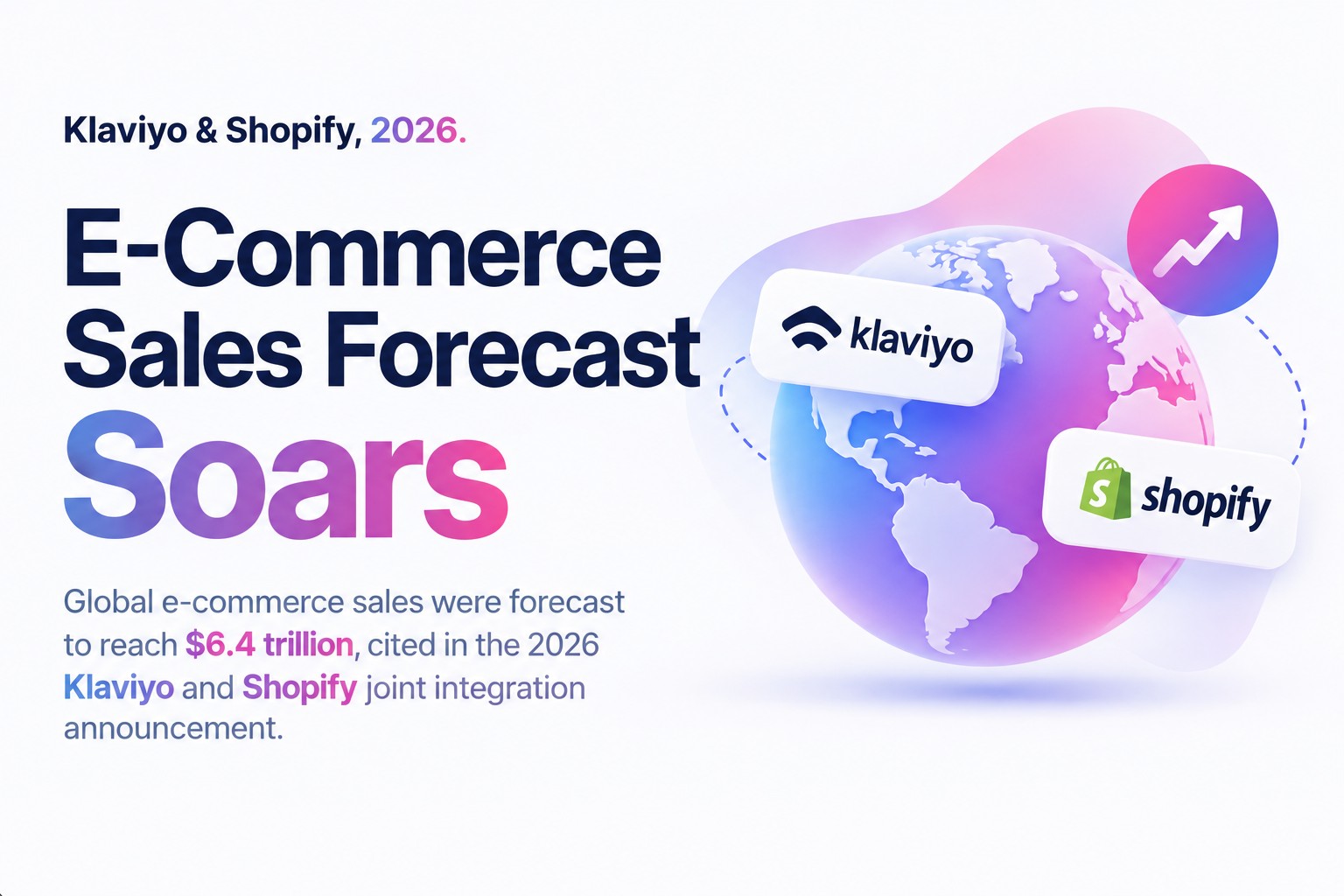
Klaviyo and Shopify deepened their integration further in 2026, with a joint announcement highlighting the acceleration of global commerce growth as global e-commerce sales were forecast to reach $6.4 trillion. That kind of platform-level partnership means the integration is maintained, updated, and prioritised rather than left to decay. WooCommerce, BigCommerce, and Magento integrations are also available and solid.
For Shopify brands in particular, Klaviyo is the default recommendation. The data fidelity, the automation triggers, and the revenue attribution reporting are all built around how Shopify stores actually operate. Our guide to the best email marketing platforms for Shopify covers this in more detail, including how Klaviyo compares to alternatives like Omnisend and Mailchimp on Shopify specifically.
HubSpot Integrations
HubSpot's App Marketplace lists over 1,500 integrations. Salesforce, Slack, Zoom, Google Ads, LinkedIn Ads, Typeform, Stripe, and hundreds of others connect to HubSpot natively. For B2B companies running a full go-to-market stack, that breadth is genuinely valuable.
HubSpot also connects to Shopify, but the integration is less deep than Klaviyo's. You can sync customer and order data, but the e-commerce-specific triggers, product catalogue logic, and revenue attribution in Klaviyo are not replicated in HubSpot's Shopify connector. For brands where Shopify is the primary revenue source, that difference matters.
If you need both platforms, they integrate with each other. Some of the brands we work with run Klaviyo for e-commerce email and SMS while HubSpot manages the B2B or wholesale side of the business. The two platforms can coexist, with Zapier or a direct integration keeping contact data in sync. It is more to manage, but it is a legitimate architecture when your business genuinely has both B2C and B2B revenue streams.
AI Features and Reporting
Both Klaviyo and HubSpot have built AI features into their platforms, with Klaviyo focusing on predictive analytics tied to purchase behaviour and HubSpot focusing on AI-assisted content creation and predictive lead scoring for B2B sales contexts.
Klaviyo AI
Klaviyo's AI features centre on predictive analytics. The platform calculates predicted lifetime value, predicted next order date, and churn probability for every customer profile automatically. Those predictions feed directly into segmentation: you can build a segment of "high-LTV customers predicted to lapse in the next 30 days" and send a targeted retention email without any manual modelling.
Send-time optimisation in Klaviyo uses machine learning to identify the best send time for each individual contact based on their historical open behaviour. Subject line recommendations and generative AI copy tools are available in the flow and campaign builders. AI is a force multiplier here, not a replacement for a strategist who understands your brand. Our AI for email marketing service covers how to build AI-assisted workflows that actually improve performance rather than just cutting corners.
Klaviyo's reporting is revenue-first. Every flow and campaign shows attributed revenue, orders placed, and revenue per recipient alongside standard email metrics. For an e-commerce marketer, that is the number that matters. Klaviyo's customers generating over $50,000 in ARR grew 37% year-over-year to 3,912 as of December 31, 2025, according to Seeking Alpha's coverage of Klaviyo's investor data. That growth at the high end of the market signals that serious e-commerce businesses are scaling on the platform.
HubSpot AI and Reporting
HubSpot's AI features include AI-assisted content generation for emails, landing pages, and blog posts, plus predictive lead scoring that ranks contacts by their likelihood to become customers. The lead scoring feeds directly into workflow automation and sales rep prioritisation, which is valuable in a B2B context where sales team capacity is the constraint.
HubSpot's reporting and analytics are genuinely strong. Custom dashboards, multi-touch attribution models, and sales pipeline reporting give marketing and sales leadership a shared view of what is working. The attribution models in HubSpot tend to suit B2B buying cycles better than e-commerce purchase cycles, where the time from first touch to conversion is measured in minutes rather than months.
The marketing automation market is expanding significantly, projected to grow from $7.39 billion in 2025 to $11.06 billion by 2030, according to The Business Research Company's marketing automation global market report. Both Klaviyo and HubSpot are positioned to capture a share of that growth, but from opposite ends: Klaviyo through e-commerce intelligence and HubSpot through B2B sales and marketing alignment.

Who Should Choose Klaviyo vs HubSpot
The choice between Klaviyo and HubSpot comes down to your primary revenue model: e-commerce and D2C businesses belong on Klaviyo, while B2B companies with sales-led growth belong on HubSpot, and anything in between requires an honest assessment of where most of your revenue actually comes from.
Choose Klaviyo If
You run an e-commerce or D2C brand on Shopify, WooCommerce, or a similar platform. You want email and SMS marketing managed in one place with shared customer data. You need purchase-behaviour-based segmentation and automation flows out of the box. Your primary marketing goal is retention, repeat purchase, and lifecycle revenue rather than lead generation.
Klaviyo also makes sense for subscription businesses, fashion and apparel brands, health and wellness D2C, and any brand where the customer purchasing journey is the primary marketing event. If revenue attribution back to specific email and SMS sends matters to your reporting, Klaviyo's model makes that straightforward in a way HubSpot does not.
If you are evaluating Klaviyo in detail, our Klaviyo marketing tutorial for beginners walks through the platform setup step by step. And if attribution reporting is a specific requirement, our guide to Klaviyo's attribution window tool covers how to configure it correctly.
Choose HubSpot If
You run a B2B business where sales and marketing need to share the same contact records and pipeline data. You need lead generation tools including landing pages, forms, and blog hosting alongside email marketing. Your email marketing is primarily contact nurture and lead progression rather than e-commerce lifecycle campaigns. You want a single platform that covers CRM, marketing automation, and sales enablement without extensive integrations.
HubSpot also suits businesses where content marketing and inbound lead generation are the primary growth channels. The blog hosting, SEO tools, and landing page builder make HubSpot a complete inbound platform in a way Klaviyo is not. HubSpot reached 299,458 paying customers and $3.45 billion in annual recurring revenue as of Q1 2026, per Resonate's analysis of HubSpot's market share data. That scale reflects a mature platform with a proven B2B market fit.
For a broader view of HubSpot's email automation capabilities specifically, our guide to HubSpot email marketing automation covers what the platform does well and where its limits lie.
Making the Right Call for Your Business
Klaviyo wins for e-commerce. HubSpot wins for B2B. That verdict holds up under scrutiny, and it is the same one we give clients when they ask us directly before a migration or a new implementation.
The detail that most comparison guides skip: the platforms are not mutually exclusive. A growing number of brands we work with run both, connecting them to avoid data silos. That adds cost and operational complexity, but it is the right architecture when the business genuinely spans both B2C retail and B2B wholesale or professional services.
If you are about to pick one and need an honest third opinion, that is exactly what our ESP selection service is for. We will map your current stack, your growth model, and your team's capability against both platforms and give you a clear recommendation, not a fence-sitting "it depends."
The global email marketing software market was valued at $1.7 billion in 2025 and is projected to reach $4.27 billion by 2034, according to Fortune Business Insights' email marketing software market report. Both Klaviyo and HubSpot will grow with that market. The question is which one grows with your business. Get that decision right and the returns follow.
Need a specialist team to implement, optimise, or migrate? Talk to us at Enchant. We are Klaviyo Master Platinum Partners and HubSpot Platinum Partners, and we have done this across retail, D2C, B2B, travel, and subscription brands.